


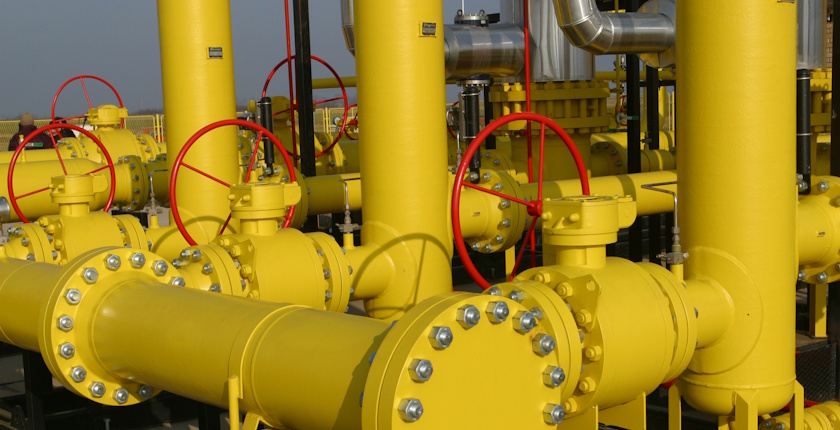
Serbia is in a very difficult situation because, as of January 1, 2026, it won’t be able to receive Russian natural gas via Bulgaria, according to the Ministry of Mining and Energy.
Serbia receives natural gas from Russia via the Balkan Stream. The pipeline is an extension of TurkStream that passes through Bulgaria and Serbia. Bosnia and Herzegovina and Hungary, Serbia’s neighbors, are also supplied via Balkan Stream. TurkStream delivers gas from Russia across the Black Sea to Turkey.
Serbia is facing a very difficult and almost dead end situation due to the European Union’s ban on the transit of Russian gas through the EU to third countries, which will come into effect on January 1, 2026, according to Serbia’s Minister of Mining and Energy Dubravka Đedović Handanović.
Đedović Handanović: Bulgaria won’t allow the flow of Russian gas through the Balkan Stream
Bulgaria won’t allow the flow of Russian gas through Balkan Stream, which will negatively impact Serbia, she stressed.
The European Commission set out a plan in May to phase out the purchases of Russian natural gas, including in liquefied natural gas (LNG), and oil, by the end of 2027. The council now confirmed that imports of Russian gas will be prohibited from January 1, 2026, while maintaining a transition period for existing contracts.
Đedović Handanović: We are doing everything in our power, but the situation is almost hopeless, considering the current situation regarding NIS
Yesterday, the Council of the European Union agreed on its negotiating position on the European Commission’s draft regulation to phase out imports of Russian natural gas. When the European Parliament adopts its own position, it can start negotiating with the council.
When the two institutions approve a regulation, it directly applies to all member states.
Đedović Handanović expressed hope that a solution would be found due to, as she put it, President Aleksandar Vučić’s excellent relations with world leaders.
“We are doing everything in our power, but it is an almost dead end situation, considering the current situation regarding Naftna industrija Srbije [NIS]. Our country, which is not involved in any conflict, has found itself affected through no fault of its own. Despite everything, we will do our best, as we have so far, so that citizens don’t feel the problems we are facing,” Đedović Handanović underlined.
Namely, the United States imposed sanctions on October 9 against NIS, Serbia’s national oil importer, refiner, and operator of a chain of service stations.