



Plans for waste incinerators and for waste co-incineration in coal plants in cities across the Western Balkans, and especially in Podgorica, Zenica and Tuzla, pose serious financial and health risks, CEE Bankwatch Network warns. The organization has called upon authorities and energy companies to abandon such projects.
Montenegro and Bosnia and Herzegovina are considering waste incineration despite having some of the lowest recycling rates in Europe. It would further slow the development of recycling and separate waste collection systems, into which tens of millions of euros have already been invested through the European Union’s funds or national budgets, CEE Bankwatch Network said. The organization noted that no Western Balkan country currently applies the EU waste hierarchy.
Prevention, reuse and recycling remain marginal, while disposal and plans for burning mixed waste dominate, which is directly contrary to European rules, it concluded in a new document. It is titled Waste incineration trends in the Western Balkans: A critical overview of energy and heat generation.
“We want to call on the Government of Montenegro, and Bosnia and Herzegovina, as well as their energy companies and cities, to immediately halt further planning of the construction of waste incinerators, or co-incineration in coal-fired thermal power plants, and to commit to strengthening waste management systems, i.e. separate collection and recycling of waste, composting, anaerobic digestion and clean heat sources, including large heat pumps, solar thermal systems and geothermal energy,” said the report’s author Nataša Kovačević, a campaigner for decarbonization of district heating in the region.
Expensive infrastructure that blocks more sustainable solutions
Incinerators are not modern solutions for a circular economy, but rather expensive infrastructure that locks cities into decades of dependence on mixed waste and discourages investment in waste prevention, recycling and reuse, the update reads. Arrangements require long-term waste delivery guarantees and result in decades of financial obligations, warns the said network of nongovernmental organizations for environmental protection and human rights. It focuses on monitoring investments and public funding.
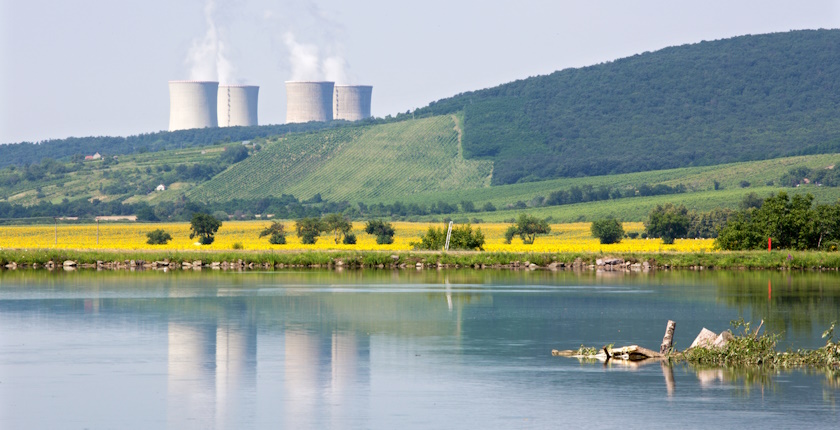
When it comes to plants for the incineration or co-incineration of waste for heating or including electricity generation, Vinča is the only one in operation in the region. It is near the eponymous suburban community, at a landfill just outside of Serbia’s capital Belgrade. The facility was highlighted in the report as the most relevant example.
Contracts for incinerators typically last 20 to 30 years and obligate cities to deliver large quantities of mixed waste, Bankwatch added.
Recycling rates in Serbia, Albania moderately stronger than in rest of region
Recycling rates are extremely low and separate collection is largely absent. Some Western Balkan countries don’t report validated data. In 2023, Albania officially recycled 18.8% of municipal waste, compared to 3.5% in Kosovo* and 15.2% in Serbia. BiH was at 1.1% in 2024. The estimate for 2023 for North Macedonia is only 0.3%. Montenegro had an estimated 3.6% in 2024.
The report finds that none of the countries in the region have sufficient quantities of adequately treated waste for the planned capacities, putting them at a higher risk of long-term dependence on waste imports. There are examples in developed European countries like Sweden.
Even newer European incinerators cause serious pollution with microscopic dust (PM particles), heavy metals and toxic chemicals such as per- and polyfluoroalkyl substances (PFAS), also known as forever chemicals.
In Harlingen in the Netherlands, concentrations of PFAS in surface waters reached 138 times the legal drinking water threshold. Seven times more dioxins were found in the soil than before the plant started operating. In Ivry-sur-Seine near Paris, contamination above EU limits was found in the soil near schools and public parks.
Incinerators produce vast quantities of hazardous waste, primarily toxic ash contaminated with heavy metals and dioxins.
Retrofitting coal plants would cost tens of millions of euros per unit
The report highlights concerns that power utilities such as Elektroprivreda BiH (EPBiH) are considering coincineration in obsolete facilities. Their retrofitting for compliance with the best available techniques would cost tens of millions of euros per unit. It implies risk of becoming stranded investments, due to the EU’s pollution and emissions regulations.
Public and institutional resistance is growing across the region. The planned experimental co-incineration of waste with coal at the Tuzla thermal power plant in BiH was halted last year. Its operator is state-owned EPBiH.
The possibility of burning sludge from the local wastewater treatment plant was suggested for inclusion into the Butila project for large heat pumps for district heating in the Sarajevo Canton.
Žiško: Politicians from the Western Balkans obviously do not understand the principles of the circular economy and decarbonization, as they persistently promote waste incineration as part of those processes
Plans for an incinerator in Zenica, in the central part of the country, have triggered citizen protests over to air quality concerns. The project was initiated by embattled steel maker Nova Željezara Zenica. Notably, it has just halted production.
“Politicians from the Western Balkans obviously do not understand the principles of the circular economy and decarbonization, as they persistently promote waste incineration as part of those processes. It is high time they realize that burning waste breaks the materials cycle because it irreversibly destroys resources that could be recycled or reused. It is a fact that waste incineration results in emissions of CO2 and many other pollutants dangerous to health. Therefore, our rulers should stop lying to citizens and finally establish sustainable waste management systems that are key to reducing emissions while simultaneously saving vast amounts of energy needed for the production of new materials,” Denis Žiško from Aarhus Center BiH stated.
Local communities bearing costs, risks
Officials in Montenegrin capital Podgorica have said that a feasibility study for the planned EUR 200 million incinerator is complete, but the document is not publicly available.
“Montenegro has not yet built the basic elements of a waste management system and that is exactly where the greatest room for progress lies. Skipping these steps leads to long-term dependence on solutions that are not in line with the principles of the circular economy. If we are talking about a just transition and climate justice, investments should be directed toward solutions that reduce waste and strengthen local capacities, rather than into projects that limit us in the long term and tie us to a single model. Otherwise, the risk and cost remain with local communities, while resources are irreversibly lost,” Vanja Cicmil from the Zero Waste Montenegro group stressed.
Serbia’s two projects
Serbia’s state-owned power utility Elektroprivreda Srbije (EPS) is planning to coincinerate waste with coal in its Nikola Tesla A (TENT A) power plant. It is in the town of Obrenovac, in Belgrade territory.
District heating enterprise Novosadska toplana, owned by the City of Novi Sad, has commissioned a preliminary feasibility study for a cogeneration plant. It would burn solid recovered fuel (SRF) or refuse-derived fuel (RDF) from waste for combined heat and power (CHP) production. The thermal capacity would be 50 MW, according to the new report.
Series of corruption scandals in region
Slovenian state-controlled Holding Slovenske elektrarne (HSE) scrapped a coincineration project for its Termoelektrarna Šoštanj (TEŠ) coal plant. The decision followed criticism by the municipal authority and environmentalists.
The new report contains several other supporting cases.
The damage from three failed projects in Tirana, Fier and Elbasan in Albania amounts to over EUR 350 million. Eleven people have been arrested for alleged corruption. Member of Parliament and former Deputy Prime Minister Arben Ahmetaj was charged in 2023 with corruption and money laundering, and fled the country.
Three incineration projects in Albania resulted in more than EUR 350 in liabilities
Soon after, the Sofia City Administrative Court in Bulgaria overturned the environmental impact assessment study approved earlier for a waste-to-energy project. It cited unassessed health risks and toxic emissions, a lack of public consultation and unreliable data. The country’s capital lost the entire EUR 90 million allocated from EU funds. It also had to repay the EUR 35 million that it already received.
The Pavlikeni-Varbovka project was an attempt to mask a large-scale waste incinerator as a stone wool factory. The envisaged capacity was 1,160 tons of RDF per day. For three years, protests and petitions were organized in Bulgaria over falsified data and the lack of pollution protection measures. The Supreme Administrative Court annulled the approval, reasoning that law and procedure had been violated. The investment was blocked following a second review.
The Bobov Dol coal plant has a permit for the coincineration of biomass and RDF. Last year, air quality monitoring stations recorded excessive hourly levels of sulfur dioxide 55 times, which is more than twice the allowed limit. The plant’s operator regularly submitted requests to increase its allowed quantity more than fivefold to 185,000 tons per year, according to the report.
Western Balkans suffocating in waste, landfill fires
The waste-to-energy concept is not limited to incineration. For example, there is a cleaner technology, plasma gasification, through which synthesis gas (syngas) or hydrogen can be obtained. Admittedly though, there has been no success in its application in Europe so far.
Anaerobic digestion, or fermentation, is a way to produce biogas, often from agricultural waste. What remains is digestate, which can serve as fertilizer.
Importantly, due to their dismally inappropriate waste management, the Western Balkans are dotted with illegal and improvised landfills. Catastrophic fires regularly break out. Ergo, waste is burning, though in absolutely uncontrolled conditions. In addition, many rivers, lakes and shores are covered in trash, as are agricultural, urban and other areas. And the quantities of municipal and similar waste are constantly increasing.