

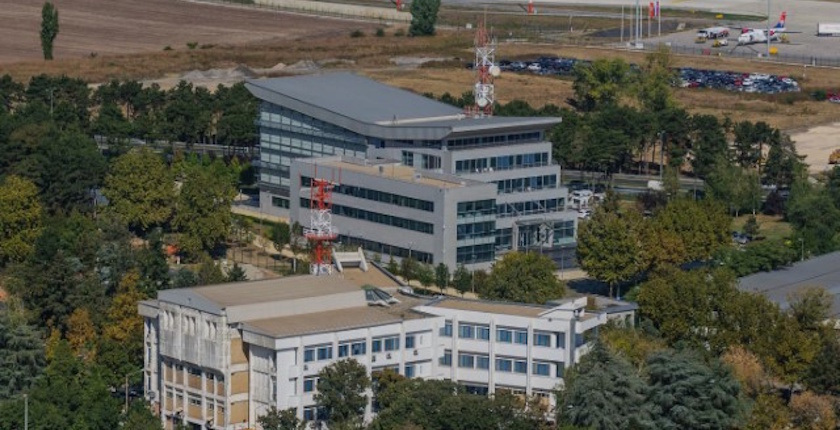
The Serbia and Montenegro Air Traffic Services Agency (SMATSA) plans to install solar panels on the roofs and grounds of four of its facilities.
SMATSA has issued a public call for initial feasibility studies for the construction of photovoltaic plants at four locations in Serbia, which have been assessed as economically and technically viable.
Taking into account the expansion of green energy in recent years and the trend of using renewable energy sources among air navigation service providers, both regionally and across Europe, SMATSA is considering the possibility of launching the use of renewables by installing solar panels, the company said.
Two ground-mounted and two rooftop locations
The goal of the four feasibility studies is to analyze and assess the economic and technical viability of constructing solar power plants at each location, to provide a reliable basis for the project’s further execution.
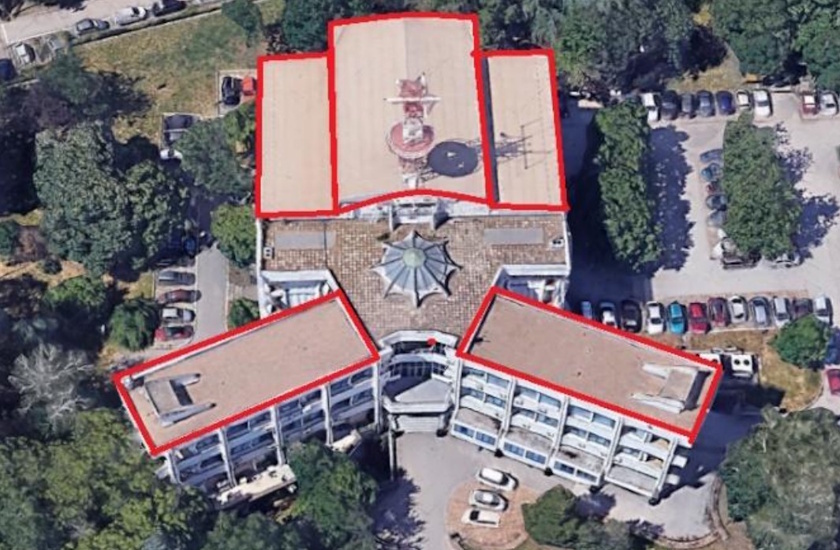
The locations are: SMATSA Training Centre Belgrade (STC Belgrade), Kraljevo Air Traffic Control (AKL Kraljevo), Belgrade Terminal Area Radar (TAR Belgrade), and Belgrade Air Traffic Control Technical Centre (TCKL Belgrade).
Deadlines for studies are end of November 2026 and end of November 2027
SMATSA requires studies for two locations to be completed by November 30 of this year, while the deadline for the remaining two locations is one year later.
The final schedule for completion and the locations in annual terms will be defined later, depending on the company’s current needs, according to the public call.
STC Belgrade has a roof surface area of 2,000 square meters, and solar panels could also be installed on the parking canopy. The roof could also be used at the TCKL Belgrade facility, covering an area of 1,200 square meters.
AKL Kraljevo has 45,804 square meters surrounding the tower available for the installation of PV panels, while TAR Belgrade offers an additional 10,477 square meters around the radar.
Secondary studies to follow the initial phase
The feasibility studies should suggest solar power plant capacity, determine the optimal technical solution, estimate the investment value, conduct an economic analysis with an estimated payback period, and provide guidelines for the placement of the generated electricity into the grid.
Bidders must possess specialized software for modeling, simulating, and economically analyzing photovoltaic systems and power plants, such as PVSyst or an equivalent, the call reads.
The studies will serve as the basis for future secondary feasibility studies, which will be used for the design and installation of solar power plants at locations where viability has been confirmed by the initial studies.