


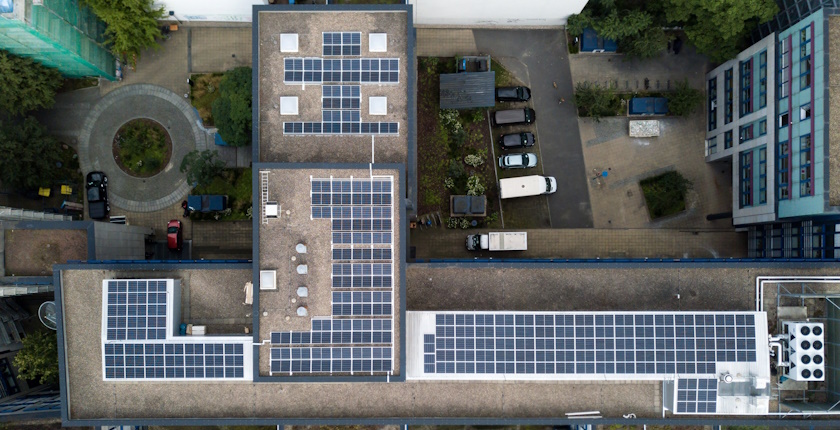
Cities, towns and villages in Romania are contributing to decarbonization and cutting costs with hundreds of solar power projects, both for ground-mounted facilities and rooftop photovoltaics.
Local authorities in Romania – from communes consisting of a village or two to the capital Bucharest – are investing in solar power to save on electricity costs. Projects have been piling up, helped by administrative reforms and, especially, incentives and European Union funding. Including other small facilities installed by businesses, institutions and even churches, photovoltaics have made prosumers the country’s main energy transition pillar. However, some endeavors amount to several megawatts, like in Timișoara.
Sector 3, one of the six administrative units in Bucharest, is conducting a large-scale green energy program. It aims to place solar panels on all state-owned pre-university education entities.
The municipal authority counts on reducing costs and increasing its energy independence, as it cited the context of the continuous rise in prices of utility services. In case there are no alternatives, the transition to renewables production for self-consumption becomes an economic necessity and not just a sustainability option, the announcement reads.
An optimally-sized PV system can cover a significant part of energy consumption, reducing dependence on the electricity grid and stabilizing costs in the long term, Sector 3 pointed out. It is using EU funds for 13,000 solar panels on the roofs of kindergartens and schools, for 5 MW in total.
Photovoltaics to benefit multi-apartment buildings as well
The other part of the program is for rooftop solar for one hundred multi-apartment buildings that would undergo energy efficiency upgrades. The installations would generate electricity for staircase lighting, elevators and other joint needs of households.
A commune, comună, is the lowest local authority unit in Romania. It is followed by oraș, which is the status of more than two hundred towns and cities. A municipality (municipiu) is a larger city. There are just over a hundred of them. Bucharest is the only one divided into administrative sectors.
Commune in Dobruja to host wind-solar hybrid but also its own PV plant
Casimcea commune in southeastern Romania, in Dobruja (Dobrogea), hosts a number of renewable electricity plants and projects. Mayor Gheorghe Țilincă recently praised such investments, in a statement to DobrogeaNews, highlighting the development of rural areas.
He revealed that the commune itself is working on a project for a solar power plant.
“After the feasibility study, we will go through the necessary steps to finance this photovoltaic park of the commune, which will cover the electricity needs for its own consumption and bring benefits, consisting of reducing electricity costs borne by the institution’s budget, using green energy and reducing CO2 emissions, increasing the degree of energy independence,” Țilincă explained.
Investments and projects with European funding are the benchmarks of sustainable development, Casimcea’s Mayor Gheorghe Țilincă says
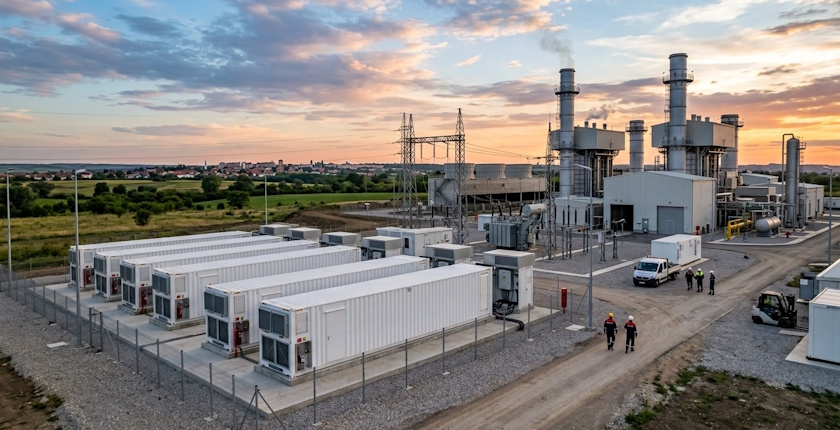
There are already 135 wind turbines in operation, he noted. Verbund Green Power Romania has 88 in its Casimcea wind park, of 226 MW. Interestingly, the company is expanding it into a hybrid power plant. It would comprise a PV park of 60 MW in peak capacity, with Simtel as a contractor, and a battery energy storage system of 48.3 MW and 76 MWh.
“In today’s global situation… we need energy produced here in Romania more than ever,” Țilincă stressed. The owner of the land where a wind turbine is spinning can receive EUR 5,000 to EUR 7,000 per year, while renting a surface for PV parks costs EUR 1,500 to EUR 1,800 per hectare per year, he added.
“In my opinion, investments and projects with European funding are the benchmarks of sustainable development,” the mayor underscored.
Notably, projects have been emerging in Romania for hybrid power plants consisting of wind and solar power, especially in Dobruja, alongside local renewable energy hubs, like the area of Crucea and Pantelimon.