

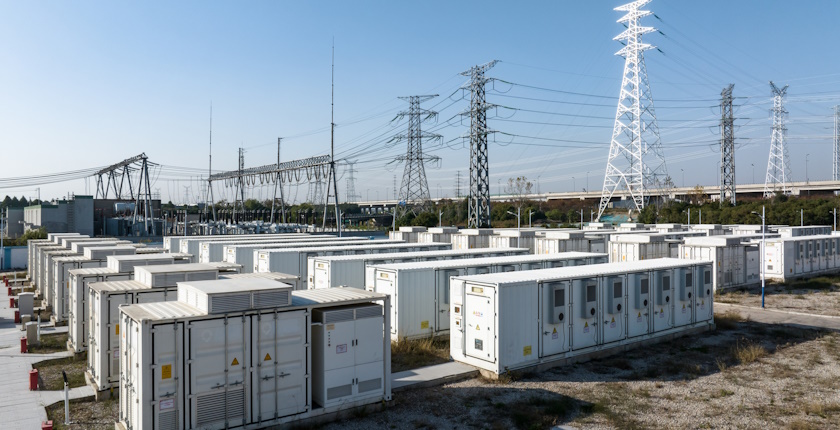
The battery industry is advancing rapidly and entering a new phase of its development, the International Energy Agency said, highlighting sharp demand growth and weakening prices. Batteries made in China, making up more than three quarters of the global market, are cheaper than in Europe and North America by over 30% and 20%, respectively. Demand topped 1 TWh, compared to 3 TWh in manufacturing capacity, which is set to further triple within five years.
Last year the electric car industry passed a major milestone, in addition to sales surging 25% to 17 million, experts from the International Energy Agency pointed out in a commentary on the global battery market. The average price of a battery pack for a battery electric car dropped below USD 100 per kWh, commonly thought of as a key threshold for competing with conventional models.
Annual battery demand surpassed 1 TWh, according to the update. The global market is advancing rapidly as demand rises sharply and prices continue to decline.
Manufacturing capacity reached 3 TWh in 2024
Cheaper battery minerals have been an important driver. Lithium prices, in particular, have dropped by more than 85% from their peak in 2022. However, rapid advancements in the battery industry itself are also supporting price declines, the article reads.
After years of investments, global battery manufacturing capacity reached 3 TWh in 2024, and the next five years could see another tripling of production capacity if all announced projects are built, the agency calculated.
Standardization underway
The trends point to the battery industry entering a new phase of development.
“While markets used to be regionalized and small, they are now global and very large, and a range of technological approaches is giving way to standardisation. Looking ahead, economies of scale, partnerships along the supply chain, manufacturing efficiency and the capacity to bring innovations swiftly to market will be crucial to compete. This will likely result in greater consolidation across the sector, which is simultaneously being reshaped by government-driven efforts to geographically diversify battery supply chains,” the authors added.
China is set to remain the top producer, but consolidation could transform the market
China produces over three-quarters of batteries sold globally, and in 2024 average prices dropped nearly 30%, more than anywhere else in the world. They are lower than in Europe and North America by over 30% and 20%, respectively, IEA found.
Chinese EV manufacturers have price advantage
Declining battery prices in recent years are a major reason why many electric vehicles in China are now cheaper than their conventional counterparts.
Over 70% of all EV batteries ever manufactured were produced in China, creating extensive manufacturing know-how. It has supported the rise of giant manufacturers such as Contemporary Amperex Technology Co. Ltd (CATL) and BYD, which have centralized expertise in the battery sector and driven innovation.
The Chinese battery ecosystem covers all steps of the supply chain, from mineral mining and refining to the production of manufacturing equipment, precursors and other components, as well as the final production of batteries and EVs, the agency stressed.
Chinese producers have prioritized lithium-iron-phosphate (LFP), a cheaper chemistry. Initially thought to be unsuitable for electric cars due to their lower energy density, years of research and development by Chinese producers have honed LFP batteries, which now cover nearly half the global EV market after more than tripling their share within the past five years.
Today, they are about 30% less expensive than their main competitor, lithium nickel manganese cobalt oxide (NMC or Li-NMC) batteries, while still offering competitive ranges for EVs.
Make or break for battery production in Europe
Elsewhere, the competitive edge of China’s electric car and battery industry is presenting major challenges. Many battery producers in Europe are postponing or canceling expansion plans because of uncertainty about future profitability.
Production costs are about 50% higher than in China. Meanwhile, the battery supply chain ecosystem is still relatively weak and a lack of specialized workers persists. The bankruptcy of Northvolt underscores the difficulties of competing with Asian producers.
The European supply chain is relatively weak and a lack of specialized workers persists
Over the past two years, Korean battery manufacturers – traditionally the largest in Europe – lost almost one quarter of their market share in the European Union, to land at 60%. However, some have started investing in making LFP batteries in Europe.
In the meantime, Chinese battery makers are likely to keep expanding their European footprint, including through partnerships, such the joint venture between Stellantis and CATL.
In the United States, the manufacturing capacity has doubled since 2022 following the implementation of tax credits for producers, reaching over 200 GWh in 2024. Nearly 700 GWh of additional manufacturing capacity is under construction.