

Croatia is wrapping up a regulatory framework for the development of battery energy storage systems, paving the way for their deployment in 2027.
Battery capacity in Croatia stood at 11 MW in March, according to the Croatian Chamber of Economy (HGK). Of note, among the projects in the pipeline is a large standalone battery near Šibenik.
HGK now pointed out that the new law on the electricity market should come into force in the fall. This would be the main driver for the adoption of additional rules by the Croatian Energy Regulatory Agency (HERA), to enable the implementation of energy storage projects in early 2027, the chamber added.
HERA is preparing two important acts
HERA is expected to adopt the general conditions for the use of the network and electricity supply, and the methodology for determining the connection fee to the electricity grid for new users and for increasing the connection capacity for existing grid users, according to the participants at the roundtable on batteries organized by HGK.
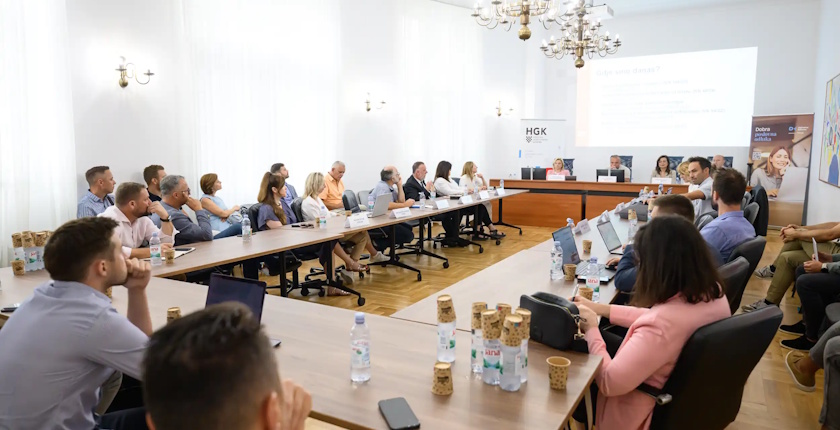
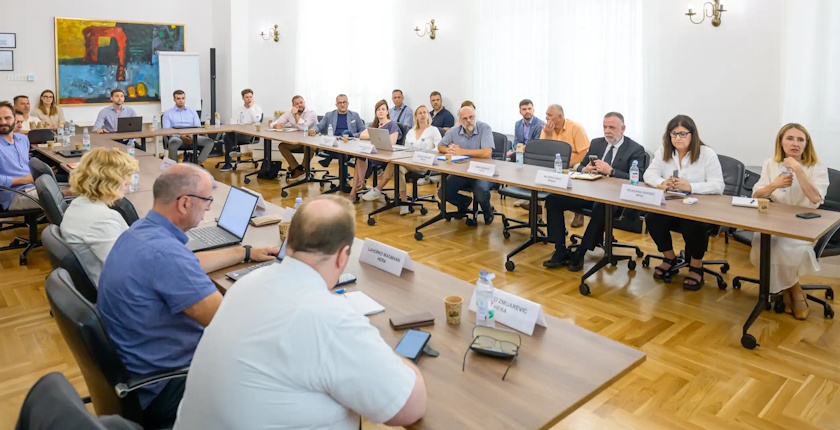
The roundtable covered spatial construction conditions, energy approvals, grid connection conditions, grid fees, and privileged status.
Building permit conditions are defined by the law on spatial planning, in effect since January 2026. However, the issue is that in some cases there is a conflict with the law on renewable energy sources and high-efficiency cogeneration, the participants at the roundtable explained.
Grid services represent a significant cost in planning the operational expenses
For energy approvals, the main topic was the non-arbitrage operating model for battery energy storage systems (BESS), which doesn’t require new approval or its modification. Operating models for BESS also include an arbitrage and a combined model at renewable electricity plant sites.
The participants stressed that the grid fee is important because it represents a significant cost in planning the operating expenses. Its calculation for the standalone or arbitrage battery model needs to be defined as soon as possible.
Šćulac: Projects totaling nearly 1,100 MW in development
Marija Šćulac, director of the industry and sustainable development sector at the Croatian Chamber of Economy, noted that batteries currently represent the technology with the highest investor interest. This is confirmed by the fact that energy approvals have been issued or requested for projects with a total capacity of nearly 1,100 MW, she added.
Energy storage is a necessity for the grid and the power system, in her view. The market will determine the profitability of investing in batteries, so they shouldn’t be restricted, Šćulac believes.
Pleić: Significant progress has been made
According to Aljoša Pleić, Deputy President of the Association for Renewable Energy Sources of HGK, in the year since a workshop with similar participants was held, and a position paper was published, significant progress has been made toward adopting a legislative framework related to spatial planning.
Of note, the Renewable Energy Sources of Croatia association (RES Croatia or, in Croatian, OIEH) recently presented a study on identifying grid congestion locations and the need for battery energy storage systems (BESS) in Croatia.