


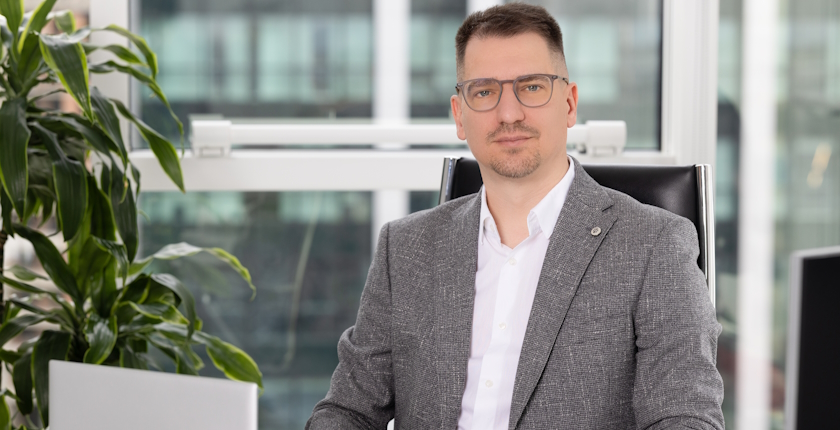
We spoke with Lazar Mijić, Head of Global Business Strategy in the business area Transformation of Industries at Siemens Energy, about where the region currently stands on the map of global energy transition. We highlighted the role of industrial electrification and the reasons why people and engineering knowledge are crucial for the next phase of development.
How do you see the position of the regional market in relation to the European and global energy markets in terms of potential and current capacities of renewable sources? Where are we today, and where are the opportunities?
In the field of electricity generation, the Southeast Europe region has rich potential when it comes to renewable energy sources such as solar, wind, and biomass. Although the first waves of investments are already present, we are still far from a significant level of utilization of these resources. The key challenge lies not only in energy production, but also in its utilization, which involves further development of the entire energy system – from transmission and distribution infrastructure to the transformation of industrial consumption.
The energy transition increasingly implies collaboration between industry, energy companies, digital partners, and institutions. The development of such ecosystems and partnerships is crucial for reducing the region’s dependence on fossil fuels, increasing efficiency, and building a more sustainable energy mix.
By developing new sources and transmission systems, the region has a real chance to become a participant in the common European energy system as a net energy exporter in the long term. In this process, Siemens Energy can contribute in every segment of the energy value chain – from power generation, through grid infrastructure, to industrial electrification solutions. Such a comprehensive approach enables the realization of complex projects that connect different technologies and markets, relying primarily on innovation and expertise.
What are the views on the trend where the topic of green energy is losing the race against the dominant demand for energy security and availability?
Today, we view energy through the lens of the resilience of the energy system, meaning its ability to be sustainable, secure, and affordable at the same time. In recent years, it has become clear that decarbonization cannot be separated from energy security and supply stability. The industrial sector needs reliable and affordable energy to function smoothly and remain competitive, so a sustainable balance between these factors is essential.
In practice, this means that the energy transition must be both technologically and economically sustainable. An important step is expected through the announced update of the European Commission’s regulations in the second half of 2026, particularly in the area of electrification of industrial heat generation, which should establish a more clear framework for further transformation.
The market is shifting from a product-driven to a solution-driven approach, where the focus moves from individual technologies to overall value and long-term sustainability.
At the same time, the market is changing from a business perspective. Industrial clients today seek integrated solutions and long-term partners who can understand the entire energy system. This is why the market is shifting from a product-driven to a solution-driven approach, where the focus moves from individual technologies to overall value and long-term sustainability.
As a company, we strive to inspire. The global team of Siemens Energy employees, consisting of 100,000 people in over 90 countries, continuously develops technologies aimed at making energy reliable, affordable, and sustainable for all. Thanks to technologies developed in our research departments and factories, 1/6 of the world’s electricity production is generated using our technology.
How do electrification projects contribute to decarbonization and the reduction of CO2 emissions?
Electrification of industrial processes represents one of the key steps in the decarbonization of industry. The essence of this approach is to replace technologies that use fossil fuels with their electric equivalents – such as using electric drives for rotating machines or inductive electric systems for heat production. These systems are characterized by higher efficiency, and by using electricity from renewable sources, they completely change the carbon footprint of today’s large industrial emitters.
This is particularly important as the industrial sector is responsible for over 30% of CO₂ emissions, and without significant transformation of industrial processes, it is impossible to achieve climate neutrality goals.
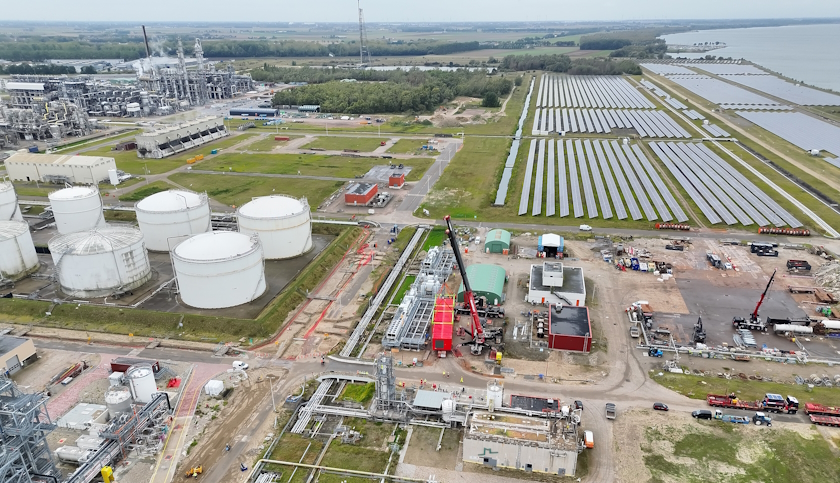
A good example that our team from Serbia is working on together with colleagues from the Netherlands is the modernization project of compressor systems at the Shell chemical complex in Moerdijk, the Netherlands, where traditional steam-driven compressor systems are being replaced with medium-voltage electric motors. This solution will contribute to a reduction of emissions by about 230 kilotons of CO₂ annually, which is approximately equivalent to the annual emissions of about 50,000 passenger cars, as well as optimizing energy consumption within the facility.
Electrification of industry represents one of the most important and challenging steps towards decarbonization, but also one of the most concrete and technologically accessible ways to achieve that goal in practice.
When we talk about increasing competitiveness, technology and investment are often highlighted, but how important are human resources and the development of specific skills for industrial transformation?
People and engineering knowledge are the drivers of industrial transformation. Although electrification is fundamentally a technical issue, it requires a multidisciplinary approach – from electrical engineering and mechanical engineering to automation, digital tools, and a deep understanding of processes.
In practice, most industrial changes occur through so-called brownfield projects – where new solutions need to be integrated into existing traditional facilities. In such projects, it is not enough to implement solutions based on new technologies; they must be integrated into existing systems, often with little or no downtime in operations. This is where a high level of knowledge and diverse expertise comes into play.
The Regional Competence Center for Industrial Electrification, established in 2022 within Siemens Energy in Belgrade, has now grown into a Global Center of Excellence
In Serbia, we have exceptional experts who design and deliver such complex industrial solutions “turnkey” and work on projects around the world – from Western and Northern Europe to the Middle East and Africa. The Regional Competence Center for Industrial Electrification, established in 2022 within Siemens Energy in Belgrade, has now grown into a Global Center of Excellence that brings together over 100 engineers from various disciplines and works on transformation projects in the industry for clients worldwide.
Continuous support and collaboration between the academic and industrial sectors are part of our business culture. This is why we pay great attention to developing new generations of experts through active cooperation with universities, through internship programs, and continuous education of young engineers.