


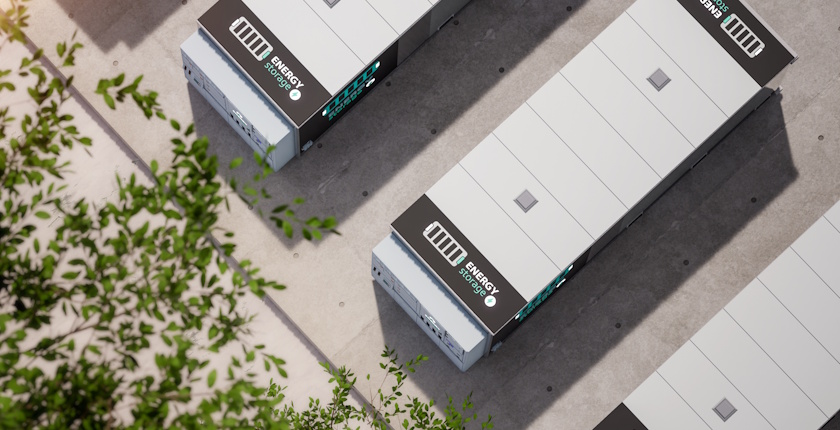
Authorities in Greece are making progress towards the 4.7 GW of merchant standalone batteries, planned to operate without any state support. The Hellenic Electricity Distribution Network Operator (HEDNO or DEDDIE) has presented a proposal for operational restrictions for the 900 MW of battery energy storage systems (BESS) to be installed in its network. It noted that interest from investors was much higher than the offered capacity.
Batteries in Greece would need to be able to accept orders from the operator at any given time. HEDNO highlighted examples of emergencies, such as possible overloading of medium-voltage lines by energy storage units in an area. It added that if rational restrictions are set, then possibly more batteries can be installed at a lower cost in existing grid infrastructure, thus accelerating their development.
No injection during midday hours, no absorption in the evening
On the national level, HEDNO sets specific time zones and levels of injection into the grid and charging from it. For example, from 10:00 to 15:00, no injection would be allowed, due to overproduction from photovoltaics in that period. Overall, restrictions of 30% to 100% would be applied between 7:00 and 18:00 regardless of conditions such as the weather, meaning they are static in nature.
No absorption would take place from 18:00 to 24:00, because of the daily power demand peak.
These static restrictions will be applied at the beginning, but they may evolve to dynamic ones in the future, said HEDNO. It added that the percentages mentioned above wouldn’t be raised, but that changes in conditions hour after hour could be taken into account with regard to controlling battery operation.
The next steps for batteries
The market awaits a ministerial decree determining priority criteria for energy storage, so that projects can receive connection terms, and one for HEDNO’s restrictions.
Aurora Energy Research recently said battery storage in Greece may reach 4 GW by 2030. If delays and regulatory issues are solved, the level could rise to 6.8 GW.
Comments (1)
N Croome
Australian power companies seam to manage battery energy storage to run their grid during high demand. Perhaps a greek group of engineers could learn from their experience. Australian homes have now installed 100,000 home batterys in the last year,also are building GW size grid storage battery.