


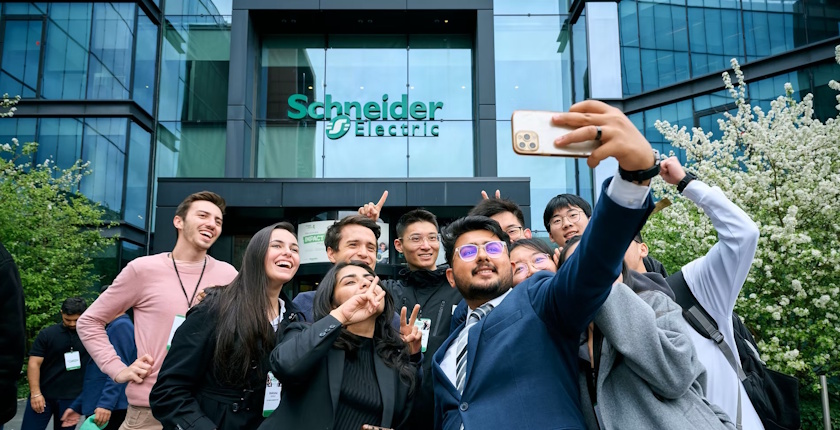
Schneider Electric has opened applications for its global student competition, the 2026 Schneider Go Green Challenge. Teams from around the world can submit clean energy solutions addressing the specific needs of local communities by August 28.
This year’s Schneider Go Green competition is being held under the theme Energy Tech for Local Impact. Teams of students and young entrepreneurs are asked to identify a specific energy access, efficiency, or reliability challenge faced by a real community and design a clean energy solution that directly addresses it.
The proposed solution must be commercially viable, environmentally friendly, and built to last. Examples include renewable energy systems that power small and medium-sized enterprises, provide lighting for schools and public spaces, or support households in their daily activities.
Who can participate
The Schneider Go Green Challenge is open to students worldwide aged between 18 and 30 who are currently enrolled, either full-time or part-time, in an undergraduate or graduate program. English is the official language of the competition, so proficiency in English is required.
Teams must consist of two to four members. All members of a team must study in the same country, but they may attend different educational institutions, pursue different programs, or be in different academic years. They are not required to be permanent residents or nationals of the country in which they study.
Applications are open until August 28
Applications and project proposals must be submitted by August 28, 2026. Each team member must first register individually and submit a résumé. Two to four registered participants then form a team and submit one joint project proposal.
Participants will receive detailed instructions on team registration and project submission by email.
A jury will select the top ten teams, which will develop a comprehensive business case outlining the feasibility, costs, benefits, and risks of their proposed solution, with support from a Schneider Electric mentor. Participation is free of charge, and the organizers encourage gender-balanced teams.
The top three teams will present their solutions at the global virtual final on December 7. They will share a total prize pool of EUR 10,000: EUR 6,000 for first place, EUR 2,500 for second place, and EUR 1,500 for third place.