

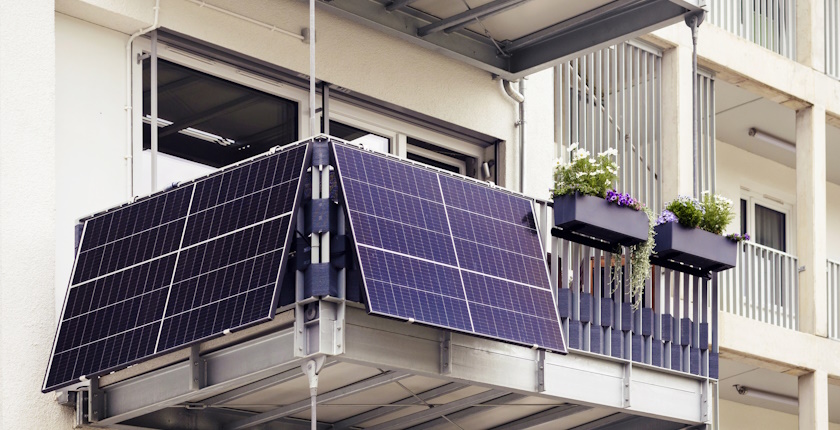
Europe is witnessing a sharp rise in the use of plug-in solar systems, according to a new report by SolarPower Europe, an association of companies in the solar industry. These systems allow for the quick and easy harnessing of solar energy, without complex installations or significant investments.
Solar energy is experiencing a boom across Europe and the world, moving beyond traditional rooftop installations and large-scale solar farms. Panels can now be seen along roads and railways and above pastures and orchards. The latest trend in renewable energy is called plug-in solar systems.
Plug-in solar systems, also known as balcony power plants or mini solar systems, are designed for easy installation by users on balconies, walls, rooftops, and in gardens. They typically consist of one or two solar modules that can be plugged into a grounded home power socket.
According to a report published by SolarPower Europe, the market for plug-in photovoltaic (PV) systems in Europe is experiencing significant growth. These systems are becoming increasingly popular as a response to rising electricity prices.
Plug-in solar systems can cover up to 25% of a household’s electricity consumption
The report indicates that in some European countries, plug-in solar systems can cover up to 25% of a household’s annual electricity consumption. Additionally, they enhance energy independence, democratize energy production, and help reduce monthly bills.
In Germany, a set with a single 400-watt module, which previously cost between EUR 300 and EUR 500, can now be purchased for EUR 200. The most advanced systems with batteries can cost up to EUR 1,500, according to the report.
Germany is the leader in the number of balcony power plants. At the end of 2024, there were about 780,000 such systems registered in the country, but the number could rise to four million, as many mini power plants remain unregistered, according to the report.
The report also highlights the increased use of small battery storage systems with capacities ranging from one to five kilowatt-hours, allowing surplus energy to be stored. In Germany alone, the number of small batteries with a capacity below two kilowatt-hours increased 24-fold between 2023 and 2024.
Europe needs better regulation for plug-in solar systems
One of the main advantages of plug-in solar systems is their affordability and ease of installation. They can also be easily relocated when moving, making them suitable for rental apartments and temporary structures. The investment in such systems pays off within two to six years, depending on system size, local solar potential, and electricity prices.
However, the report also highlights certain challenges. Due to their small size and often suboptimal placement, these systems cannot fully cover a household’s energy needs. Furthermore, the European Union has yet to adopt a unified regulation for these systems, leading to varying rules across different countries.
Countries are introducing regulations to legalize and standardize balcony power plants
“Importantly, with the rise of plug-in solar, Europe needs clear product standards and consistent installation guidelines to ensure safety, grid compatibility, and consumer confidence,” said Lia Le Penuaisic, project manager for the report.
Nevertheless, SolarPower Europe highlights that, with the growing market for plug-in solar systems, European countries are beginning to introduce new regulations to legalize and standardize them. Belgium is expected to legalize plug-in solar systems in April 2025, while Germany has already simplified the registration procedures.
The German regulator VDE plans to adopt the first official standard for plug-in solar products by the end of 2025, which could serve as a foundation for broader European regulations, the report notes.