


A new ruling by the Council of State, Greece’s supreme administrative court, is ending the practice of dividing solar projects into many smaller ones.
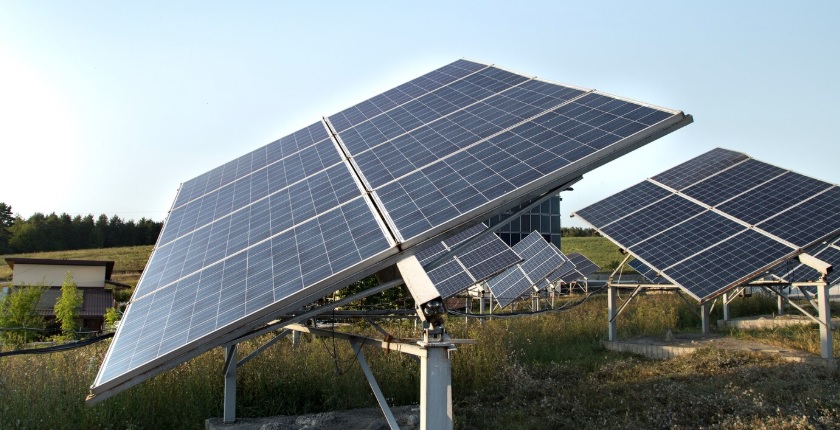
So-called segmentation enables going through a simpler licensing process, while for large photovoltaic parks it is more complex and time-consuming. Companies trying to develop solar clusters of tens or hundreds of megawatts tend to separate them into pieces of less than 1 MW.
Earlier, an investor attempted to build 185 MW made of 186 units in the area of Pineios Lake in Elis (or Ilia) in the Peloponnese. Locals launched appeals and they ended up in the supreme court.
It was decided that even though these installations received an exemption from environmental licensing, it was not previously examined whether they constitute one single investment. As a result, 186 preliminary producer licenses and 25 work approvals have been cancelled.
The court noted that it still upholds simple and fast licensing for solar farms under 1 MW. However, local and national authorities must take ownership into account from now on when examining projects in a given area, in order to prevent abusive practices.
Other investments to be affected
Moving forward, when there are signs that multiple small farms belong to a single entity, a preliminary environmental evaluation must take place.
It is estimated that the court’s decree will pave the way for similar cancellations elsewhere in the country. Last week, citizens in Amyntaio, Western Macedonia, expressed their opposition to a large renewables project comprised of 77 solar farms, seven solar farms with storage, 22 wind farms and 12 energy storage units. What remains to be seen is how companies will react and whether they will modify their plans accordingly.
When it comes to energy storage, a recent law provides the opportunity for segmentation only to projects of over 10 MW, planned for connection with the electricity transmission system.