


Iași, the third-largest city in Romania, began the construction of a photovoltaic plant to become a major prosumer. It would operate at a maximum of 9 MW in grid connection terms and be the biggest in the country among local authorities. The city of Reșița is connecting its 8.5 MW facility to the grid.
Hundreds of local authorities in the region that Balkan Green Energy News covers have become aware a long time ago that solar power is a no-brainer – a simple, affordable, profitable way to invest in own resources! Especially in Turkey and Romania. Some cities and towns are even tapping into currently less conventional renewables, like geothermal energy and sea waves. There are joint endeavors with private partners, too.
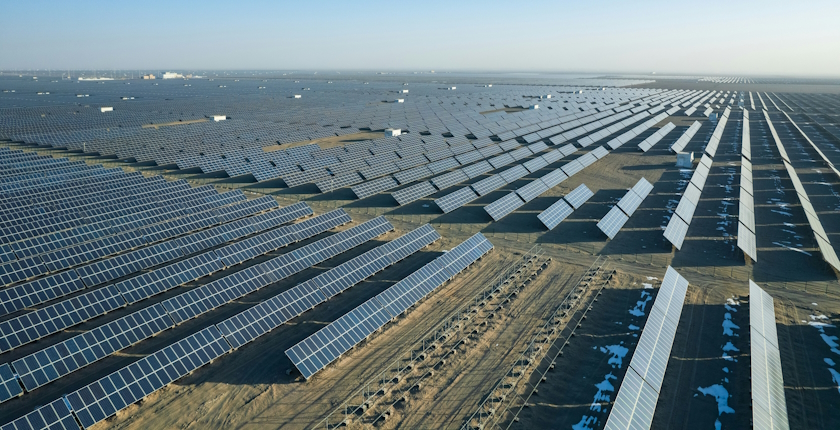
Romania’s third-largest city broke ground for a photovoltaic system on the location of a dormant coal power plant, using subsidies from the government and European Union. Iași Municipality noted it would become the biggest solar power plant run by any public administration in the country.
The project at the CET 2 Holboca coal plant is for a facility of 9.8 MW in peak capacity, translated to 9 MW in grid connection terms. Supported via the EU’s Modernisation Fund, the investment is worth RON 49.7 million, which is EUR 9.5 million at the current exchange rate.
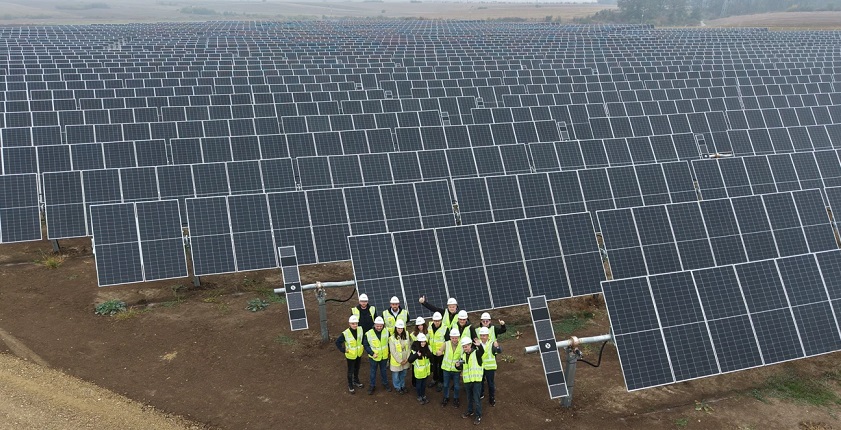
Annual output is seen at 9.85 GWh. The PV plant would have 13,068 panels of 750 W each and a maximum efficiency of 24.14%, as well as 30 inverters.
The tender for installation was estimated at RON 48.8 million (EUR 7.7 million), RON or 41.9 million (EUR 9.3 million) including value added tax. The municipality received six offers, of which five were valid. It selected the consortium of Electro-Alfa International with CRC for just RON 34.6 million (EUR 6.6 million). Launch is scheduled in late 2027.
“It is the most important step we are taking to reconfigure outdated energy structure and technologies that no longer meet current environmental requirements or the requirements of the energy market, with a new structure, with renewable photovoltaic energy,” Mayor Mihai Chirica said at the event.
The main contractor manufactures electrical equipment and provides engineering, procurement and construction (EPC) and information technology (IT) services. Electro-Alfa was listed in March on the Bucharest Stock Exchange following an initial public offering. Market capitalization is currently more than 80% higher, at EUR 581 million.
Phase 3 of local energy transformation involves 20 MW in battery storage
Iași is in Romania’s northeast, in the Moldavia geographical region, at the border with Moldova. The municipality is working on projects for gas-fired heat and power (cogeneration) plants, through the reconstruction of both existing units, of 25 MW each.
The third stage would encompass a 20 MW energy storage system and the introduction of a public-private partnership for boilers and turbines for waste from Holboca.
Iași Municipality apparently used up only 14% of the land that it designated for PV technology
Earlier, Iași designated forty hectares for photovoltaics, on land totaling 52 hectares. The first section spans 7.5 hectares. Initial plans also involved an electrolysis unit of 10 MW for the production of green hydrogen. The alternative fuel would be mixed into the natural gas network.
“We have invested tens of millions of euros in the district heating system and we will continue to exploit all financing opportunities so that Iași benefits from heating at a reasonable price. Through this investment, we will also become an important producer of electricity and thus contribute to balancing the national energy system… Through investments and efficient management, we can make centralized district heating the rational, ecological and competitive option!” Mayor Mihai Chirica stated.
The solar park under construction would be connected to the grid via a 650-meter line and a 110/20 kV substation.
Reșița installs its first phase of PV unit for self-consumption
Notably, the local authority in Reșița, near the border with Serbia, has just built an 8.5 MW photovoltaic plant. Production launch is expected next month.
The technical connection approval in 2023 was for 21 MW. Electricity will be for schools, kindergartens, street lighting and trams and electric buses. Estimated annual savings are EUR 1.6 million.