


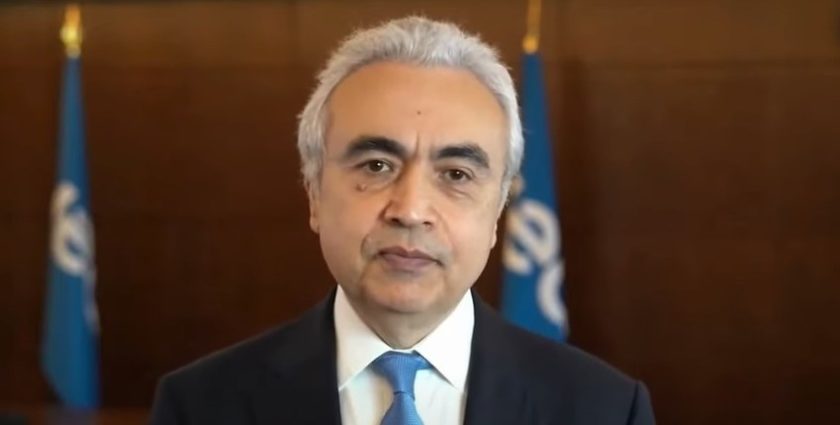
Far greater international cooperation is needed to move the world on the right path in meeting climate commitments and reducing greenhouse gas emissions, the latest report by leading international energy agencies warns. IEA Director Fatih Birol points out that strengthening cooperation is key to achieving zero emissions.
A new report by the International Energy Agency (IEA), the International Renewable Energy Agency (IRENA), and the UN Climate Change High-Level Champions emphasizes the need to strengthen international cooperation to reduce greenhouse gas emissions faster.
Birol: Through international cooperation, we can make the transition faster, cheaper, and easier for everyone
“Through international collaboration, we can make the transition quicker, cheaper, and easier for everyone – on the back of faster innovation, greater economies of scale, bigger incentives to invest, level playing fields, and benefits shared across all parts of society. Without this collaboration, the transition to net zero emissions will be much more challenging and could be delayed by decades,” IEA Executive Director Fatih Birol said on the occasion of the report.
The Breakthrough Agenda Report 2022 assesses that the international “collaboration gap” threatens to undermine climate progress and delay net zero by decades.
“We are in the midst of the first truly global energy crisis, with devastating knock-on consequences across the world economy, especially in developing countries. Only by speeding up the transition to clean sustainable energy can we achieve lasting energy security,’’ Birol stressed.
Experts set priorities
The authors recommend strengthening cooperation between governments, businesses, and civil society. They set out urgent priorities to rapidly make more clean technologies the most accessible options in key sectors of electricity, hydrogen, road transport, steel, and agriculture.
It is necessary to create new cross-border super grids in this decade, to increase trade in low-carbon energy, reduce emissions, improve energy security and enhance the system flexibility.
It also notes that research needs to be supported for alternative chemistry for batteries to reduce reliance on precious metals, such as cobalt and lithium.
The report argues that in addition to reducing emissions, stronger international cooperation will lead to a faster and cheaper transition while boosting job growth.
The authors state that the projected increase in global capacity of renewable energy sources is 8% in 2022, which would reach the limit of 300 GW, equivalent to powering approximately 225 million homes.
International experts have predicted cost reduction for global electricity production for 2022 by at least USD 55 billion, based on the new renewable capacity added in 2021.
Introduction to COP27
The report is also an introduction to the upcoming UN climate change conference COP27, which will be held in Egypt later this year.
Under the Breakthrough Agenda, 45 countries committed to making clean technologies the most affordable and available option
At the previous COP26 Summit, under the Breakthrough Agenda, 45 countries committed to making clean technologies the most affordable and the most available option in greenhouse gas-emitting sectors by 2030.
The COP27 must take clear and committed steps towards collective action to make clean technologies accessible and accessible to all, international experts reported.