







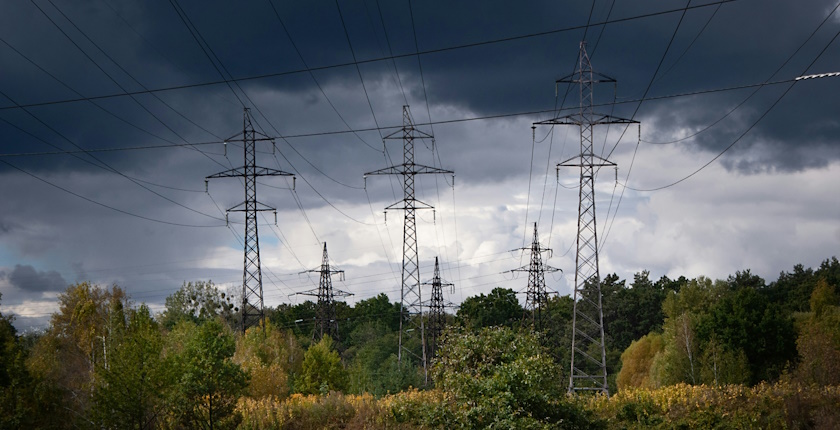
Photo: Andriy Nestruiev on Unsplash


In a comprehensive analysis, Transelectrica urged the authorities to support large-scale energy storage projects, especially for pumped storage hydropower plants. Given the projections for the expansion of wind and solar power and the shutdown of coal plants in Romania, it highlighted the increasing instability in the system and the market. The transmission system operator said the electricity system would require up to 4 GW in operating power in the storage segment with as much as 20 GW in capacity.
Difficulties in operating Romania’s electricity system are intensifying together with power price volatility in the market. Transelectrica urged the government to work on solutions and, in particular, facilitate the acceleration of the deployment of energy storage systems as part of the solution.
The transmission system operator pointed to the degradation of frequency stability and the rising risk of blackouts. The country’s renewable electricity generation capacity is expected to rise to 15 GW by 2030 from 4.6 GW, the state-owned company wrote in an analysis that Economica.net obtained.
Instability is intensifying with more coal plants taken out of operation, Transelectrica warns
Wind and solar power have intermittent production. Namely, it depends on the weather, so forecasting to match supply and consumption in the entire system is increasingly complex.
In addition, coal power capacities are being shut down alongside some gas facilities that don’t match the ever more stringent environmental standards. A total of 5.5 GW was taken out of operation between September 2017 and the beginning of June 2023.
Such conventional electricity plants provide necessary flexibility against the variability of renewables – wind and photovoltaics in particular. The changes brought by the energy transition and decarbonization are affecting the prices of balancing energy.
They are also making investment returns unstable. For instance, without substantial energy storage capacities, surpluses in production tend to prompt operators to cut wind parks and solar farms out of the system for a while.
Pumped storage hydropower required to match batteries in electric power system
Transelectrica said government incentives should be directed to large-scale energy storage facilities. The company added that the system should be based on pumped storage hydropower plants and battery energy storage in equal proportions, alongside hydrogen, compressed air and other technologies.
A criterion to consider when evaluating the investment is the lifetime: 50 years for a pumped storage plant against 10 years for a battery facility, the company said. Moreover, a portion of long-duration energy storage, of up to 12 hours, is necessary, it added. Pumped storage hydropower is more favorable there as well.
Transelectrica estimated that Romania would require energy storage systems with a total of 2 GW to 4 GW in operating power, lasting five hours across the fleet. It translates to between 10 GWh and 20 GWh in capacity.
More balancing reserves imply higher balancing energy prices
The massive deployment of renewables makes cross-border electricity flows more volatile, too. They are driven by price differences between countries and regions, Transelectrica explained. “Advanced production forecasting applications for renewable electricity sources are needed to ensure a reasonable level of adequacy of SEN [the national electricity system], but also to prepare for and handle high production variations, especially from wind, but also photovoltaics, from one moment to another, from one hour to another,” the document reads.
As for the increasing risk of outages, Transelectrica said more intermittency can lead to significant deviations between forecasts and the actual balance between supply and demand. They could cause cascade triggering of equipment and impact the interconnected operation at the European level, the document adds.
The system will need more balancing reserves, inevitably leading to an increase in the prices balancing energy, according to the company.
Prosumers emerge as energy transition pillar
Transelectrica highlighted the ongoing surge in the segment of prosumers and their photovoltaic installations.
The Romanian Energy Regulatory Authority (ANRE) said the number reached just under 130,000 at the end of April. Prosumers – households, firms and institutions – had 1.7 GW installed at that point. Notably, Romania has just passed a law obligating them to add batteries.
Legal entities have 1.1 GW in total and the rest are citizens. With the Casa Verde Fotovoltaice program, the regulatory body expects the number to hit 200,000 by the end of the year in Romania.



Be the first one to comment on this article.