


Renewables

Romania calls agricultural, food firms to apply for solar, wind power grants

Romania calls agricultural food firms apply solar wind power grants

Photo: Michael Förtsch on Unsplash

Published

December 25, 2024

Country

Comments

comments icon

0

Share

Published:

December 25, 2024

Country:

Comments:

comments icon

0

Share

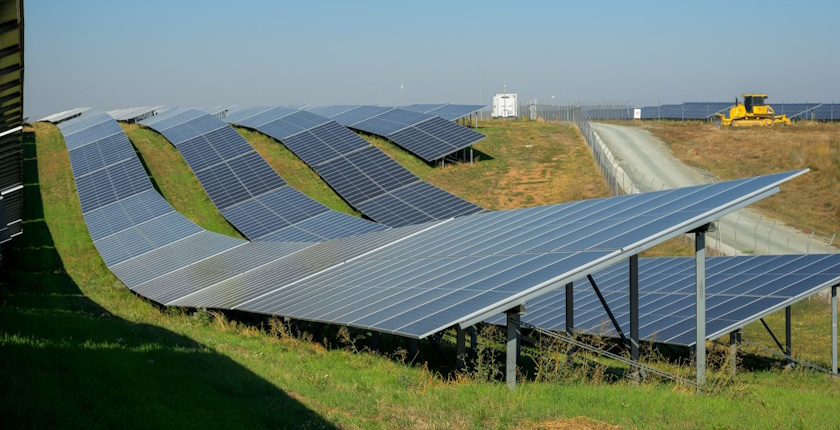
The Agency for Financing Rural Investments (AFIR) has EUR 150 million in grants for photovoltaic and wind power projects for self-consumption in Romania. The new call is for agricultural and food producers.

The Ministry of Energy of Romania is gradually disbursing EUR 14 billion in subsidies and grants for renewables. In cooperation with the Ministry of Agriculture and Rural Development, it is providing support for companies in the agricultural and food production sectors. Irrigation associations (categorized as OUAI/FOUAI) can apply as well.

The budget for the new call for solar and wind power plants is EUR 150 million. The aid comes via the European Union’s Modernisation Fund and the Agency for Financing Rural Investments (AFIR), operating within the Ministry of Agriculture and Rural Development.

Firms in Romania can apply until February 28 within the second call for photovoltaics and wind power plants for self-consumption. The grants are for facilities planned both with and without storage.

The support measure covers up to 100% of eligible costs. Developers of wind power projects get EUR 700,000 per MW of envisaged capacity. The sum for investments in solar power is EUR 650,000 per MW for future facilities of 1 MW at most. Companies will get EUR 550,000 per MW for more, according to AFIR.

There is EUR 2 million available for small wind power systems and EUR 18 million for the segment above 1 MW. The agency said it has EUR 90 million in total for PV systems of up to 1 MW each. Larger solar power projects are competing for an overall EUR 40 million.

Potential beneficiaries are allowed to submit more than one project. No company can receive no more than EUR 20 million, according to the rules.
Comments (0)

Be the first one to comment on this article.

Enter Your Comment
Please wait... Please fill in the required fields. There seems to be an error, please refresh the page and try again. Your comment has been sent.

Related Articles

serbia eu region bef 2026 cbam border eu western balkans

CBAM may hinder decarbonization and renewables, contrary to its intended aim

18 May 2026 - The European Union’s Carbon Border Adjustment Mechanism (CBAM) has caused serious disruptions to electricity markets...

NGEN Smart batteries AI are energy transition bedrock

NGEN: Smart batteries, AI are energy transition bedrock

18 May 2026 - The energy system of the future is decentralized, dynamic, and software-controlled, NGEN Group's representatives pointed out at BEF 2026

Governing the Unseen: Interdependencies in Europe’s Digital–Energy Transition and Sovereignty

Governing the Unseen: Interdependencies in Europe’s Digital–Energy Transition and Sovereignty

18 May 2026 - The growing digital-energy nexus is reshaping Europe’s energy transition, creating new opportunities and challenges for resilience, competitiveness and strategic autonomy.

Establishing a Robust Transmission Grid: The Essential Role of Balkan TSOs in the Green Transition

Balkan TSOs face green transition challenge: grids must keep pace with energy shift

18 May 2026 - Investments in grids, digitalization, and energy storage are key to ensuring security of electricity supply amid rapid decarbonization, representatives of regional TSOs said at Belgrade Energy Forum (BEF 2026)