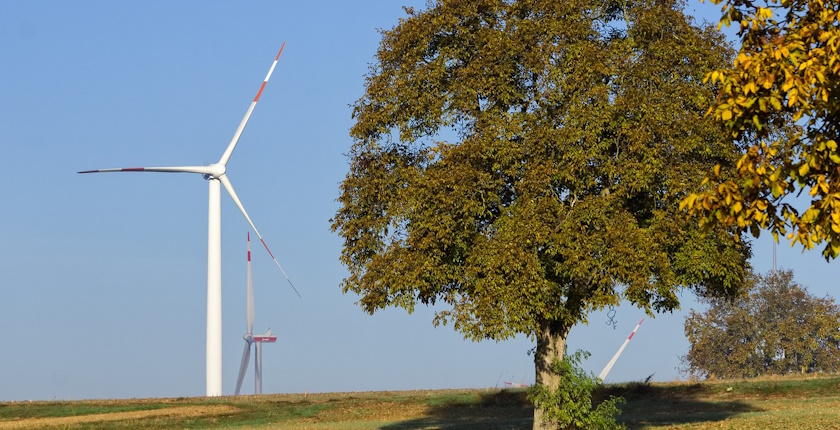


Last year power production in Romania grew 7.8% to 69.37 TWh, according to data from the National Institute of Statistics. Thermal power stations generated 1.65 TWh, a 6.2% increase on the year, hydropower output fell 12.2% to 16.69 TWh, and nuclear units produced 11.64 TWh or 0.3% less than in 2014. Wind turbines contributed 7.05 TWh, advancing 2.32 TWh, while photovoltaic facilities generated 1.99 TWh or 692 GWh more than in the previous year, the report said.
Consumption rose 6% to 52.57 GWh, where public lighting accounted for 30.6% more than in 2014. The population increased consumption by 3.7%, and the volume within power stations and networks fell 3.75%. Exports of electricity rose by 28.1% to 10.5 TWh.
Transmission operator Transelectrica SA’s data show electricity from renewable sources has grown in installed capacity to 5.14 GW by the end of last year. Wind farms in the system in Romania had 3.13 GW, photovoltaic panels accounted for 1.33 GW, small hydropower had capacity of 585 MW, while cumulative power of 103 MW was fuelled by biomass, Romania Journal reported. The overall production capacity in the system was a little larger, 5.2 GW, according to the article.
The National Energy Regulatory Authority (ANRE) had by December certified renewable energy facilities with 4.66 GW in aggregate installed capacity, shows a document posted on the institution’s website, The Diplomat portal reported. Wind farms accounted for 2.93 GW, photovoltaic – for 1.3 GW, waste-to-energy projects represented 106.5 MW and small hydropower plants with less than 10 MW accounted for 327.8 MW (new – 228.8 MW, retooled – 85.5 MW, old plants – 13.5 MW). There were 70 operators certified for the production of wind power, 514 for solar power production, 89 for hydropower and 25 for generating power from biomass and biogas.