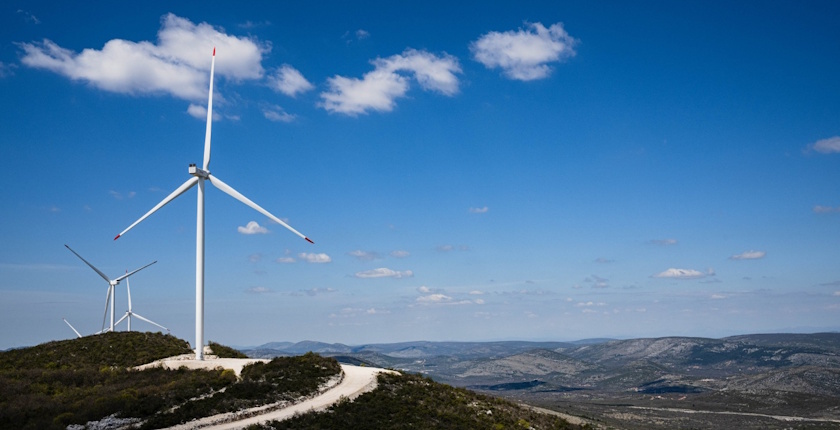


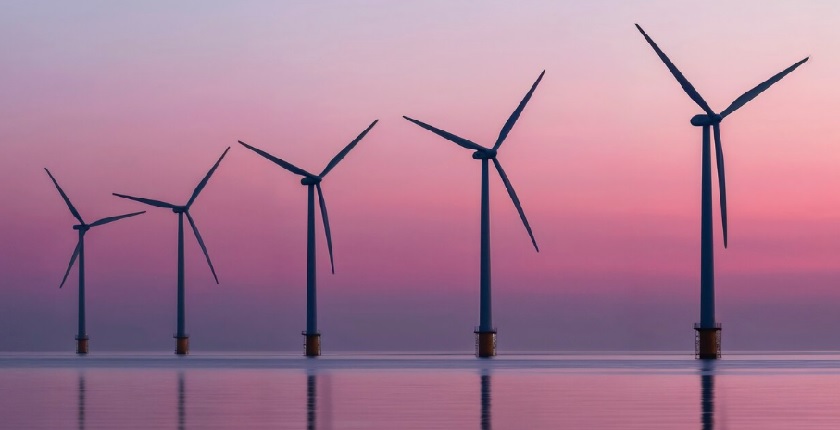
Two measures are under consideration for the first Greek offshore wind farms, to make them commercially viable in the long term.
The Hellenic Hydrocarbons and Energy Resources Management Company (HEREMA) submitted its proposal on how auctions will be organized. It includes participation terms, as well as two important regulations setting offshore wind apart from other renewable energy projects.
According to the draft, there would be flexible contracts for difference (CfDs) between selected investors and the government. The price would be adjusted to inflation and other factors such as the cost of capital, equipment and maintenance.
Furthermore, offshore wind farms will also benefit from a special mechanism against curtailment. “Given the size of these investments and their strategic importance, the enactment of a special mechanism is proposed, to be determined at a later stage by the ministry of Environment and Energy,” HEREMA noted.
Another issue is the maximum number of marine zones where an investor may participate. If a company wants to build offshore wind farms in more than one offshore development area (ODA), the proposed limit is 67% of the available ODAs.
Offshore wind needed for functional energy mix
HEREMA’s proposal is under public consultation. The Regulatory Authority for Energy, Waste and Water (RAAEY or RAEWW) will have the final say.
The National Energy and Climate Plan (NECP) calls for 1.9 GW of offshore wind by 2030, a goal that is now considered very hard to achieve. The Greek offshore program has been delayed for several years now, with the regulatory and legal framework taking a long time to develop.
Stefatos: We need to supplement photovoltaics with offshore wind
Recently, HEREMA’s head Aristofanis Stefatos highlighted the sector’s importance for the national energy mix.
“As energy storage takes time, we need to advance offshore wind to supplement photovoltaics. The country has the ability to install large wind farms in the Aegean with high capacity factors. However, they are not necessary for domestic demand, therefore we must look at power exports and better interconnections,” Stefatos added.