

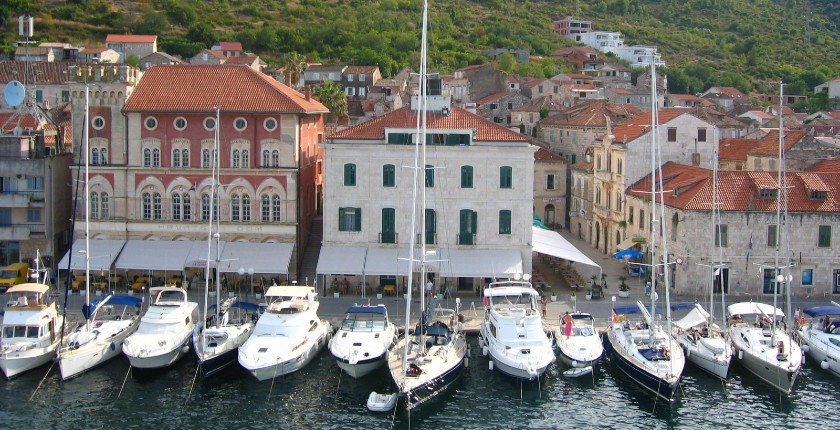
The City of Vis and the H2 association are developing a plan to build the first hydrogen filling station in Croatia. The fuel would be produced for boats and utility vehicles, using electricity from the island’s solar power plant and from waste treatment.
A solar power plant with a battery storage unit, run by Croatia’s state-owned power utility Hrvatska elektroprivreda (HEP Group), increased the energy independence of the City of Vis to 60%. The town is on an island of the same name, located 54 kilometers offshore Split. The next step is to produce green hydrogen and build a filling station, Mayor Ivo Radica told Nacional.
The local authority signed a letter of intent in July 2021 with the H2 – Hydrogen Cell association, which is active in the development and application of fuel cells. According to the document, the hydrogen filling station would be used for passenger and cargo boats and fishing vessels. The facility is planned to be built on municipal property.
Green hydrogen is produced from water using electricity from renewable sources, in electrolyzers that separate the liquid into hydrogen and oxygen gases. The City of Vis has stable water sources, Radica pointed out.
Project was submitted for public funding
“We already conducted all the necessary studies and produced documentation in cooperation with the H2 association and submitted them to European and Croatian investment funds in order to start producing hydrogen as soon as possible with the electricity from SPP Vis and the water in an electrolyzer and to build and commission a respectable filling station with enviable capacities by 2025. It would make us the first energy independent town in Croatia, which of course includes the entire Vis island,” he said. Radica added that by 2025 the local authority would spend EUR 6.7 million on utility vehicles and vessels that use hydrogen.
The City of Vis needs to secure EUR 2.9 million for the hydrogen filling station
“Together we initiated the projects for the remediation of the Wellington landfill in the town of Vis and for the production of hydrogen by gasifying municipal and other waste, for the production of hydrogen from the energy of the sun from the Vis SPP and for storing excess water, but also for the construction of the hydrogen filling station for utility vehicles, machinery, cars and personal vehicles in the territory of the town of Vis,” said Ivica Jakić from H2.
He explained that hydrogen would be separated from biosynthetic gas obtained from the treatment of organic waste. Vis needs to secure EUR 2.9 million for the hydrogen fueling station. The project with the H2 association includes the use of energy from wind, biogas and methanol.
Vis hosts largest battery in Croatia
HEP Group’s Vis solar power plant can produce 5 GWh of electricity per year with its 3.5 MW in capacity. It was commissioned in 2020.
The biggest battery storage system in Croatia was recently integrated with it. It has 1 MW in operational power and 1.44 MWh in capacity, which means it can work at full throttle for up to one hour and 26 minutes. The investment cost EUR 2.3 million, according to the energy company.
The Vis solar farm was the largest in the country when it was connected to the grid. In November, HEP Group commissioned its Obrovac photovoltaic facility of 8.7 MW in peak capacity, with a 7.35 MW connection.
Of note, Croatian oil and gas company INA said in November it would start producing green hydrogen at its oil refinery in Rijeka, using solar power.