



Western Balkan countries haven’t yet adopted the regulatory frameworks for the establishment of energy communities as the most developed form of citizen energy, which not only contributes to the decentralization and democratization of the energy sector but also reduces pollution and energy costs, according to the speakers at the second regional conference Citizen Energy Communities/Renewable Energy Communities – Why are we not moving forward?, held in Sarajevo.
The conference on citizen energy, organized by the Regional Center for Sustainable Energy Transition (RESET) from Bosnia and Herzegovina and the Heinrich Böll Foundation, was attended by more than 80 experts and representatives of local communities, non-governmental organizations, regulatory agencies, energy companies, international organizations, and financing institutions.
Professor Mirza Kušljugić, chairman of RESET’s managing board, said that in all Western Balkan countries there is great interest among private investors in constructing photovoltaic plants but that the development of citizen energy lags significantly.
It is clear, in his words, that such a trend in renewable energy wouldn’t result in the democratization of the energy sector and wouldn’t enable the participation of small consumers – households and small businesses – in the energy transition.
Kušljugić: Citizen energy in the region is losing the battle with private investors, which is bad for the sustainability of the energy transition
“It is an opposite direction than the trends in the developed EU countries, where the small consumers are the ones who are the majority owners of solar power plants, for example, 70% of all solar capacities in Germany, and 98% in Italy. Given that citizen energy is the basis of the sustainable energy transition, it is necessary to change the notable trends in the region urgently,” Kušljugić pointed out.
The participants at the conference agreed, in general, that the governments and parliaments in the Western Balkans region, along with state-owned power utilities, represent the main obstacle and bottleneck for an efficient and sustainable transition. They lack a clear vision and preferences, so therefore, they have no strategy, legislative framework, and action plans for the successful implementation of a sustainable energy transition, they stressed.
In addition to identifying bottlenecks for the development of energy cooperatives, the speakers at the event suggested how the Western Balkans could turn the tide with regard to the currently unfavorable situation.
No country in the region has regulated the energy communities concept

According to the participants, the Western Balkan has not fully transposed the European Union’s directives on citizen energy.
Serbia achieved the most significant progress lately, in the prosumer segment. The worst situation is in Bosnia and Herzegovina, which remains the only country in the European continent, where citizens cannot exercise their right to participate in the energy transition.
“Currently, there is a law in the Republic of Srpska enabling it, but all the deadlines for passing bylaws have been missed. Nothing has been done in the Brčko District, while a set of energy reform laws was adopted in July by the Federation of BiH. The most important one, the Law on Renewable Energy Sources has not come into force there,” stressed Damir Miljević, a member of RESET’s managing board.
Bosnia and Herzegovina comprises the Republic of Srpska and the Federation of BiH. The small Brčko district, in the country’s northeast, is formally a condominium of the two entities.
Moreover, no country in the region has yet adopted the regulations for introducing energy cooperatives (citizen energy communities and renewable energy communities) as the most developed citizen energy concept.
Power utilities, network operators, and regulators must keep up with the changes
For the concept of citizen energy to be successfully implemented, state-owned energy companies, transmission and distribution system operators and regulators must keep up with the requirements to accelerate the energy transition, according to the conclusions from the conference.
Unfortunately, the document adds, that part of the electric power system is lagging far behind and is the main bottleneck for an efficient and effective energy transition, especially regarding the integration of the energy produced by small consumers.
The lack of trained staff, failure to follow trends, outdated technical rules and procedures, and lack of interest in change threaten to jeopardize all the efforts to rapidly include the countries of the region in the third industrial revolution and energy transition, the participants concluded.
The governments and parliaments wrongly assume that state-owned power producers can and should be the leaders of the energy transition
The governments and parliaments wrongly assume that state-owned power producers can and should be the leaders of the energy transition.
It is mission impossible for them as they are facing an intensive transformation and transition with all the issues related to the closure of obsolete coal-fired thermal power plants and coal mines and the switch to renewable energy, the conclusions showed.
Individuals and non-governmental organizations are leading the way
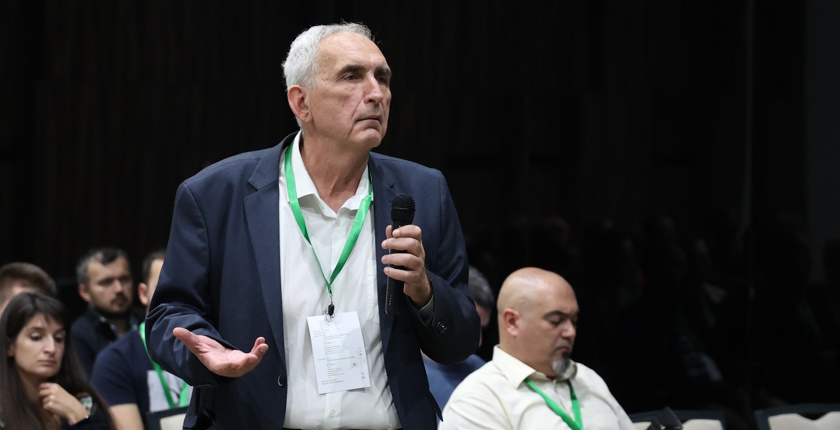
Despite all the obstacles, individuals and non-governmental organizations as well as some local authorities in the region are rapidly and successfully working on energy transition through creative solutions and initiatives. It demonstrates a strong interest, will and positive energy needed for change.
These examples can be an inspiration and guide for other local authorities, organizations, and individuals in the region to follow the same path and overcome the current unfavorable conditions, the conference participants said.
Financing is not a problem, there is money
Green projects make up 30% of the loan portfolio of Partner MKF, a domestic microcredit institution, and 20% at ProCredit Bank in BiH. Their representatives said the funds for citizen energy are sufficient and that they are also ready to provide grants.
There are various types of project funding and funds for such purposes available to local initiatives. Successful projects in the region that citizens funded demonstrate their readiness to invest in developing citizen energy and renewable energy communities.
The conference participants also pointed out that citizens’ savings are one of the potentially most important sources of financing. However, it is not sufficiently used due to the lack of adequate models, unclear legislative framework, and complicated administrative procedures, they underscored.