


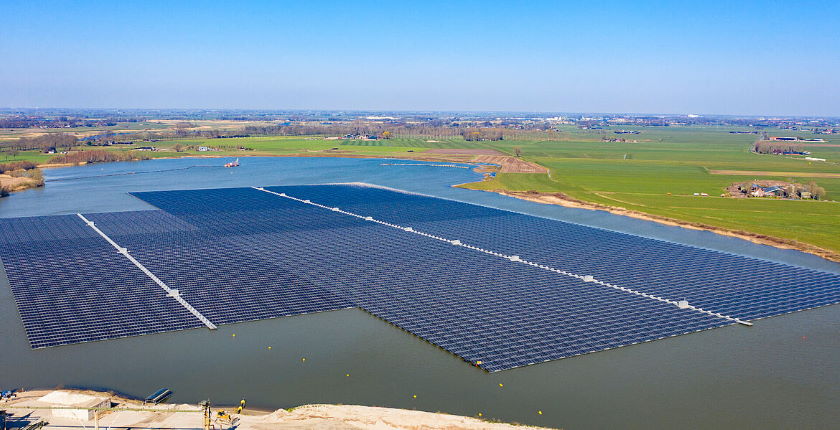
PPC Renewables plans to install floating solar power plants with 50 MW in total, starting with one of the largest lakes in Greece. It would be the first such unit in the country.
The subsidiary of Public Power Corp. tasked with the energy transition submitted another set of applications for photovoltaic plants as part of its push to replace open cast coal mines and thermal power plants of 3.5 GW in Greece with green power capacity. It filed paperwork for 650 MW with the Regulatory Authority for Energy (RAE) on top of the 1.9 GW in photovoltaics that it already received permits for, and 50 MW in the package is for floating power plants, local media reported.
The first such facility in the country is planned to be built on the artificial Polyfytos lake on the Haliacmon (Aliakmonas) river, according to unofficial information. The location for the floating solar power project is in Kozani in the northern part of Greece.
Several available sites in northern Greece
At 73 square kilometers, Polyfytos is one of the largest in the Balkan state. PPC Renewables is said to be determined to cover other artificial reservoirs in the area with solar panels. There are lakes on rivers Acheloos, Nestos and Arachthos as well as irrigation facilities and open pit coal mines on the way to be closed.
The overall size of the new applications is 650 MW, domestic news outlets learned. The Liberal wrote PPC intends to turn to offshore wind farms next. The dam on the Haliacmon hosts the 375 MW Polyfytos hydroelectric system.
Floating solar power plants are attractive as zero or minimal land purchase is required, among other factors. There are two floating solar power plant projects in neighboring Albania.
Renewable energy projects of 24 GW in total submitted for permits
PPC has earmarked EUR 3.4 billion for investments through 2023, of which 34% is intended for renewables. The state-owned utility targets an increase in green power output to 1.6 TWh from 0.3 TWh per year.
In other news, as many as 1,200 applications were submitted to the RAE for renewables producer certificates for a total capacity of 24 GW in the December round even before the expiration of the deadline. Photovoltaic projects account for 850 MW and wind farms participate with 250 MW.
PPC reportedly received 19 applications for the sale of 49% in the Hellenic Electricity Distribution Network Operator (HEDNO), also known for its Greek acronym DEDDIE. According to unnamed sources, United States–based investment management company Blackrock is among them. The deadline for expressions of interest expires on January 29.