







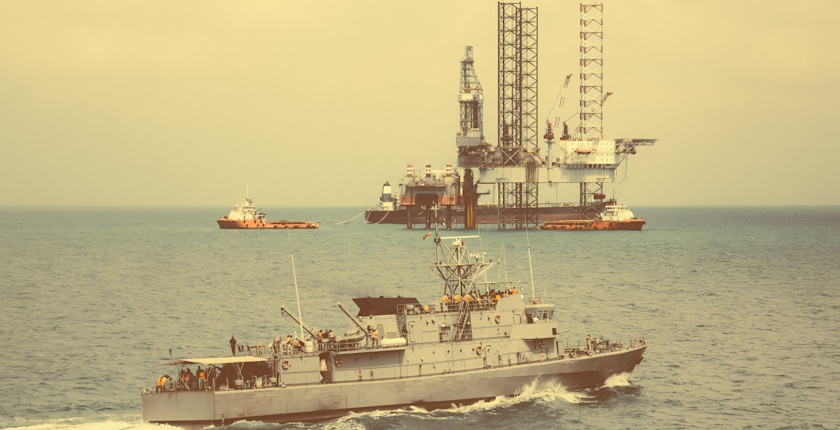
Photo: iStock


European gas prices skyrocketed more than 30% and Brent oil rallied almost to a four-year high as investors are getting more concerned that the war in the Persian Gulf region would lead to long-term damage to production infrastructure.
The carnage in fossil fuel markets is getting worse, and there is risk of unthinkable price swings, as hostilities have been intensifying since the United States and Israel attacked Iran on February 28. Europe’s benchmark TTF gas price spiked 31.7% to EUR 72 per MWh in the first minutes of trading today, before partly retreating. It would be the highest level at the close since late 2022.
Brent oil surged 8.6% today to USD 119.13 per barrel, testing a four-year high. Notably, think tank SolAbility has calculated that the price would hit USD 128 per barrel within a week, and a record USD 190 per barrel by early May if there is no immediate ceasefire.
World’s largest gas complex attacked
US President Donald Trump threatened to destroy Iran’s South Pars offshore gas field in case Iran keeps hitting back at Qatar. He did acknowledge that Israel bombed South Pars, which spread the war to the main production facilities. Extensive damage to such facilities could take years to repair.
Iran retaliated in the meantime by attacking the Qatari part of the shared field, where it is known as North Dome or North Field. Together, it is the world’s largest gas production hub. Iran has also hit the huge Ras Laffan energy and petrochemicals complex in Qatar, which includes a liquefied natural gas (LNG) terminal.
The attack took out 17% of the country’s LNG capacity, affecting contracted deliveries to Italy, Belgium, South Korea and China for up to five years, QatarEnergy’s Chief Executive Officer Saad al-Kaabi told Reuters. Several other commodity markets will be impacted as well, the article adds.
Extensive damage to oil and gas fields could take years to repair
Saudi Arabia reported an attempted attack on a gas facility and a hit on a refinery. A part of Kuwait’s largest oil refinery Mina al-Ahmadi briefly caught fire after a drone strike.
The Homuz strait, which is effectively closed, was a corridor for 20% of all global oil and more than 30% of black gold’s sea transportation. The passage accounts for a fifth of LNG trade, and a third of some of the main fertilizers and components for them. A minor share of the commodities has been rerouted so far.
Importantly, with the latest escalation, gas supply to Turkey is likely affected. It means it would spill over to the Balkans and beyond.
Sanchez: War is excuse to weaken climate policy
Prime Minister of Spain Pedro Sanchez said some people, whom he didn’t identify, are using the war to weaken climate policy including renewable energy and the energy transition. European energy should be “from the sun and the wind, and not oil,” in his view.
Notably, the spread between Brent and American WTI oil, which isn’t as affected by the Iran conflict, has grown as much as fivefold. Furthermore, benchmark Oman crude more than doubled to an all-time high above USD 165 per barrel.
Later in the session, TTF was going for EUR 63.3 per MWh or 15.8% up for the day. Brent traded at USD 114.53 per barrel. WTI even slipped 0.3% to USD 96 per barrel, following a jump to USD 99.14 per barrel.



Be the first one to comment on this article.