


As much as USD 3.5 trillion of global gross domestic product, or 3.15%, is at risk in case of a prolonged Hormuz strait closure, according to SolAbility’s projection. The think tank estimated that the price of Brent oil would peak at USD 128 per barrel or lower only with a ceasefire within the next two weeks. Otherwise, the price could reach USD 190 per barrel by day 62 of the current war.
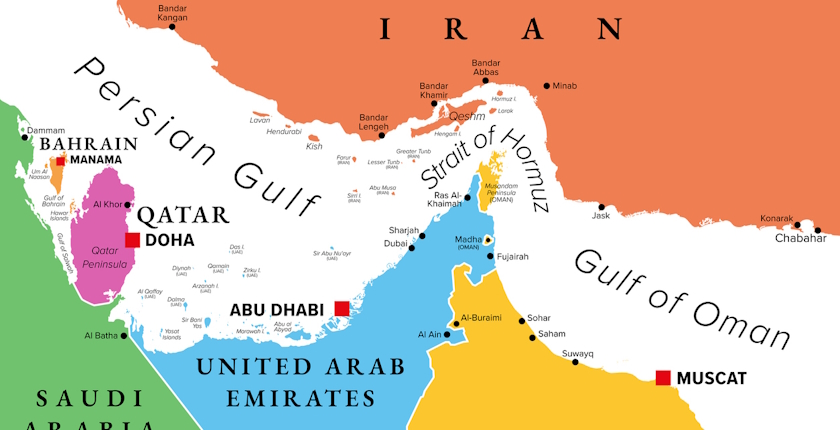
The Strait of Hormuz has been almost entirely shut since February 28, when Israel and the United States attacked Iran. It was the corridor for dozens of tankers each day, carrying 20% of the world’s oil supply. According to a projection by SolAbility, an independent think tank, just today the war cost the global economy USD 14 billion, and the toll peaks at USD 38 billion per day between the 65th and 75th day.
In the escalation scenario, where the Hormus passage remains closed, the global GDP loss reaches as much as USD 3.5 trillion or 3.15%. In addition to oil, the factors include shortages of liquefied natural gas (LNG) and fertilizers, rising inflation and shipping risk premiums.
The Brent crude oil benchmark peaks at USD 190 per barrel by day 62 and holds above USD 160 per barrel for a total of six weeks. Only a credible ceasefire in the next two weeks keeps the price at or below USD 128 per barrel, which it touches in eight days.
In the model, day 45 is critical because of irreversible agricultural damage if Hormuz isn’t reopened.
On day 90, inflation peaks at a whopping eight percentage points or more above the baseline in the most exposed economies. Notably, oil exporters such as Norway and Canada would experience strong gains in GDP.
As for the region that Balkan Green Energy News covers, the analysis includes Romania, which has a low dependence on oil from the Persian Gulf, and Greece and Turkey, both with moderate dependence. With Hormuz closed, losses after six months reach USD 2.5 billion (0.7% of GDP), USD 4.1 billion (1.7%) and USD 22.9 billion (1.9%), respectively.
Notably, the price of benchmark Oman crude more than doubled since the start of the war, to more than USD 150 per barrel. Brent closed above USD 100 per barrel for the fourth session in a row.