







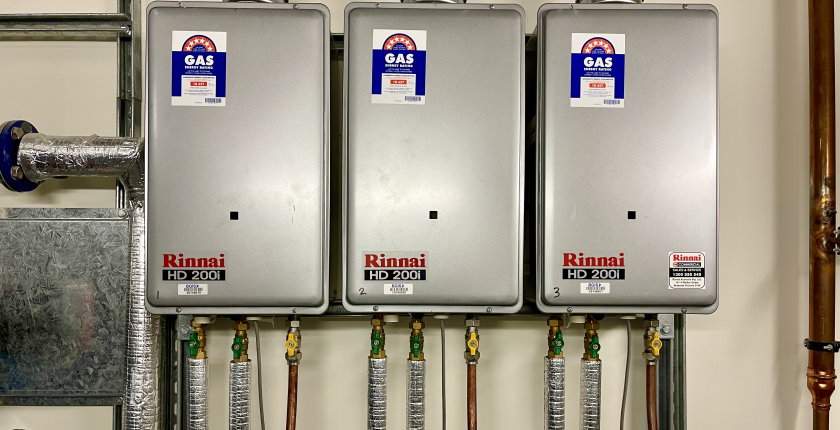
Photo: Kgbo / https://creativecommons.org/licenses/by-sa/4.0/legalcode


Austria is preparing legislation aimed at phasing out fossil fuels in heating, starting with a ban on the installation of gas boilers in new buildings from next year. Heating systems that use coal and oil should be switched to renewables by 2035 and the proposed deadline for gas is 2040.
Heating accounts for a quarter of Austria’s gas consumption, Minister of Climate Action, Environment, Energy, Mobility, Innovation and Technology Leonore Gewessler said as she presented the amendments to the Renewable Heating Act. She pointed out that buying foreign fossil gas, primarily from Russia, costs EUR 2 billion per year.
“Every gas heater that we replace with a sustainable heating system is a step out of dependency. Every apartment that we keep warm with sustainable heating makes us freer and less vulnerable to blackmail. That’s why from 2023 there should be an end to gas heating in new buildings,” Gewessler underscored.
The technology is currently set to be banned in 2025. Austria gets more than 80% of its gas from Russia.
Heaters can be switched to biogas but not to hydrogen
When a heating oil or coal heater breaks down, it will need to be replaced by a renewable heating system, and by 2035 the country will have replaced all of them, according to the plan. The government banned the installation of such devices in 2020.
As for heating on fossil gas, the proposed deadline is 2040 and such systems can also switch to biogas, the minister added.
Anyone who switches to renewable heating systems, for instance pellet and heat pumps, is entitled to EUR 7,500 from the government, Gewessler said. The federal states offer their own subsidies. The minister noted that poor households can have the entire cost covered.
The central government and federal states have earmarked massive subsidies for the introduction of renewable heating
In the national hydrogen strategy presented earlier this month, the use of the fuel for cars, trucks and heating was declared inefficient. The government said it wants to replace 80% of hydrogen generated from fossil fuels with “climate-neutral” hydrogen by the end of the decade. It is a broader category than green hydrogen, which is obtained by electrolysis using electricity from renewable sources.
The designation therefore leaves room for the use of so-called blue hydrogen. It is produced from natural gas, but carbon dioxide emissions are captured in the process so they don’t reach the atmosphere. Pink hydrogen is also made by splitting water molecules, but by using nuclear power, which is considered climate neutral.
Central government wants to break opposition to wind farm projects in some federal states
Separately, Gewessler has revealed propositions to simplify the planning procedure for wind power plants, mostly to prevent federal states in the west from blocking such projects. There are still no wind farms in Vorarlberg, Tyrol and Salzburg.
She said developers would be able to conduct environmental impact assessments for their projects even if the zoning process isn’t complete. Another idea is to make it easier for investors to adapt blueprints, for instance to opt for stronger turbines than they initially planned.
The European Union aims to accelerate wind and solar power projects at the expense of the environmental protection and zoning procedures
The move mirrors the upcoming measures from the European Union’s REPowerEU package, aimed at accelerating the deployment of wind and solar parks at the expense of the environmental protection and zoning procedures.
Austria is racing to become climate neutral by 2040. Another goal is to make electricity production completely green by 2030. The country switched its last coal-fired heat and power unit to reserve two years ago.


Be the first one to comment on this article.