







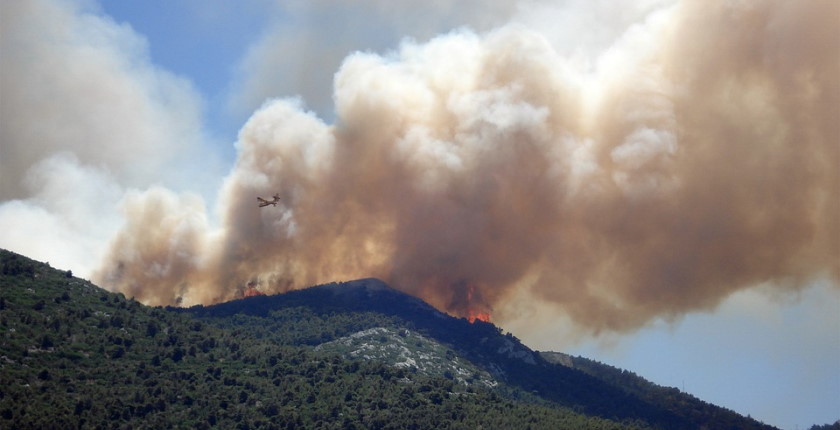
Photo: Saiho from Pixabay


Climate science and innovations, education of students and adults, adequate policies and rules are necessary to adapt to climate change in Bulgaria, which is already severely affected, WWF and the Konrad Adenauer Foundation warned. According to current forecasts, the temperature in the country is set to grow by as much as 4.4 degrees Celsius and precipitation could drop by over 20%.
WWF Bulgaria and the Konrad Adenauer Foundation Bulgaria presented a joint scientific study Bulgaria’s Climate Challenge with recommendations for necessary action. The authors warned that, according to current estimates, if greenhouse gas emissions continue at current levels, the planet would warm by approximately 2.7 degrees Celsius by 2100 from the levels registered in the preindustrial era.
Bulgaria is already one of the worst affected countries in Europe, they said and added the temperature there could rise by 4.4 degrees by the end of the century while that precipitation would drop more than 20%, threatening urban water supply and agriculture. Wheat and corn yields could also be reduced by one fifth in that case, the study shows.
Droughts, tropical nights becoming regular
Toward 2100, severe summer droughts will likely occur every year, while the frequency of catastrophic floods (now once every 50 years) could increase two to four times, the document adds. By 2050, Bulgaria may experience months of temperatures over 30 degrees and more than 40 nights when the temperature stays above 20 degrees Celsius, greatly increasing heat strokes and heat stress, scientists found.
In order to adapt and avoid the worst possible impact, climate science and innovations, education of students and adults, adequate policies and rules in line with the European Union’s goals are necessary, the study shows.
Economic transformation is a way to turn the challenge into an advantage, particularly with renewables, recycling and nature conservation
There are three critical goals: to preserve ecosystems, stabilize the climate and create a climate-neutral, circular and prosperous economy in Bulgaria, the two organizations pointed out.
Apostol Dyankov from the World Wide Fund for Nature’s Bulgarian branch said the country can adapt its industry, agriculture and nature protection in a way that not only minimizes the negative effects, but also brings benefits from the production and use of renewable energy, reuse and recycling and regeneration of natural ecosystems.
Bulgaria has biggest energy intensity in EU
The Bulgarian economy mostly depends on fossil fuels – coal for electricity, oil products for transport and gas for heating and industry. The country has the biggest energy intensity in the EU, using almost 400 kilograms of oil equivalent for every EUR 1,000 its economy generates, the report reads.
Businesses should significantly increase investments in solar power and other renewable electricity sources, zero-emission vehicle fleets and zero or even positive-energy production and office buildings, the authors stressed. They also pointed to energy cooperatives as a powerful model for change.
The government and businesses have access to European funds for climate action and the mitigation of impacts from phasing out coal
Bulgaria is entitled to EUR 6.3 billion in funding from the EU’s Recovery and Resilience Facility for climate mitigation and adaptation and another EUR 1.3 billion from the Just Transition Mechanism for the restructuring of its coal regions.
From July 2020, companies can buy 100% renewable energy on the Independent Bulgarian Energy Exchange (IBEX). Mila Dimitrova from the reporting team said the surge in electricity prices is making renewable energy sources – wind and solar – the cheapest even in Bulgaria, although that supply is limited. The Bulgarian Development Bank began lending to micro and small companies in September for photovoltaic plants, covering up to 95% of investments.



Be the first one to comment on this article.