






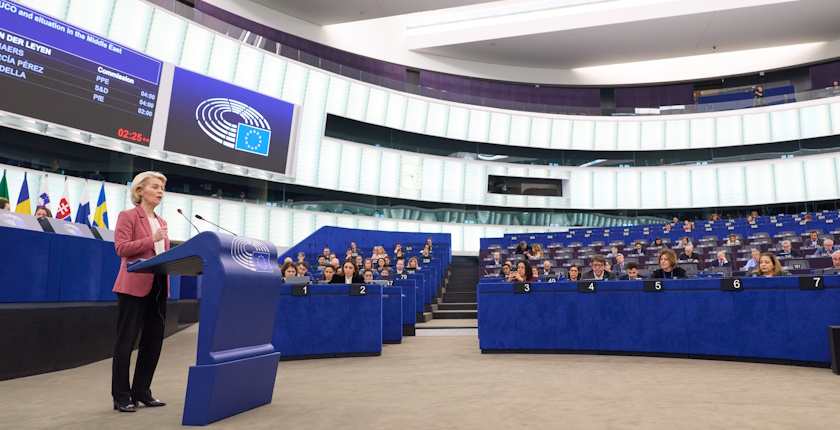
Photo: © European Union, 2026, licensed under CC BY 4.0/Dati Bendo


The European Commission is considering measures to restrict energy prices including a natural gas price cap to lower electricity bills across the continent, according to its President Ursula von der Leyen.
These measures have gained renewed urgency as natural gas prices have skyrocketed due to the armed conflict between the US and Israel on one side and Iran on the other, and the resulting disruption of shipments of oil and liquefied natural gas through the Strait of Hormuz, a crucial passageway.
Before the war, in late February, European benchmark TTF gas traded at EUR 31 per MWh. Following the escalation, prices surged by 100%, surpassing EUR 62 per MWh this week. The current price is above EUR 51 per MWh.
The cost of energy itself makes up more than 56% of electricity bills
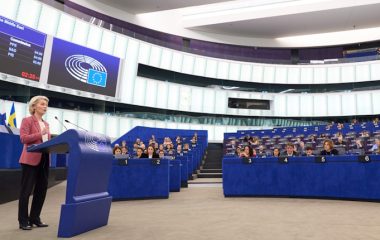
“It is crucial that we reduce the cost impact, when gas sets the electricity price. We are preparing different options: better use of power purchase agreements (PPA) and contracts for difference (CfD), state aid measures, exploring subsidizing or capping the gas price,” Ursula von der Leyen pointed out in a speech at a plenary debate in the European Parliament.
Von der Leyen recalled that the cost of energy itself makes up more than 56% of electricity bills, and the rest are grid charges, 18%, taxes and levies, 15%, and carbon costs, on average around 11%.
The commission intends to target all components of power bills
Of note, in the EU, electricity prices are set by the merit order system. The most expensive power plant needed to meet total demand determines the final price for all suppliers. Natural gas plants are often the last ones called upon, to balance the grid.
In addition to direct price mitigation, Von der Leyen said that the commission intends to target the remaining components of power bills.
There is room to increase the productivity of grids, so that less renewables are wasted, as well as to lower taxes and levies and modernize the EU’s Emission Trading System (EU ETS), she explained.
Be the first one to comment on this article.