





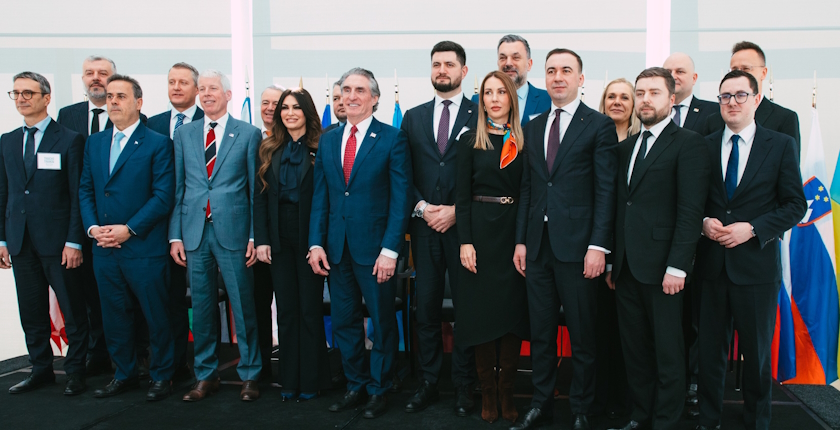
Photo: Emilija Čabarkapa / Ministarstvo rudarstva i energetike


Twelve countries of Central and Eastern Europe and the Balkans agreed in Washington DC to enhance gas supply in partnership with the United States, by facilitating access to its LNG and signing purchase contracts. The joint statement was signed on the sidelines of the Transatlantic Gas Security Summit. Several companies signed memoranda of understanding.
Energy ministers and representatives of more than 20 countries and the European Commission gathered in Washington DC at the Transatlantic Gas Security Summit. The US National Energy Dominance Council (NEDC) organized the event. In light of the European Union’s gradual ban on all kinds of Russian natural gas, 12 countries and the US signed the Joint Statement on Enhancing Security of Natural Gas Supply to Central and Eastern Europe. The main point is to facilitate the entry and supply of US liquefied natural gas (LNG).
Greece, Bulgaria, Hungary, Poland, Romania, Slovakia, Moldova, Ukraine, Croatia, Lithuania, Serbia and Bosnia and Herzegovina acknowledged that diversifying gas supplies and routes is vital for energy security.
The document envisages commercial contracts with US suppliers of liquefied natural gas
They are establishing a partnership with the US. The document was signed on the sidelines of a ministerial meeting. Chairman of the NEDC is Secretary of the Interior Doug Burgum, while Secretary of Energy Chris Wright is the vice-chairman.
The signatories commended regional efforts to enhance energy security by increasing the liquidity of regional natural gas markets and by entering into commercial contracts with US LNG suppliers.
They stressed that Ukraine has one the largest underground gas storage facilities in Europe. It should be integrated into regional gas markets, the officials pointed out. They agreed to eliminate regulations that hinder gas imports, or at least mitigate their effect.
Serbia to access new markets, sources
Serbia’s Minister of Mining and Energy Dubravka Đedović Handanović expressed support for developing and strengthening relations between Europe and the US in the energy sector within the Partnership for Transatlantic Energy Cooperation (P-TEC).
She explained that the statement doesn’t imply a complete shift to only one supplier, but rather increasing energy security.
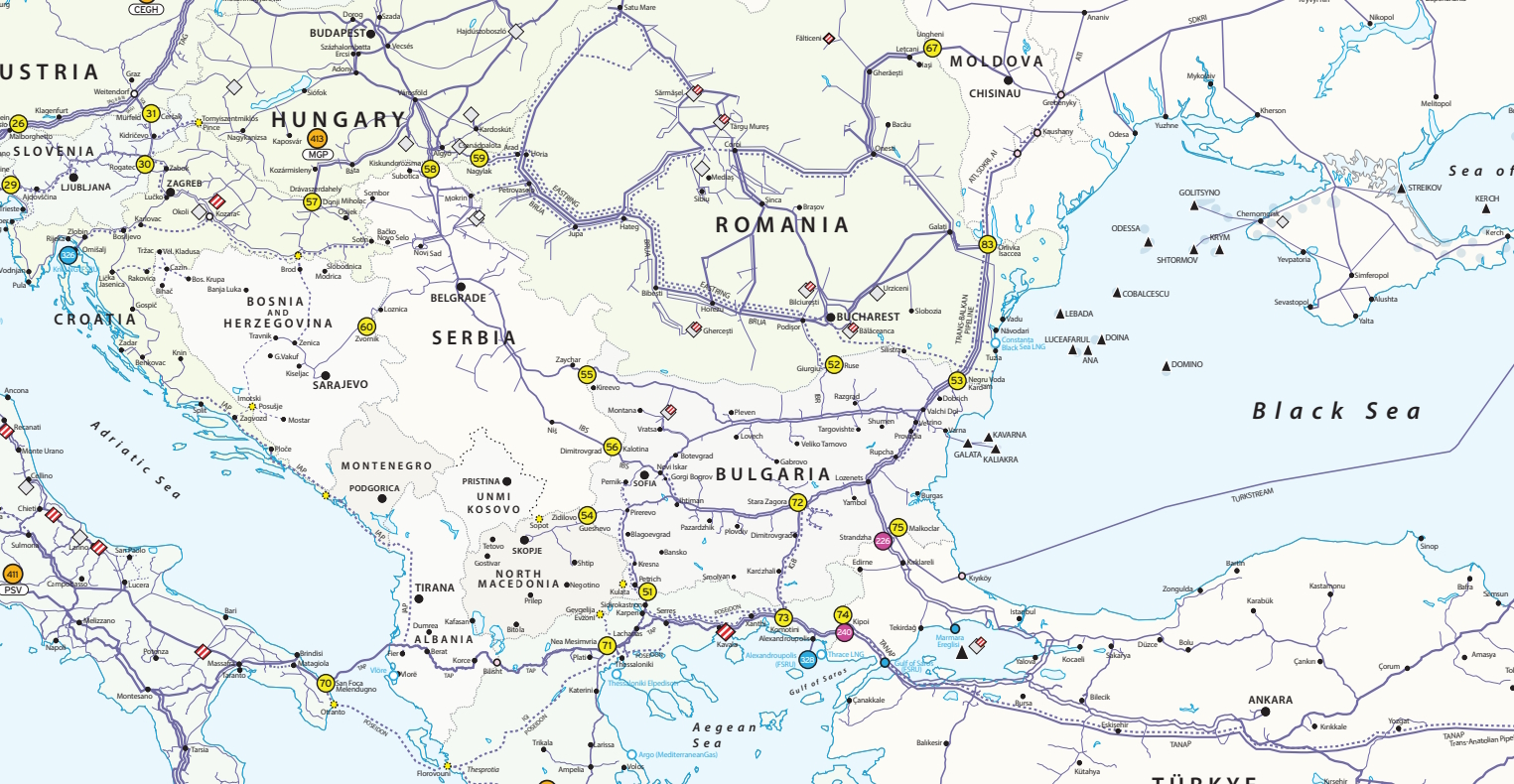
“By building gas interconnections toward North Macedonia and Romania in the next two years, along with the existing Serbia-Bulgaria gas interconnection, we will have the capacity to carry around four billion cubic metres of gas per year. With this infrastructure, we gain access to new gas markets as well as new sources and we get new supply routes,” Đedović Handanović asserted.
US accounted for more than two thirds of LNG supply to Croatia so far
At the Transatlantic Gas Security Summit, the discussion was not theoretical – it was about who in Europe is building alternatives and who is still explaining why they cannot, said neighboring Croatia’s Minister of Economy Ante Šušnjar.
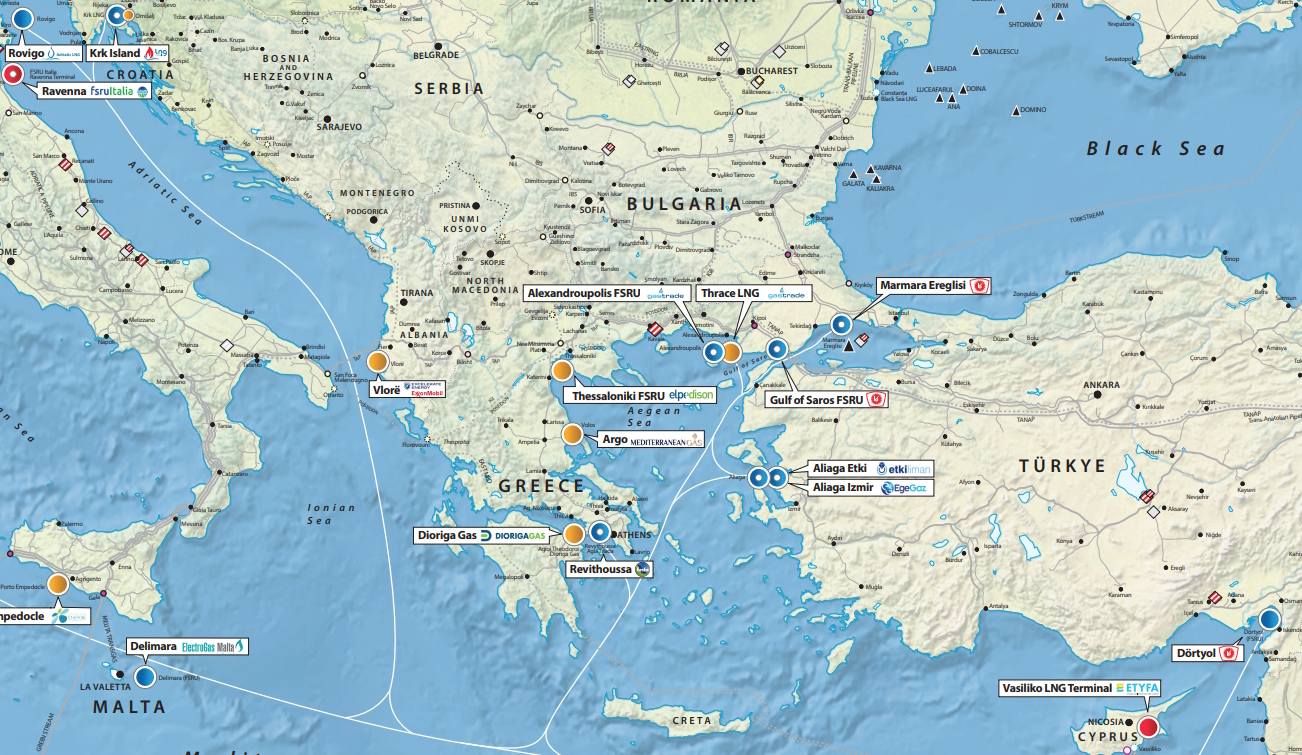
Croatia expanded its Krk LNG terminal to 6.1 billion cubic meters per year
“With the expansion of the Krk LNG terminal to 6.1 billion cubic meters per year, we now operate one of the key entry points for diversified gas supply in this part of Europe. The terminal is fully booked, with dozens of LNG carriers arriving each year. Since 2021, more than two thirds of cargoes have originated from the United States – a clear indicator of the strength and credibility of our transatlantic partnership,” he stated.
Croatia is planning interconnections with Bosnia and Herzegovina. Technically, it could easily establish a link with Serbia, as both gas grids almost reach the joint border.
Montenegro mulls pipeline, LNG terminal
Minister of Energy and Mining of Montenegro Admir Šahmanović, who attended the event, presented his country’s strategic priorities. They are the development of the Ionian Adriatic Pipeline (IAP), discussions about possible LNG capacities, and the construction of gas-fired power plants.
Amid an environmentalist protest against an LNG terminal project at the Bar port, the ministry stressed that there is no final investment decision yet. The only activities are analysis and feasibility studies. Any type of materialization will imply a comprehensive environmental impact assessment, the announcement adds.
“We see gas as a transitional solution that contributes to energy stability and accelerates the integration of renewable energy sources, and not as a long-term replacement for the green transition,” Šahmanović underscored.
Vertical Gas Corridor would be 20% more expensive for Hungary than supply via TurkStream
Hungarian Minister of Foreign Affairs and Trade Péter Szijjártó reiterated that his country is dependent on investments in the gas networks of its neighbors. It is interconnected with six out of seven of them.
The government welcomes diversification but it won’t switch to more expensive and less reliable supply, he stressed. Szijjártó said the Vertical Gas Corridor is an option but that its capacity is not yet sufficient. In addition, the prices are 20% higher than via the TurkStream gas pipeline, the minister pointed out.
Hungary has started receiving Turkish and Azerbaijani gas
On the other hand, Hungary is already receiving gas Turkish and Azerbaijani gas, he noted. The country has also signed long-term contracts with US suppliers Chevron and ConocoPhillips and is negotiating with Romania, which plans to start exporting large quantities next year.
Minister of Energy of Romania Bogdan Ivan said companies in his country would be able to earn up to EUR 500 million more when the Vertical Gas Corridor is completed. It is envisaged to expand the flows from Greece toward Bulgaria, Romania, Moldova and Ukraine.
They plan to transport the fuel from LNG terminals Alexandroupolis and Revithoussa in Greece, and from the Caspian region, via the Southern Gas Corridor. Projects for other terminals are underway, for instance Dioriga near Athens.
Greece’s Papastavrou warns that Russian gas could return through back door
Minister of Environment and Energy of Greece Stavros Papastavrou called on the EU and US to ensure that Russian gas doesn’t return to Europe. He highlighted the path through Turkey. Russian gas could find another way in, and at a competitive price, which would undermine the process, the minister warned.
The US has become the dominant supplier of EU with LNG, accounting for almost 60%, Papastavrou underscored.
Bulgaria has the opportunity to become a gas supply and transit hub connecting Southeastern, Eastern and Central Europe, Acting Minister of Energy Traycho Traykov said.
Several provisional deals for LNG supply
However, investments in the Vertical Gas Corridor will become cost-effective only with long-term procurement and supply deals. Delays are also jeopardizing the projects for LNG terminals in Greece.
Companies signed six memoranda of understanding in Washington DC. Among them is Atlantic SEE LNG Trade, a joint venture between Greece-based Aktor Group, holding 60%, and DEPA Commercial. The latter is also known as DEPA Emporias (in Greek), DEPA Commerce, DEPA Trading and DEPA Trade.
The firm signed deals with Ukraine’s Naftogaz, Bulgaria’s Bulgargaz, M.T. Abraham Group’s subsidiary Aluminij Industries in Bosnia and Herzegovina, and the Ministry of Infrastructure and Energy of Albania.
Shell signed deals with Metlen and MET Group
Metlen Energy and Metals and Shell agreed to cooperate in LNG supply and gas trade of half a billion one billion cubic meters per year, from 2027 to 2031. The fuel would arrive through Revithoussa and Alexandroupolis.
MET Group also signed a memorandum of understanding with Shell, to expand long-term cooperation. It is opening the way for MET International to purchase LNG, primarily from Shell Global LNG’s US portfolio. It would be delivered to various European regasification facilities, they said.
Earlier this month, North Macedonia and the United States signed a trade agreement that includes the procurement of liquefied natural gas.

Be the first one to comment on this article.