


Though ignored by politicians, the long-standing struggle against the construction of hydropower plants (HPPs) in the region is gaining more and more support from Europe and the world. Two world-known artists, as well as environmentalists, musician Manu Chao and actor Leonardo DiCaprio have supported initiatives to halt the construction of HPPs on Mt. Stara Planina in Serbia and on the Vjosa river in Albania.
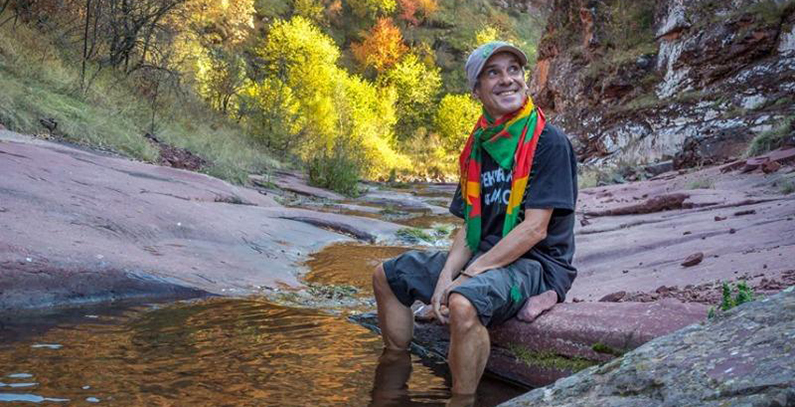
After a concert in the Serbian city of Niš, Manu Chao met with activists of the Defend Rivers of Mt. Stara Planina movement. He listened to their story and said that he had already come across similar problems.
The musician also visited the village of Topli Do on Mt. Stara Planina, which was recently the scene of clashes between residents of the village and activists on the one side and security personnel and workers accompanying the investor in small hydropower plants (SHPP). Manu Chao supported the village residents fighting for their survival and activists who want to raise their voice against this crime.
I’ve seen things like that all over South America, he said, adding that people are fighting everywhere. According to him, somewhere the reason is hydropower plants and somewhere mines or Monsanto.
I know people have won many battles because they were united, he said.
https://www.facebook.com/dmbvideo1/videos/1607837469365189/?t=0
Not too far from Mt. Stara Planina, some 500 kilometers southwest, activists in Albania are putting an effort to stop the construction of HPPs on the Vjosa river. Recently, nearly 150 national and international NGOs asked the Albanian government to stop the construction of HPPs on the Vjosa river.
Leonardo DiCaprio has posted on his Instagram profile a short video about the Vjosa river and quoted an article published by the AP.
This is one of Europe’s last wild rivers. But for how long? The Vjosa river runs through the forest-covered slopes of Greece’s Pindus mountains to Albania’s Adriatic coast. Albania’s government has set in motion plans to dam the Vjosa to generate much-needed electricity for one of Europe’s poorest countries, with the intent to build eight dams along the main river, DiCaprio quoted the AP.
Rivers are a crucial part of the global water cycle, because they act as nature’s arteries, carrying energy and nutrients across vast landscapes, providing water for drinking, food production and industry, reads the AP article.
https://www.instagram.com/p/B4ShcDzFnOc/
Comments (1)
Helena
Koji carevi!!!