


Bulgaria’s decision to introduce a high transit fee for Russian gas that passes through its territory will substantially affect Greece as well. The government in Athens has not yet officially commented on the issue.
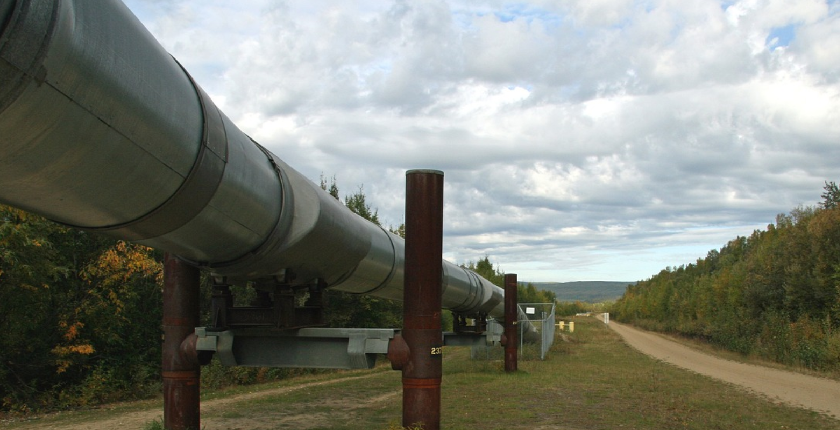
Last year Russian Gazprom decided to cut all gas supplies to Bulgaria, however quantities are still delivered to other clients via the Turk Stream pipeline and the Bulgarian network.
The decision by the government in Sofia means these volumes will be burdened with a EUR 10.2 per MWh fee, equivalent to one fifth of the current TTF gas price, the European benchmark.
Both Serbia and Hungary reacted by saying it was a hostile act that would hurt their consumers. Things are even worse because the fee was imposed right at the beginning of the heating season, when demand for gas grows. The levy will hit Bosnia and Herzegovina as well.
The decision also affects Greece, which so far this year has covered 42.6% of its gas demand using Russian gas. According to the National Natural Gas System Operator – DESFA (also known as Hellenic Gas Transmission System Operator), out of 52.67 TWh of total consumption during the first nine months of 2023, 22.45 TWh came from Russia in the form of pipeline gas (16.18 TWh) and liquefied natural gas or LNG (6.27 TWh).
Bulgarian Prime Minister Nikolai Denkov specified that the new fee will not have to be paid by the end consumers but by Gazprom. He added that through this surcharge, the price of Russian pipeline gas would be equivalent to LNG supplies, therefore there would be more competition. In any case, Bulgaria revealed that it is discussing the matter with the European Commission.
Bulgaria not allowed to unilaterally impose tariffs
The regional market will now have to wait for Gazprom’s reaction. If the Russians choose to cut supplies altogether, then consumers in Serbia, Hungary and Greece will have to find alternative sources, mainly LNG. It comes at a rather difficult time, since the Alexandroupolis LNG terminal in northern Greece is not yet able to provide more quantities.
Greece can export gas northwards from its LNG terminal in Revithoussa (Revythousa) and through the IGB pipeline, however it remains to be seen if they will suffice. The country exported large quantities of gas last year to Bulgaria to replace its lost Russian gas, but there is a limit to the utilization of its sole LNG terminal. Obviously a lot would depend on weather conditions and other factors affecting demand dynamics.
Kapros: Move by Bulgaria has no legal ground
There is also the legal aspect of this whole matter: Professor Pantelis Kapros from the National Technical University of Athens (NTUA) said no European country is allowed to impose tariffs on its own without approval by the European Union. Bulgaria made the announcement without consultation with the administration in Brussels, therefore the move is highly disputed from a legal standpoint. Kapros expects that “shortly there will be appeals from several countries to overturn this fee.”
Sources familiar with the matter from the Greek Ministry of Environment and Energy said today that in the event of a complete halt of Russian pipeline supplies, Greece would be able to source more LNG to cover the shortfall. Obviously, this means that the country can cover its own needs, but it is not specified if there will be enough left for Bulgaria.
Long-term effects
The best-case scenario for the three importing countries is if Brussels decides to turn down the Bulgarian tariff, thus ending the matter.
In the event that the European Commission greenlights the tariff, then the best outcome is if Gazprom decides to accept the extra cost and continue supplying them. Since the Bulgarian government made negative remarks against Russia, it is questionable. Denkov himself notably said that “these countries must decide whether they are part of the European family, or if they are with Russia and China.”
In the long term, the move benefits Greece’s ambition to become a regional gas hub. Apart from the Alexandroupolis LNG terminal, the country is also planning a new gas pipeline to North Macedonia, an upgrade of the TAP pipeline, as well as various projects to modernize its gas network. Altogether, the investments will allow Greece to export larger quantities of gas from LNG northwards in the years to come.