


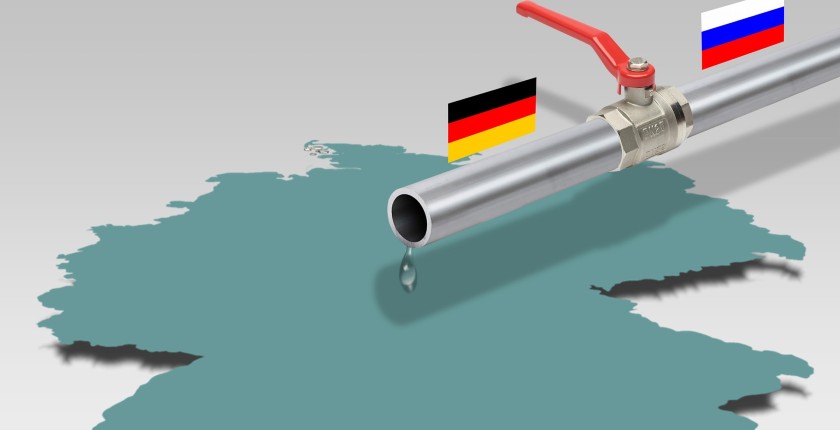
Despite the interruption of the natural gas flow from Russia, its largest supplier, and the uncertainty with regard to purchases from other countries, Germany still wants it as a transitional fuel, according to documents from the Ministry of Economy and Climate Action. It plans gas-fired power plants with a combined capacity of 21 GW, compared to the current 27.5 GW.
Germany wants new gas power plants as a backup for when wind farms and solar power plants don’t produce enough electricity due to unfavorable weather conditions, Euractiv reports. However, such units have to be technically prepared to switch to hydrogen. Germany is actively working to secure hydrogen deliveries, and recently it made a major deal with Norway.
The country presented an energy transition plan in January 2022 that envisages an important role for gas power plants. It was just before the war in Ukraine started and totally changed Europe’s energy map. Gas prices reached EUR 360 per MWh or six times more than before the energy crisis, and the security of supply became an obsession of governments around the world.
The government aims for a share of renewables in electricity of 80% by 2o30
But the German government still wants the share of renewables in electricity to reach 80% by 2030, where coal use must end and gas power plants should provide the remaining 20%.
Investments in gas-fired power plants still make sense, according to the documents of the Ministry of Economy and Climate Action, but only with the necessary infrastructure for importing liquefied natural gas (LNG) and if prices get lower.
The regulators told the ministry they expect the construction of gas power plants with a combined capacity of 17 GW to 21 GW in the coming years and argued that it is the most effective approach. The level is similar to earlier estimates made, for example, by Markus Krebber, CEO of RWE, who said Germany needs 20 GW to 30 GW in gas-fired power plants.
New gas-fired power plants will have to be equipped to switch to hydrogen
Of course, it is necessary to secure the supply of the fuel. Germany is strongly in favor of LNG. It wants import capacities with the required technology at the end of 2023 to be equivalent to two thirds of the quantities that used to come from Russia. The country opened its first floating LNG terminal in mid-December, and four more are scheduled to be built this year.
Confronted with criticism from environmental groups that natural gas is yet another fossil fuel, the government said new gas power plants must be equipped to switch to hydrogen.
Germany covered about 50% of its gas consumption from Russia before the war in Ukraine, while the remainder was supplied by the Netherlands, Norway and domestic sources. After the start of the war, imports from Russia decreased, reaching zero in December. In the meantime, non-EU suppliers entered the market with a 25% share while Norway and the Netherlands increased their cut by 25 percentage points.
In December, the biggest supplier to Germany was Norway, with a 37% share.