





Photo: Balkan Green Energy News


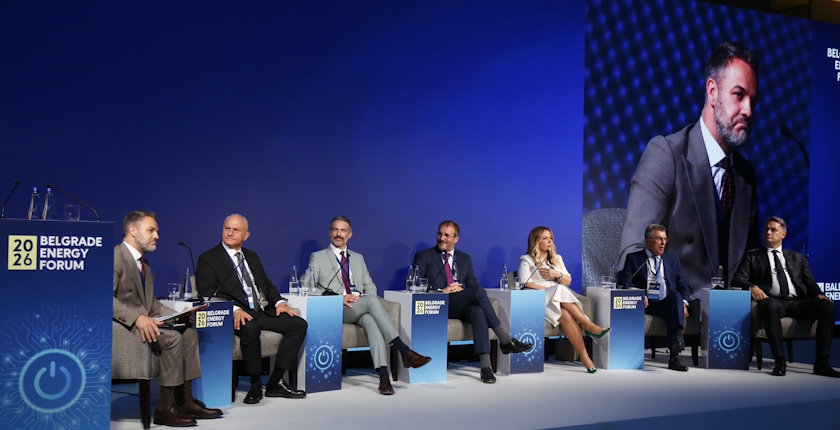
Energy companies in the region face simultaneous challenges concerning energy security, decarbonization and digitalization, and the key to a successful transition will be investing in the grid, battery systems and new production capacities, according to the panel titled Power System Transition towards Flexible, Secure and Decarbonized Future, at Belgrade Energy Forum – BEF 2026, organized by Balkan Green Energy News. The main responsibility is to maintain the security of supply alongside stable business operations and room for investment.
General Manager of Serbia’s state-owned Elektroprivreda Srbije Dušan Živković said energy companies today are navigating parallel pressures of maintaining energy security, digitalizing and decarbonizing, along with the need for all the processes to remain financially sustainable. At the same time, the European Union’s Carbon Border Adjustment Mechanism (CBAM) increases costs, he pointed out at Belgrade Energy Forum – BEF 2026.
Within a panel titled Power System Transition towards Flexible, Secure and Decarbonized Future, Živković warned that electricity production from fossil fuels would decrease while the process of reducing carbon dioxide emissions would intensify, adding that the growth of digitalization, artificial intelligence and data centers simultaneously is increasing the need for electricity.
In his opinion, the biggest challenge in managing energy companies will be how to preserve energy security while ensuring stable financial operations and room for investments in new production capacities.
Živković recalled that through energy efficiency projects and the revitalization of hydropower plants, Elektroprivreda Srbije increased the capacity of its hydropower assets by more than 100 MW, and that it revitalized the Bajina Bašta pumped storage hydropower plant, more than 40 years after its construction. “The clear goal is for it to continue its lifespan and keep ensuring Serbia’s energy security,” said the chief executive of the power utility, also known by its acronym EPS.
The panel moderator Nikola Bitrak, CEO of consulting company Colenco Ltd, stressed that decarbonization is a reality, adding that development in the field of renewable energy sources is very fast and that the system cannot keep up with it.
Belgrade Energy Forum, organized by Balkan Green Energy News, is being held for the fourth consecutive year in Serbia’s capital city.
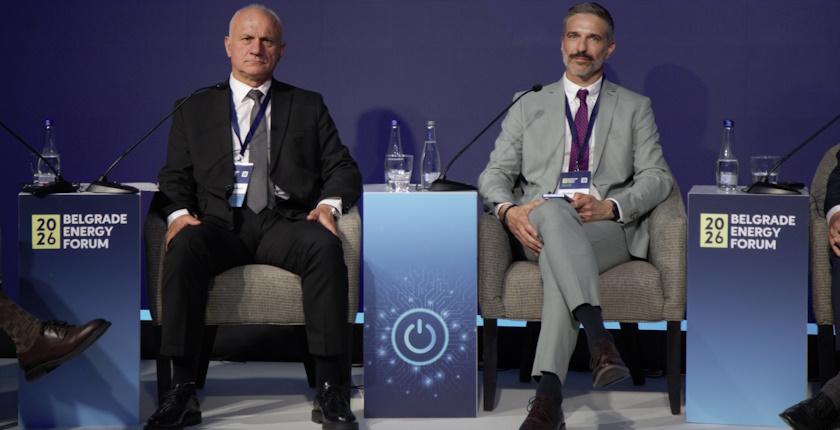
Jakšić: Bottlenecks are in grids
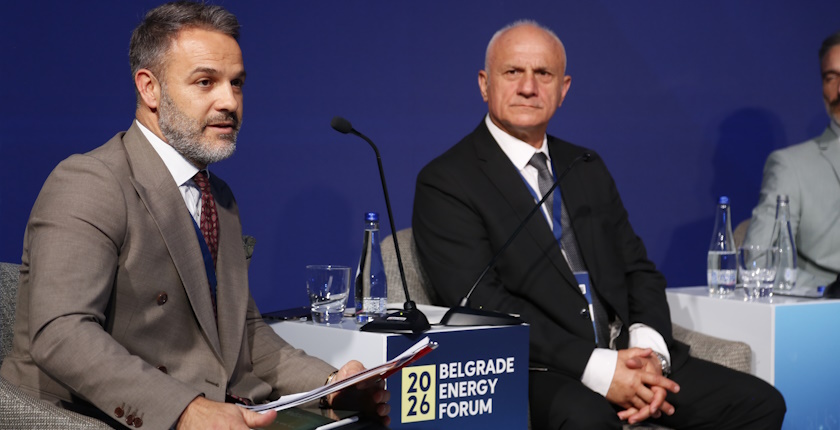
The Director of Zagreb-based Energy Institute Hrvoje Požar, Dražen Jakšić, opined that the region recognized the need to decarbonize and accelerate the construction of renewable energy facilities, and highlighted the countries’ ambitious renewable electricity share targets of 40% to 50% for 2030.
He added that it shows there is political will for an energy transition, but also with interest from investors and a rising number of financial mechanisms that can support green projects.
Power systems in the region were not designed for large-scale integration of renewable energy sources, and the share of inflexible coal-fired generation is high
However, he warned that the main limitation and bottlenecks for the development of renewable energy sources lie on the grid side. “It is not unique to this region. It is happening across Europe, and in all countries worldwide that have embarked on a stronger green transition,” Jakšić said.
He added that the region’s power systems were not designed for large-scale integration of renewable energy sources, and that the high share of inflexible coal-fired generation presents an additional problem.
According to Jakšić, the region lacks battery systems, flexible power plants and fast-start gas power plants to stabilize the system amid a high share of wind and solar output. “What is missing is grid development, batteries and market mechanisms that would help integrate renewable energy sources,” he asserted.
Route to market is most delicate matter
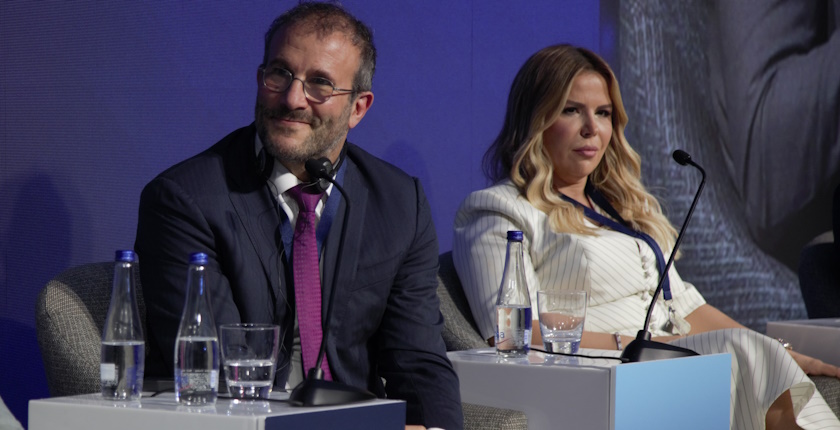
Renewable electricity producer Akuo Energy Group takes into account the specifics of every country, energy sovereignty issues, but also an economy’s competitiveness of and climate change, Chief Executive Officer Bruno Bensasson said.
The fall in prices of renewable energy, from solar and wind, is making the energy transition easier, although reducing the reliance on gas and oil is not a simple process, he added.
Speaking about challenges for investors, Bensasson said there are grid issues across Europe – including Germany, France and the United Kingdom – and not only in the Western Balkans.
He also pointed to the permitting process as one of the challenges. In Serbia, there are national and local levels of administration, where local procedures sometimes present a greater challenge, he underscored.
“And the last thing, perhaps the most delicate one, is the route to market. And once you have a good route to market, you will find financing. There are the long-term contracts, they can be public – contracts for difference (CfDs), or private. And there are short-term contracts. But being short term on the market is difficult. And CBAM doesn’t help either,” Bensasson explained. Akuo has several long-term contracts and power purchase agreements (PPAs) in Southeastern Europe.
Lazendić: Serbia did everything for establishment of regulatory framework attractive to investors
Energy expert Neda Lazendić noted that Serbia has conducted its second round of renewable energy auctions, so that now the projects that received state support are due to be materialized.
She revealed that investors are already asking when the third round of auctions would be organized, especially with regard to the three-year plan.
Banks require long-term contracts to finance projects, but the corporate sector is still not ready to offer sufficiently long PPAs
“Serbia has done everything that concerns the establishment of a regulatory framework that will be attractive to investors. Now the delivery phase must follow. For all projects that have started and applied for connection to the transmission system, we need to see how many will be realized and how many will free up the grid for some other investment rounds,” she asserted.
Lazendić added that aligning new technologies, especially equipment from China, with European grid rules requires additional time and adjustment.
Speaking about the next phase of market development, she stressed that the key would be in direct contract arrangements between green energy producers and industry. Lazendić underscored that banks require long-term contracts to finance projects, but that the corporate sector is currently not ready to offer sufficiently long power purchase agreements.
Đukanović: CBAM is opportunity for development
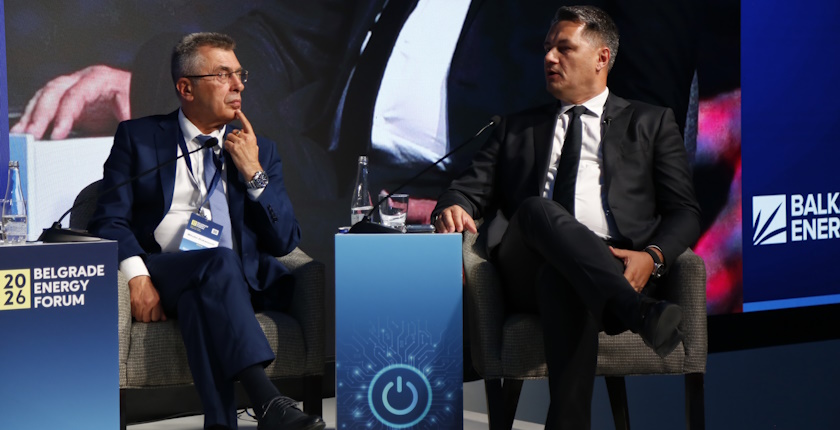
President of the Board of Directors of Elektroprivreda Crne Gore (EPCG) Milutin Đukanović said the Montenegrin state-controlled utility is conducting the transition in a planned and responsible manner, while maintaining the country’s energy stability and strengthening domestic production capacities.
He pointed out that green energy sources, excluding hydropower, can hardly achieve their full potential without a strong development of battery systems.
EPCG’s top official expressed the opinion that CBAM should not be viewed only as a burden, but also as a development opportunity for the region. Đukanović added that electricity production must remain under state control because it is a strategic economic branch.
He added that EPCG is intensively investing in renewable energy sources, system modernization and the strengthening of Montenegro’s energy security, and that its goal is to be one of the key drivers of the green transition in the region, while also providing a stable and secure supply of electricity to citizens and companies.
Laković: Transition must be planned, gradual, socially responsible
CEO of Coal Mine Pljevlja Nemanja Laković said his company and EPCG’s coal plant in Pljevlja account for 50% of electricity production in Montenegro, but that the government is clearly committed to the European path. Alongside maintaining the country’s energy security, the mine operator wants to develop new sustainable activities and create new jobs, before exiting its core coal-based business, he added.
The transition must be carefully planned, gradual and socially responsible, without compromising energy stability, the official stressed.
Laković opined that the region must find a stable alternative energy source that, together with renewable sources, would form a sustainable energy mix.
“A successful transition cannot depend on just one company,” he said. It requires a partnership between the government, local community, international financial institutions and the European Union, Laković underscored, adding that the mine also needs financial assistance for the transition.
The company has launched an initiative for non-EU member states to also gain access to just transition funds, to enable a planned and socially responsible transformation of the energy sector, he noted.
Be the first one to comment on this article.