

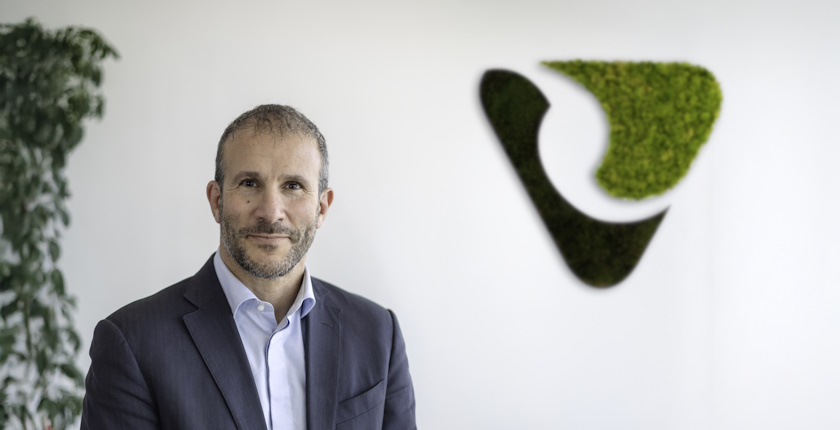
The energy crisis is underscoring the necessity of renewables for maintaining energy security, alongside climate goals and competitiveness, Bruno Bensasson, Chief Executive Officer of Akuo, tells Balkan Green Energy News ahead of his regional debut at the Belgrade Energy Forum. After it was taken over by Ardian, the company remained committed to Southeastern Europe amid a refocusing push, he pointed out. Akuo, an early mover in the region, has several major projects underway in the Western Balkans.
Bruno Bensasson took the helm of Akuo last year, when global private equity firm Ardian acquired the France-based independent renewable energy producer. He brought experience from top management positions in green energy giants Engie and EDF Renewables.
Akuo’s operating portfolio has reached 1.7 GW worldwide, while 400 MW is under construction. Bensasson revealed in an interview that he expects an acceleration, given the 10 GW project pipeline. He added that the company aspires to reach 5 GW in operation by 2030. It is expanding its activities in Southeastern Europe, with investments ahead in Serbia, North Macedonia, Kosovo*, Montenegro and Greece. The company is developing a porfolio of 1.3 GW of green energy projects in the region, dominantly solar and wind.
Akuo is a Silver sponsor of Belgrade Energy Forum 2026
Akuo’s new CEO is among the most prominent speakers at Belgrade Energy Forum – BEF 2026, which will be held on May 11 and 12 in Serbia’s capital city. The company is a Silver sponsor of the event, which is organized by Balkan Green Energy News.
“It is my first time in such a conference in the region. I have some experience from before with Engie and EDF, particularly in Greece before, but less in the rest of the Balkans. It is a very promising area for us. It is a pleasure to discover new countries and culture. And I also feel European here, be it inside or outside of the European Union, and I am happy that with Akuo I can contribute to the region’s energy transition,” Bensasson said.

Lessons from yet another energy crisis
The war in and around the Persian Gulf is jeopardizing energy stability throughout the world, with no end in sight.
Asked about the path ahead for Europe, the head of Akuo highlighted the strategic importance of renewables for energy security, as a local source that reduces dependency on imports and the volatility of oil and gas prices, in addition to combating climate change. Furthermore, green energy is becoming more and more competitive.
“It’s an alarm and it is not the first one. I hope that it will be heard loud and clear. And regularly we discover and rediscover that we are depending on oil and gas, that the price can go in any direction, that we can suffer from very high prices and even from scarcity. I hope that the shock will not be too long and too hard, but beyond it we need to draw the conclusions and lessons,” Bensasson stressed.
It requires public policy and commitment, and Akuo is part of the solution, he said. Bensasson added that the company’s goal is to bring non-fossil electricity at the best cost and price for the system and for households, companies and the industry.
Refocusing in technology, geography, with much more financial power
Within Ardian, Akuo has a much stronger financial capability. The parent company manages EUR 190 billion of assets around the world for its customers.
The new Akuo maintained the continuity, including the refocusing efforts dating before the acquisition, Bensasson explained. In terms of technology, it is now purely a renewable electricity producer, while earlier it also manufactured some equipment.
The company has exited the biomass and geothermal segments, concentrating its scope to solar power, onshore wind, and battery storage. With regard to geography, it is focusing on some European and countries in the Americas.
Balkans are very promising for Akuo
The company has taken some early positions in the Balkans, a decade ago.
“It’s a very promising region of Europe, and we definitely want to contribute. France is 25% of our position, there is Portugal and, to the east, Poland. But I want to run on several legs. In the Balkans, we have additional projects to develop in Serbia, in Kosovo*, in North Macedonia. It’s great that our teams there are local. They are closely cooperating with authorities and companies,” Bensasson underscored.
Akuo owns wind power plants Ogorje in Croatia and Krnovo in Montenegro, and hydropower units in Bulgaria.
In Greece, it operates PV facilities. Akuo has just signed a memorandum of understanding with Jasper Wind and AirEnergy to enter their consortium developing six wind farm projects. The investments are for 145 MW in total at sites in Phthiotis (Phthiotida) in the Central Greece region.
Bruno Bensasson participated in the French delegation during President Emanuel Macron’s visit to the country.
The company is planning a PV park of 300 MW with a BESS in North Macedonia
In Serbia, Akuo is developing wind power project Bela Anta 2, also known as Matrix Power. It has won market premiums at a renewable energy auction. The other one, for 85 MW, is looking for a route to market, either in Serbia or in a neighboring country, Bensasson revealed. It is called Bašaid. Akuo has passed into the second round of a wind power tender in Kosovo*. Its project is known as Çiçavica.
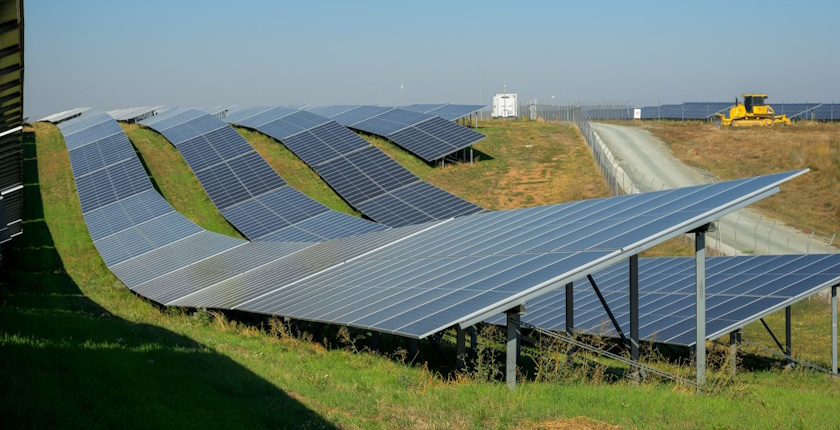
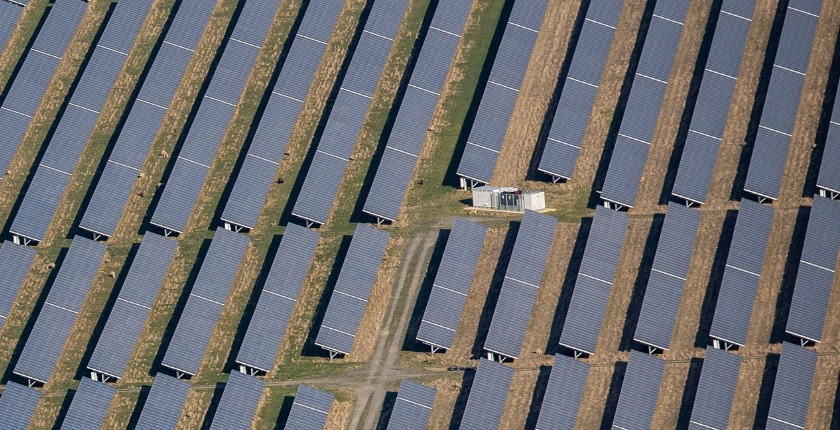
In North Macedonia, the company intends to build a 300 MW solar park with battery storage. It would be the biggest in the Western Balkans. The site is near Štip (Shtip), at a location previously intended for a cargo airport. The endeavor is called Stipion or Ostro.
“We have good relations with the authorities in those countries, and we are hopeful that we can develop the projects in a timely manner. As I said, the transition from coal or gas doesn’t come without some public commitments. We are working with the governments to find the most appropriate scheme. For us, what matters is to have a good scheme that gives visibility, respects the interests of each party and is in line with the local law. And we are making good progress,” Akuo’s CEO said.

Additional potential in Southeastern Europe in floating photovoltaics
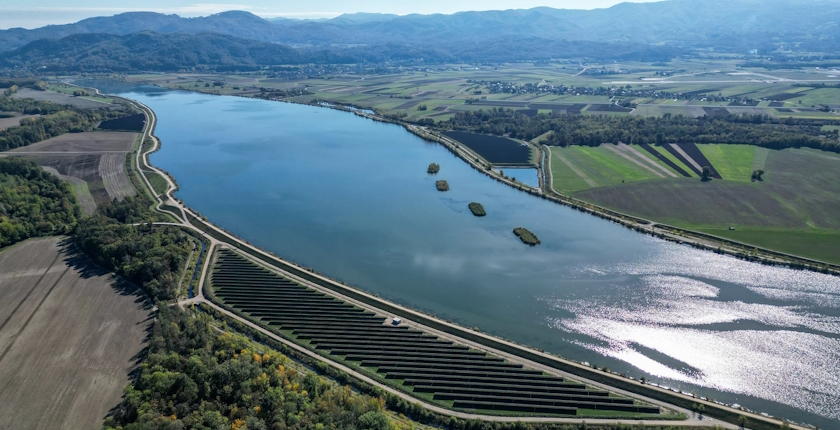
Bensasson recalled the company’s pioneering role in the Western Balkans and Europe. He expressed optimism about trailblazing some technologies in the region and pointed to the potential project for the first floating solar power plant, in Montenegro, where Akuo signed a memorandum of understanding in October of last year for a 36 MW facility.
The company is advanced in agrisolar as well, Bensasson said and added that the two concepts make a lot of sense in certain places, where land is scarce.
“I’m very supportive of agrivoltaics. We do a lot and we see it as a way to access land at the benefit of both energy production and agricultural production. You get protection from heat, hail and freezing, as temperature and humidity are slightly different below panels. We have proposed a floating solar power plant in Montenegro and we are making progress. We need to look at it carefully. It has its benefit, and it has its complexity, its costs. So it’s a matter of balance,” he stated.
Big fossil fuel share means lots of room for renewables growth
Asked about advantages in the Western Balkans from the viewpoint of one of the main investors in renewables, Bensasson accented the solar and wind power potential. In addition, there is still a significant reliance on fossil fuels, with relatively high prices. It translates to the need for growth in renewables, for transitioning away from coal and gas, he said.
Tenders for state support enable visibility and provide route to market
“There are the tenders, too, within the public support schemes. We appreciate long-term contracts. Tenders give us visibility. They give us route to market to sell the electricity that we will produce in the long term. Alternatively, you need to go on the spot market, very liquid and volatile. It is very difficult to accept such a risk for 30 years. Or you need to find a corporate power purchase agreement. But you don’t find so many people ready to offtake electricity for the very long term. So tenders are very good,” Bensasson clarified.
CBAM is making it harder to produce renewable electricity in Western Balkans
The bottlenecks side is a bit more complex. Bensasson stressed that the renewables expansion has to be accompanied with grid investments, and underscored the roles of transmission and distribution system operators – TSOs and DSOs. It includes permitting.
“When we talk about hurdles, we need to mention the Carbon Border Adjustment Mechanism, fully implemented at the beginning of this year. It does have an understandable effect due to its purpose, but it is very unfortunate that instead of favoring the production of renewable electricity, and we especially notice it in Serbia, it makes it more difficult. It led to a drop in spot power prices, which hampers investments,” Akuo’s chief executive asserted.
Serbia could roll out a carbon pricing system. Or if the country was joining the EU, there would be none of the said CBAM impact, in Bensasson’s words.
“We would have a proper price of carbon dioxide, within the electricity prices. No tax. Industry in the Western Balkans wouldn’t suffer from any border mechanism. Now even if one has renewable electricity, for instance in Serbia, there is no CO2 pricing. On the contrary, this carbon mechanism complicates the market,” in his view.