






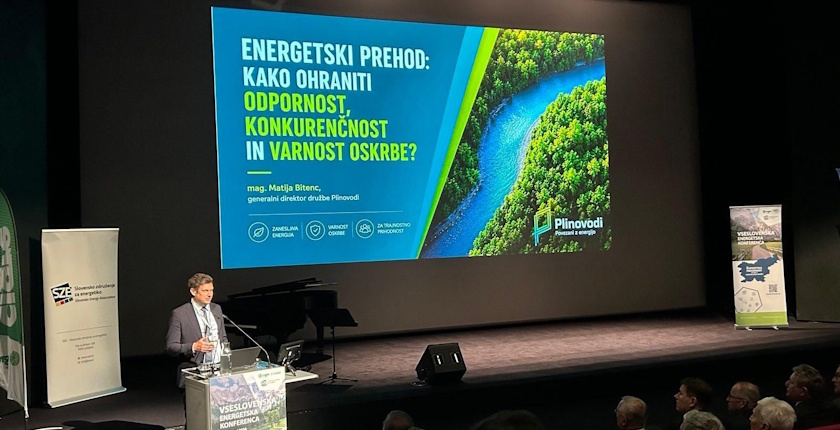
Photo: Plinovodi/LinkedIn


The natural gas pipeline and storage network could be a solution for seasonal energy storage, according to Matija Bitenc, CEO of Slovenia’s gas transmission system operator, Plinovodi.
Bitenc spoke at the two-day All-Slovenian Energy Conference 2026 (Vseslovenska energetska konferenca 2026) in Slovenia’s capital, Ljubljana, which brought together leading energy experts.
One of the key issues discussed was how to ensure energy is available when it is truly needed, while maintaining the stability, reliability, and competitiveness of the energy system, Naš stik reported.
Bitenc stressed that the electrification of society alone would not be sufficient. It will be necessary to connect different energy systems—for electricity, natural gas, and heat, he added.
The balance of production and consumption can be ensured only with appropriate energy storage
He noted that in January, Slovenia experienced record peak consumption of both electricity and gas, adding that this highlighted the importance of gas in providing energy when it is most needed.
Bitenc believes that peak consumption will dictate the future development of energy systems.
The balance of production and consumption, however, can only be ensured with appropriate storage as the share of renewable sources increases, he explained.
Electricity consumption is highest in winter, when generation from renewable sources is lowest, making it necessary to secure alternative sources. Bitenc sees gas as the only source that also ensures covering seasonal demand.
All other known technologies—batteries and pumped-storage hydropower plants—store energy for only a few hours, a day, or at most a week, he pointed out.
Excess electricity could be stored in the gas network as methane or hydrogen
However, in his words, the gas pipeline network is least loaded in the summer months, when production from renewable sources is highest and there are energy surpluses.
These surpluses could be stored in the long term in the gas pipeline network, in the form of methane or hydrogen, so these two systems should be connected, Bitenc proposed.
The extensive gas pipeline network represents one of Europe’s rare competitive advantages
The role of gas will change in the future, as it will be used to ensure flexibility for seasonal storage and support for renewable sources, he explained.
The European Union currently has 1,100 TWh of gas storage capacities and 1.2 million kilometers of gas pipelines. The EU will certainly have to take this fact into account in the energy transition, as the extensive gas pipeline network is one of Europe’s few competitive advantages, Bitenc asserted.
He pointed out that it is necessary to diversify sources and supply routes because energy transition challenges cannot be tackled with a single source.


Be the first one to comment on this article.