







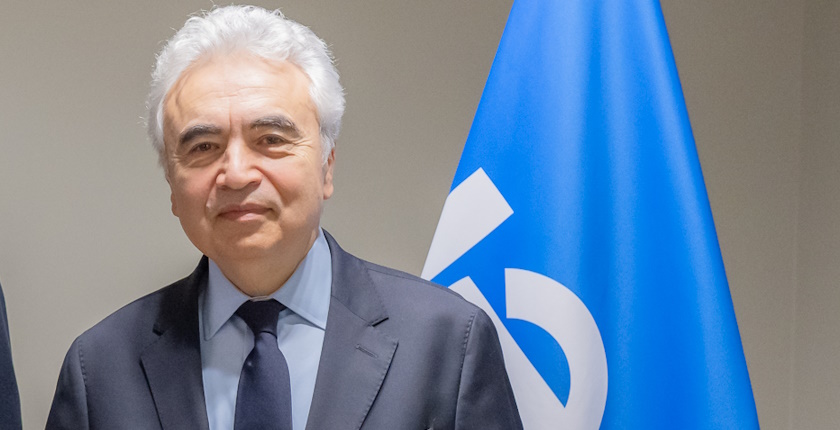
Photo: Fatih Birol / X


The current energy crisis surpasses in severity the shocks of 1973, 1979 and 2022 combined, said the International Energy Agency’s Executive Director Fatih Birol. The shortfall of oil and refined products will double this month, he warned and called it “black April.”
Fatih Birol appealed to governments around the world to work in coordination to mitigate the impact of the war in the Persian Gulf. The world is facing a triple shock – in oil, gas, and food – the executive director of the International Energy Agency (IEA) told Le Figaro.
He pointed out that the only real solution is the reopening of the Strait of Hormuz.
Energy system’s architecture to change fast
Nevertheless, it will take time for the countries of the region to restore their production and regain their key role in the energy landscape, in Birol’s view. But strategic solutions do exist and there are reasons to be optimistic as “the architecture of the energy system will change,” he stressed – the crisis should accelerate the development of renewables, nuclear power, and electric vehicles.
It will take years, but solar and wind power can be installed very quickly, Birol noted. He estimated that a shift toward renewables is a matter of months. The crisis should also “reinvigorate the momentum for nuclear energy, including small modular reactors,” he underscored. In the short term though, countries must turn to the most prudent use of energy, saving and improving efficiency, he asserted.
Multiple crisis of unprecedented magnitude
Birol warned of “a black April,” reiterating that it would be much worse than the previous month. He expressed the opinion that the shortfall in the crude oil and derivatives supply would double if the critical maritime passageway remains blocked.
“The war is blocking one of the arteries of the global economy. Not just oil and gas, but also fertilizers, petrochemicals, helium, and many other things. The world has never experienced a disruption to energy supplies of such magnitude,” the IEA’s head said. The crisis is “more serious than those of 1973, 1979, and 2022 combined,” he added.
The official underscored that 75 energy facilities have been damaged already, of which more than a third severely or very severely.
Developing countries are at a bigger risk of a surge in prices of oil and gas and food and an overall acceleration of inflation, Birol said.
Earlier he estimated the losses in supply at 12 million barrels of oil per day since the United States and Israel attacked Iran. It is equivalent to 11% of oil production before the closure of the Hormuz. The drops in 1973 and 1979 amounted to as much as five million barrels per day or some 7% of output. This time, however, the shortage of natural gas, transported as liquefied natural gas (LNG), is another major factor.

Be the first one to comment on this article.