







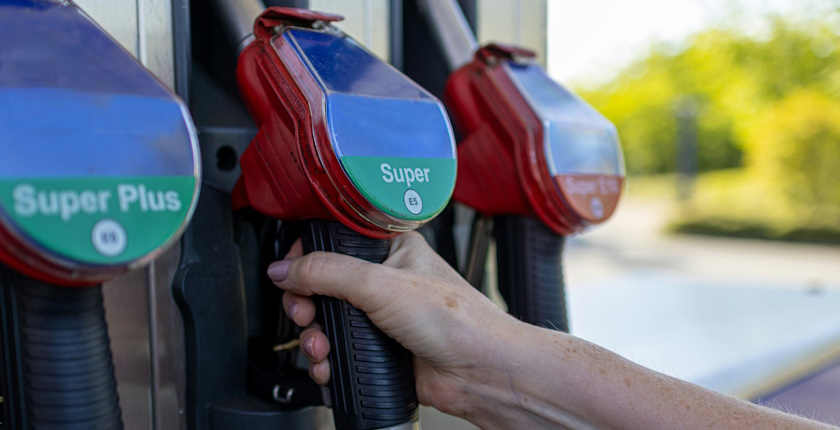
Photo: Marek Studzinski on Unsplash


Governments in Southeastern Europe are rolling out short-term measures to maintain fuel supply and limit the surge in prices at the pump. Slovenia has even rationed sales. Nevertheless, the situation is becoming more drastic with every day of the Hormuz strait blockade. Sharp consumption cuts may be necessary as the disruption effects are expected to last several months even in the most optimistic scenarios.
The United States and Iran are reportedly working on a ceasefire, which brought cautious optimism in the oil and gas markets. Regardless of the outcome and the big picture, refiners and fuel distributors across much of the world economy are already struggling to maintain supply and contain costs. Government measures in the region that Balkan Green Energy News tracks range from export bans to fuel tax cuts.
Slovenia was the first in the European Union to ration fuels at the pump. One of the issues with strong price swings is that more buyers tend to cross the border to buy cheaper gasoline and diesel in a neighboring country, burdening supply.
The government in Ljubljana even accused Petrol, the dominant fuel retailer, of obstructing deliveries to service stations. The matter was particularly sensitive as the statement was published on election day, March 22.
With uneven price swings, more people drive to neighboring countries buy cheaper fuel, adding to instability
Petrol denied the allegations and pointed out that fuel sales spiked 54% in the first three weeks of this month, on an annual scale. Moreover, the company noted that the spread between the prices of diesel in Slovenia and Austria surged by 54 eurocents in the three weeks through March 17.
Slovenia prohibited diesel exports and suspended an emissions tax, while Serbia has extended a ban on exports of crude oil and motor fuels. Both are releasing fuel reserves and slashing excise taxes. Notably, Serbia and the surrounding countries are particularly exposed, because of the uncertainty regarding the sale of the operations of Gazprom and Lukoil, amid the sanctions that the United States imposed on them.
Governments forgoing budget income to ease price surge impact
The Republic of Srpska, one of the two entities making up Bosnia and Herzegovina, announced that it would return 10% of the excise tax to companies and 20% to citizens.
Prime Minister of North Macedonia Hristijan Mickoski has pointed to the arrival of a large number of citizens from neighboring countries to buy fuel, but also claimed that the supply is exceptionally stable.
His government has introduced a state of energy emergency for 30 days and cut the value-added tax on diesel and gasoline to 10% from 18%.
Albania has declared an emergency as well and lowered the excise tax on petrol and diesel by 20%.
The Government of Romania is preparing to declare a crisis. It is discussing a proposition to limit fuel markups and, if necessary, cut the taxes.
Greece has launched a EUR 300 million emergency relief package for April and May. The focus is on households and agriculture, with fuel subsidies and refunds for fertilizers.
Due to the drop in budget income, the risk for fiscal stability rises with every passing week.
Fuel crisis to strike Europe next
The near-total blockade of the Strait of Hormuz is in its fourth week, prolonging the forecasted economic strain. There are months of supply shortages of oil and related goods ahead even in the most optimistic scenarios. Drastic reductions in consumption may become unavoidable.
Europe is facing a fuel crisis as early as next month, like the disruption that has stricken Asia, Shell’s Chief Executive Officer Wael Sawan warned.



Be the first one to comment on this article.