







Photo: iStock


Governments, businesses and households can counter the escalating energy crisis from the Iran war with a range of measures that span transportation, cooking and industrial production. The International Energy Agency outlined the immediate actions for softening the strains in the markets for diesel, jet fuel, liquefied petroleum gas (LPG) and other kinds of energy and commodities. One of the suggestions is to roll out odd-even systems for cars, such as the ones that our older readers in Southeastern Europe may remember from the 1970s and 1980s.
The war in the Persian Gulf is – well, fueling an oil and gas crisis, which is likely to lead to shortages of fertilizers and other essential commodities and spin inflation out of control worldwide. The International Energy Agency set out a range of demand-side actions that governments, businesses and households can take to alleviate the economic impacts on consumers of the disruptions to oil markets.
According to the Sheltering from Oil Shocks report, the supply crunch is the largest in the history of the global oil market. IEA member countries agreed last week to release 400 million barrels of oil from emergency reserves – a record stock draw. However, supply-side measures alone cannot fully offset the scale of the disruption.
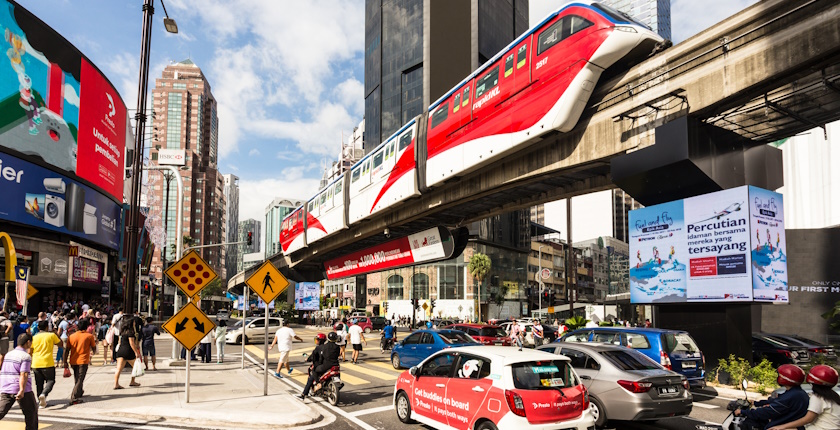
The demand-side recommendations focus primarily on road transportation, which accounts for around 45% of global oil demand, but also cover aviation, cooking and industry.
In addition, forty countries are deploying or considering deploying emergency measures to shelter consumers from price increases, the agency found. Immediate government responses have been to implement price caps, fuel subsidies and shifts in taxation. The United Kingdom is allocating GBP 53 million to support vulnerable heating oil customers.
Experience from previous crises shows that well-targeted support mechanisms are more effective and fiscally sustainable than broad-based subsidies.
As for structural, long-term measures, the agency highlighted incentives for electric vehicles, energy efficiency and sustainable fuels, alongside fuel economy standards and plastics reuse and recycling.
In the absence of a swift resolution, the impacts on energy markets and economies are set to become more and more severe, the IEA’s Executive Director Fatih Birol pointed out. The agency listed ten immediate demand-side actions.
1. Work from home where possible
Remote work displaces oil use from commuting. For example, the Philippines and Pakistan have mandated four-day workweeks for government workers, while Sri Lanka has closed public offices on Wednesdays, and Laos, Thailand and Vietnam are all promoting work from home.
2. Reduce highway speed limits by at least ten kilometers per hour
Lower speeds reduce fuel use for passenger cars, vans and trucks. Pakistan has reduced speed limits on motorways and national highways. Its government also launched an awareness campaign.
3. Encourage public transport
A shift from private cars to buses and trains can quickly reduce oil demand.
4. Alternate private car access to roads in large cities on different days
Number-plate rotation schemes can reduce congestion and fuel-intensive driving. The concept is to designate zones where driving private vehicles is allowed on specific days only, based on their number plate.
Vehicles with odd-numbered plates would have access on different weekdays than those with even-numbered plates. Notably, the demand-side measure reduces traffic congestion, engine idling and fuel-intensive stop-and-go driving.
Exceptions can be made for cars with many occupants, as well as taxis. Governments can refrain from granting exemptions to non-essential government fleet vehicles.
In the region that Balkan Green Energy News covers, Romania, Yugoslavia, Greece and Turkey had the odd-even system in place for a while in the late 1970s and early 1980s amid oil and fuel shortages, but also to ease congestion and pollution.
5. Increase car sharing and adopt efficient driving practices
Higher car occupancy and eco-driving can lower fuel consumption quickly.
6. Efficient driving for road commercial vehicles and delivery of goods
Better driving practices, vehicle maintenance and load optimization cut diesel use, and digital technologies can help such efforts. IEA suggests regular checks of tyre pressure, reduced idling and reduction of braking and accelerating, to operational improvements such as optimization of vehicle loads and a reduction of empty travel journeys.
7. Divert LPG use from transport
Shifting bi-fuel and converted vehicles from LPG to gasoline can preserve LPG for cooking and other essential needs, especially for vulnerable households. Shortages of the fuel are already evident and intensifying in some regions.
8. Avoid air travel where alternative options exist
Reducing business flights can quickly ease pressure on jet fuel markets.
9. Where possible, switch to other modern cooking solutions
Encouraging electric cooking and other clean options can reduce reliance on LPG and avoid a return to more polluting fuels that harm people’s health. LPG is the main fuel used for a fundamental service like cooking by 2.3 billion people in Asia.
10. Leverage flexibility with petrochemical feedstocks and implement short-term efficiency and maintenance measures
Through quick operational improvements, the industry can help free up LPG and reduce oil consumption. Two thirds of industrial oil demand is for the chemicals industry. The majority of petrochemical production capacity in Asia and the European Union can technically switch between different oil products as a feedstock – such as LPG, naphtha, ethane or gasoil – without requiring equipment modifications.
In addition, short-term efficiency and maintenance measures can deliver additional reductions in oil consumption.


Be the first one to comment on this article.