






Photo: Freepik


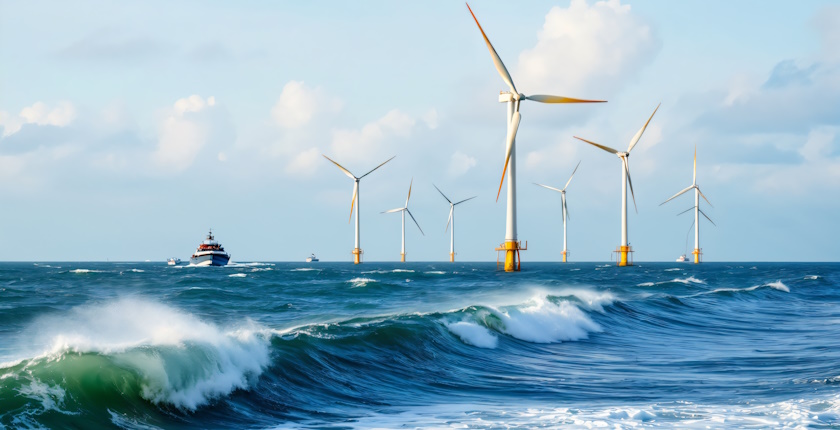
Seven heads of state and government and energy ministers of nine countries gathered in Hamburg today to boost the expansion of offshore wind. Together with industry and transmission system operators, the countries launched the Offshore Wind Investment Pact for the North Seas. They envisage cross-border projects totaling 100 GW.
Nine European countries committed to building 15 GW of offshore wind per year over 2031-2040 and derisking offshore wind investments. The industry, in return, pledged cost reductions, 91,000 additional jobs and EUR 1 trillion of economic activity.
Europe is charting the massive offshore wind buildout it needs to deliver on its energy security and competitiveness objectives, WindEurope said.
At the North Sea Summit in Hamburg today, Belgium, Denmark, France, Germany, Ireland, Luxembourg, the Netherlands, Norway and the United Kingdom confirmed their ambition to build 300 GW of offshore wind on the so-called North Seas by 2050.
Over one hundred companies participate in offshore wind pact
Governments, the wind industry and transmission system operators (TSOs) signed the Offshore Wind Investment Pact for the North Seas. The agreement is underpinned by separate declarations of the heads of state, energy ministers and the industry. The last of the three is an undertaking by more than 100 offshore wind companies across the value chain, the update adds.
Offshore wind has been a European success story with 37 GW installed across 13 countries, WindEurope stressed.
“That’s more than 6,000 turbines providing homegrown, clean and competitive electricity at scale. But deployment has been dragged by suboptimal auction design, increased costs of capital and lack of visibility for the supply chain due to an uncertain project pipeline,” the organization pointed out.
Two-sided CfDs to be auction standard
In the Investment Pact, governments pledge to provide planning and investment security and derisk offshore wind projects. It involves two-sided contracts for difference (CfDs) as the standard for offshore wind auction design, for visibility on revenue. The countries agreed to remove any regulatory obstacles to power purchase agreements (PPAs) – direct agreements between electricity producers and corporate end-consumers.
A steady pipeline of offshore wind projects will bring the needed confidence to invest in new capacity for manufacturing, ports infrastructure and vessels, according to WindEurope.
In return, Europe’s offshore wind industry pledges to drive down costs of offshore wind by 30% towards 2040 against the 2025 levels. The cost reduction would be driven by scale effects, lower costs of capital and further industrialization underpinned by clarity and visibility on the project pipeline.
The industry vowed to create lasting value for the economy, communities and consumers. It also said it would invest EUR 9.5 billion in the value chain including manufacturing, port infrastructure and vessels.
The TSOs intend to identify cost-effective cooperation opportunities and 20 GW of economically promising cross-border endeavors by 2027 for deployment in the 2030s. It includes offshore projects with interconnections to more than one country. The operators are about to develop cost-sharing principles.
The new partnership will secure 100 GW of joint offshore wind projects, Britain said.

Be the first one to comment on this article.