







Photo: iStock


President Aleksandar Vučić said he obtained information that the United States would impose sanctions on Russia-owned oil company NIS in Serbia within days. It would block the inflow of oil through the JANAF pipeline, the country’s only supply source. The US Embassy in Serbia said a change in ownership over NIS would bring more peace and prosperity.
Soon after a warning from Bulgaria that it may be forced to halt the transit of Russian natural gas, President of Serbia Aleksandar Vučić said the supply of oil through the only pipeline is in jeopardy, too. The US is about to introduce sanctions against oil refiner, distributor and producer NIS, because of Russian ownership, he claimed. The United Kingdom would join them, the president added. He stressed that the information came through “an official channel” but also from Serbia’s secret service.
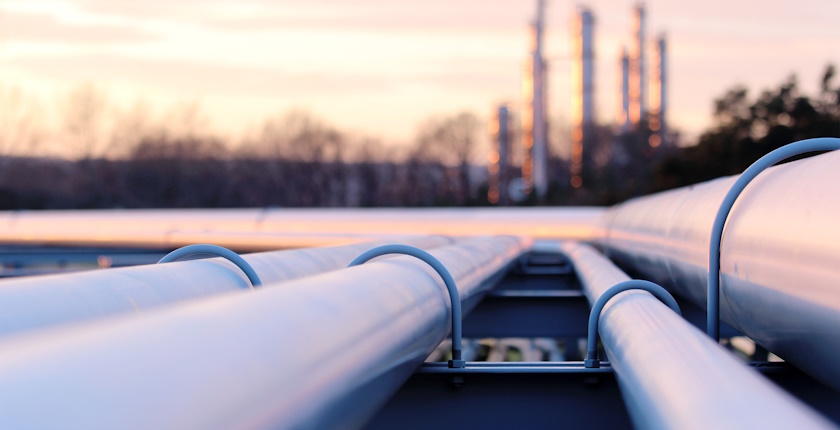
“When we see the document, we will first speak with the Americans, and then we go to talk with the Russians,” Vučić added. In his words, the sanctions being prepared would block the delivery through the Jadranski naftovod (JANAF) pipeline. It starts at the Omišalj terminal on Krk island in Croatia and transports oil to NIS’s refinery in Pančevo, just northeast of Belgrade.
JANAF is the only supply source, though the country is developing a project with neighboring Hungary for another pipeline. Serbia also imports fuel.
NIS’s stock plunged 20.1% at the opening today at the Belgrade Stock Exchange, to RSD 622 (EUR 5.3) apiece. They clawed back a chunk of the losses to close 12.9% down, at RSD 678 per share.
The government will tend to maintain its friendly relations with Russia and at the same time not ruin the relations with the ones that are imposing the sanctions, Vučić pointed out. There were several announcements that the European Union would make such a move, he noted.
In 2022, majority owner Gazprom Neft reduced its stake to 50% to avoid EU sanctions, by transferring a part to its parent company Gazprom. It currently holds 6.2% of NIS, while the government in Belgrade controls 30.1%. At the time, Serbian officials said the share of Russian oil was actually small and that the country would replace it.
Not ready to discuss any sanctions against Kremlin
Vučić suggested the sanctions could be circumvented by lowering Russia’s combined stake in the company to under 50%. The measures are geopolitical, aimed at making Serbia impose sanctions on Russia, which is “not realistic,” he asserted.
“As the president of Serbia and someone presiding over the National Security Council, I am not ready at this moment to discuss potential sanctions against Moscow at all,” Vučić underscored.
The moment is difficult, given that the winter is starting, according to Vučić
He added that the sanctions would come into force on January 1. The moment is difficult, given that the winter is starting, in the president’s view.
“They have to leave us a period of time. We will see what happens and what they mean by it,” Vučić stated. He highlighted the fact that NIS accounts for around 9% of the state budget.
US Embassy calls for change in ownership over NIS
US Embassy later told Euronews Serbia that a change in ownership would surely bring more peace and prosperity.
NIS was worth more than USD 2 billion in 2008. when Gazprom bought more than half of the shares for a small piece of their market value, the statement adds. Now it is the most profitable company in Serbia, the embassy said. Russian owners are using their part of the profit to finance the brutal aggression against Ukraine and endanger stability in the Balkans and throughout Europe, and not to invest in Serbia’s future, it added.
In addition, the company said operations aren’t disrupted and that the supply to petrol stations is regular.
Szijjárto finds solution for Bulgarian gas transit issue
In other news, Hungarian Minister of Foreign Affairs and Trade Péter Szijjártó met with Acting Minister of Energy of Bulgaria Vladimir Malinov. They spoke about the regional Vertical Gas Corridor project, but also about the dispute regarding gas transit.
Szijjártó said he presented an alternative for the payment and claimed they found a legal solution. Hungary imports Russian fossil gas via Serbia, through the Balkan Stream pipeline.


Be the first one to comment on this article.