







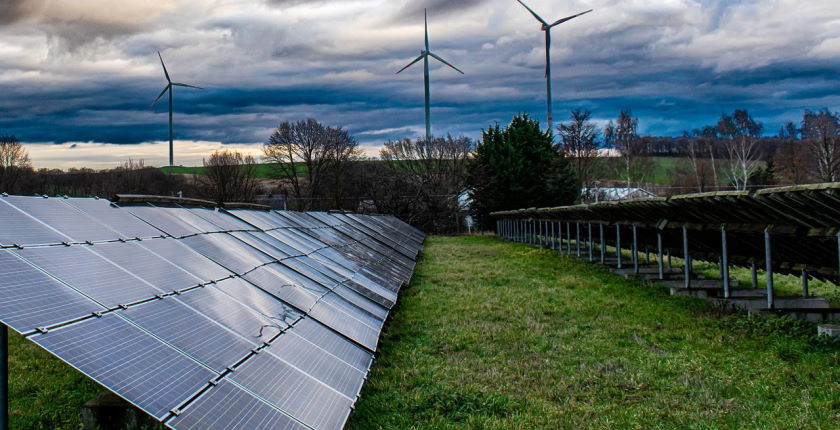
Photo: Cornell Frühauf from Pixabay


Companies connected 261 GW in new renewables to the grid last year, 45.1% more than in 2019, IRENA said in its annual report. Turkey was among the world champions in hydropower and geothermal energy. It had the strongest overall expansion in Southeastern Europe, together with Cyprus and North Macedonia.
The economic downturn caused by the coronavirus pandemic left deep scars throughout the planet, but renewable energy continued to post records. The International Renewable Energy Agency (IRENA) said global capacity jumped 10.3% to just under 2.8 TW.
The addition in absolute terms was a record 261 GW, which was 45.1% more than in 2019, beating forecasts. It is also impressive that solar power (including concentrated solar power or CSP) and wind power accounted for a combined 91% of new installations.
Turkey, Cyprus top world’s green electricity growth rate
Turkey boosted its geothermal capacity by 6.3% to 1.61 GW. Its expansion by almost 100 MW was the highest in the world. Turkey’s total growth in renewables was 10.8% to 49.4 GW.
Romania’s renewable energy capacity decreased slightly in 2020
Cyprus is the only other country in the area tracked by Balkan Green Energy News that achieved growth above the global rate for 2020 – 15.2% to 371 MW. North Macedonia was next, adding 10.1% and ending the year with 827 MW. In Greece, the level surged by 9.5% to 10.9 GW.
Albania had solid growth, 6% to 2.3 GW, and Croatia’s renewables capacity advanced 5.1% to 3.2 GW.
Romania landed at the bottom of the chart as its renewable energy capacity retreated, though only marginally, to 11.1 GW. Kosovo* remained at 139 MW. The remaining Southeast European countries posted very low growth.
Photovoltaics including CSP post highest growth rate
More than 80% of all electricity capacity added last year was renewable, according to the annual report. Nevertheless, the organization reiterated investments must be accelerated to reach climate goals.
Solar power had the strongest growth of all technologies, 22% to 714 GW, followed by wind power’s rise of 18% to 733 GW.
Hydropower (without pure pumped storage) still has the largest share, as its capacity reached 1.21 TW, but with a growth of a mere 1.7%. Turkey fared the best in Southeastern Europe. Its capacity jumped by 2.5 GW, trailing only China.


Be the first one to comment on this article.