







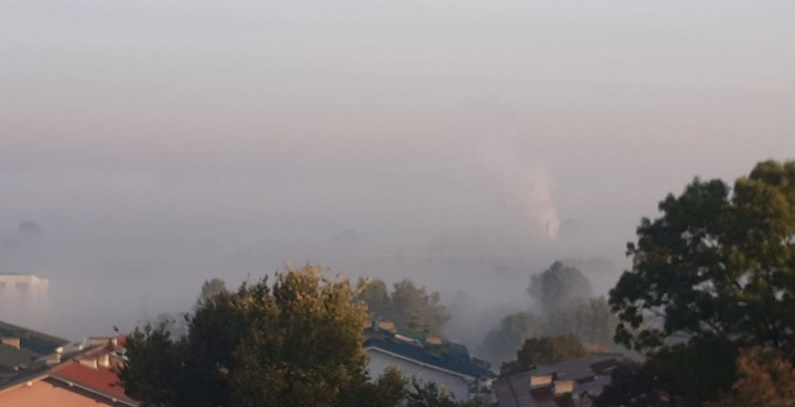
Photo: Morning in Belgrade (Facebook by Željko Ivanji)


The beginning of the heating season in the Western Balkans brought a rise in air pollution once again. In recent days, cities in the region returned to the top of the lists measuring the most polluted air.
The spike in air pollution in the Balkans is repeating at the same time as a year ago, so nothing seems to have changed despite protests from citizens, and appeals from nongovernmental organizations and experts to authorities to act. The main polluters continue their business as usual.
Citizens, especially those in sensitive groups, are advised to avoid spending time outdoors
Yesterday morning Belgrade, Priština, Sarajevo, Skopje, Sofia, and Zagreb were among the 50 cities with the most polluted air as per AirVisual. The Air Quality Index (AQI) for the majority of the cities reached the range of 100 to 150 points during the day. According to the service, it means air pollution can cause irritation and respiratory distress for the entire population, and especially for sensitive groups of people including the elderly, the ill, children, and pregnant women. Everyone is advised to avoid spending time outdoors.
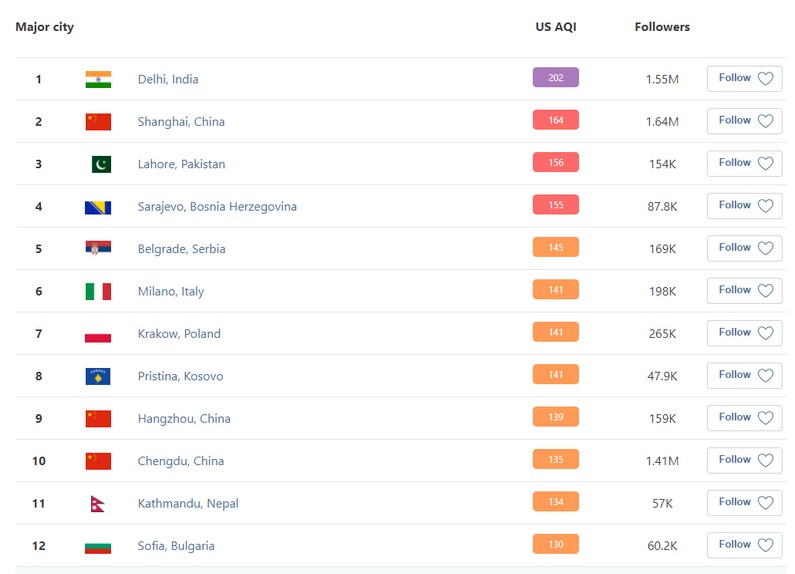
The cause of air pollution was mainly the increased concentration of particulate meters PM2.5 and PM10, which are considered the most dangerous air pollutants for human health because they can penetrate deep into the lungs and enter the bloodstream.
AirVisual publishes the Air Quality Index based on data from national measuring stations
AirVisual estimates air quality according to data from national measuring stations on up to six main pollutants: PM2.5 and PM10, carbon monoxide, sulfur dioxide, nitrogen dioxide and ground-level ozone.
The AQI index ranges from zero to 500. Between zero and 50 the quality is good, 51-100 is moderate, 101-150 is unhealthy for sensitive groups, the level from 151 to 200 is unhealthy, 201-300 is very unhealthy and a reading above 301 is hazardous. The value of the index and the ranking on the list usually change by the hour.
Some cities in the region have taken steps in the past 12 months to reduce air pollution. Skopje has continued to approve subsidies for households using wood stoves or heating oil in boilers to buy inverter air conditioners. The Sarajevo Canton started preparing the strategy for restricting the use of coal and other solid fuels for the period 2021-2031. It also announced a program for financing the replacement of stoves and small coal-fired boilers in households.
Pollution has been rising since Monday
The cities with the most polluted air in Serbia yesterday were Belgrade, Bor, Kosjerić, Niš and Novi Sad, according to data provided by the Serbian Environmental Protection Agency (SEPA). The government body determined five categories for air quality: excellent, good, acceptable, polluted and heavily polluted. The five cities were in the polluted category.
From Sunday evening until yesterday, all four measuring stations in Belgrade (Stari grad, Novi Belgrade, Mostar, Vračar) recorded elevated concentrations of PM2.5 and PM10. Before that, the levels were 10-30 micrograms per cubic meter, compared to the current 100 micrograms.
The concentration of PM10 reached 114 micrograms
The situation in Niš has also worsened since Sunday. On Wednesday night, the concentration of PM10 was as much as 114 micrograms at the measuring point at the Institute of Public Health Niš.
According to the decree on monitoring conditions and air quality requirements, the average limit value of PM2.5 for a calendar year is 25 micrograms, and for PM10 the maximum allowed 24-hour concentration is 50 micrograms and must not be exceeded for more than 35 days a year.
The five cities mentioned above were also among the 14 that had excessively polluted air last year.
Be the first one to comment on this article.