


Author: Simona Aronica, Communications Manager of Energy Cities, EUSEW partner organisation.
How can we all enjoy comfortable temperatures in our homes at a fair, affordable price? Locally produced renewable heating and cooling networks fight energy poverty, increase comfort, make our cities sustainable and the Union more energy independent and competitive in challenging times.
Sofia, a single mother in a top-floor flat, and Klaus, living in a detached house with his family, face the same problem in different countries: soaring energy bills. Heating in winter and cooling in summer is increasingly expensive, as both still rely on gas heaters – polluting, costly, and vulnerable to geopolitical tensions.
How can Sofia, Klaus, and we all enjoy comfortable homes while paying fair bills? The EU has many solutions to reach climate neutrality and become energy independent, but none will succeed without active citizen participation to ensure a just and effective transition.
Coordinated action across all government levels
Heating and cooling account for almost half of the EU’s energy use, making it a priority to ensure systems are greener and cheaper. Efficient district heating and cooling (DHC) networks powered by clean sources replace individual heating systems, reducing maintenance and lowering bills. As change starts in cities, citizen engagement is essential. Community energy initiatives foster social acceptance, co-ownership, and long-term commitment, making networks more sustainable and resilient.
That is why local, national, and EU authorities must work together. The Energy Efficiency Directive requires cities with more than 45,000 inhabitants to prepare Local Heating and Cooling Plans, mapping demand, infrastructure, and decarbonisation pathways. Cities play a key role in identifying zones, planning networks, and coordinating renovations and solutions. Additionally, the upcoming EU Heating and Cooling Strategy will provide useful guidance to accelerate the decarbonisation.
Yet, few Member States have translated these obligations into support frameworks. Those curious about the state of play in their country can check Energy Cities’ EU Tracker, which highlights the gaps between the transformative potential of local plans and national backing for authorities.
Change starts with engaged citizens

Even where national governments struggle, local authorities and communities are committed to acting, often with support from EU projects such as MUSE DHC. By 2028, it aims to develop 9 investment plans for efficient, community-led DHC networks across 5 countries, creating replicable models.
One pilot is Sant Cugat Sesgarrigues in Catalonia, Spain, where public buildings now use aerothermal heat pumps for heating and hot water. Supported by strong political will, the city is exploring a 5th generation DHC network combining high-efficiency heat pumps with local photovoltaic generation. The project involves the local energy community, professionals, and public authorities to foster renewable electrification and engagement.
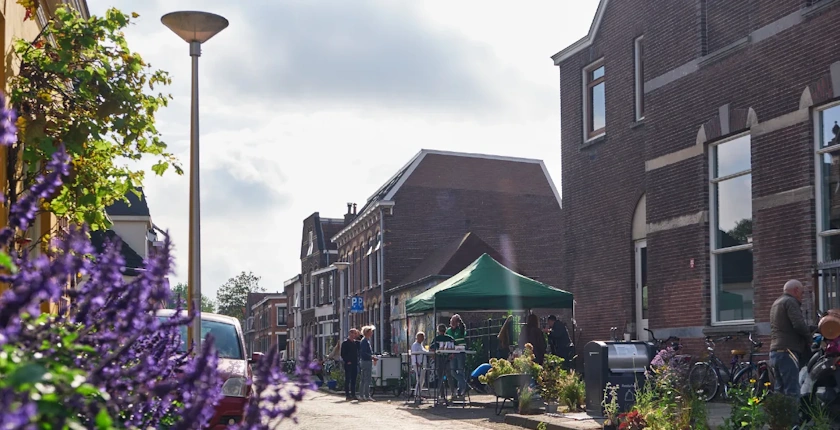
Another pilot is Zwolle, in the Netherlands. Here, the resident-led Warm Assendorp energy community is developing a collective heating network as part of a broader green renovation project. Initially covering 172 homes and 2 schools, strong engagement expanded the plan to 500 homes and additional buildings. The DHC system is foreseen to produce 5.8 GWh per year of renewable heat, thus saving 1835 tonnes of emissions in CO2-equivalents each year, roughly the same as taking about 400 cars off the road for a year.
In collaboration with the municipality and supported by MUSE DHC, the project combines air-water heat pumps, thermal storage, and backup systems, alongside green roofs and façade gardens, demonstrating that community-led initiatives can drive neighbourhood sustainability.
Building EU energy independence through a bottom-up transition
While the Russian invasion of Ukraine in 2022 accelerated the EU’s efforts to phase out fossil fuels, the current war in Iran and consequent block of the Strait of Hormuz – “the greatest global energy security threat in history” according to the International Energy Agency – highlight the urgency of stopping reliance on gas and oil. Investing in local, renewable energy production is not only essential to enhance our energy independence but also to support the EU’s economy and improve everybody’s well-being.
If Sofia’s and Klaus’ cities introduced DHC networks, they could reduce their bills and take pride in contributing to a decarbonised energy system, thus helping the planet, strengthening the EU’s independence and resiliency.
This opinion editorial is produced in co-operation with the European Sustainable Energy Week (EUSEW) – the biggest annual event dedicated to renewables and efficient energy use in Europe. #EUSEW2026 marks the 20th edition and will once again bring together the community of people who care about building a secure and clean energy future for the next generations.
Check the platform to register and join the event.
Disclaimer: This article is a contribution from a partner. All rights reserved.
Neither the European Commission nor any person acting on behalf of the Commission is responsible for the use that might be made of the information in the article. The opinions expressed are those of the author(s) only and should not be considered as representative of the European Commission’s official position.