


Unnamed sources from the Government of the Federation of Bosnia and Herzegovina said the construction of unit 7 in thermal power plant Tuzla most probably won’t proceed as General Electric decided not to supply the equipment.
Governments in the region took on the responsibility in November to price carbon emissions as a condition to gain access to grants and cheap loans from the Economic and Investment Plan for the Western Balkans. Otherwise they will face the upcoming Carbon Border Adjustment Mechanism, essentially a CO2 tax on commodities and electricity that the said countries export to the European Union.
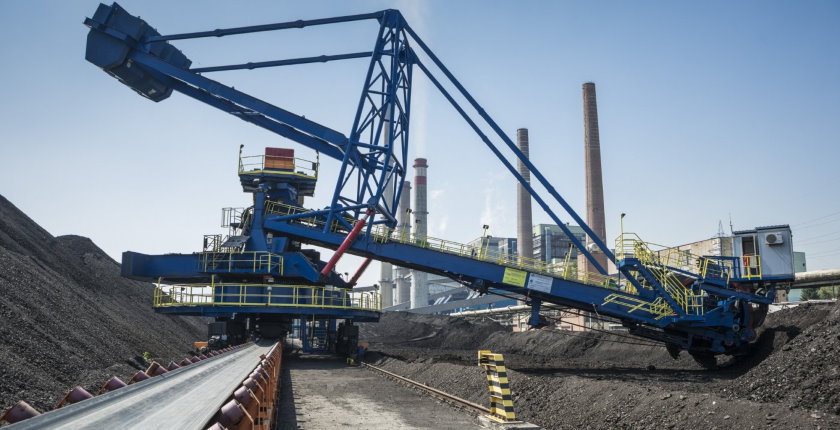
In light of the efforts in the Western Balkans to decarbonize energy production, Dnevni avaz quoted anonymous officials from the Federation of Bosnia and Herzegovina that said a Chinese project for a lignite-fired unit in Tuzla may have reached a dead end.
Works are already underway and Gezhouba now can’t meet its deadlines
General Electric, which was supposed to deliver the 450 MW turbine and generator, reportedly pulled out from the endeavor. There was no official confirmation. Gezhouba Group and Guangdong Electric Power Design Institute from China signed a deal with BiH in 2014 for Tuzla 7, valued at USD 1 billion. The works are well underway.
No renegotiation
State-owned utility Elektroprivreda Bosne i Hercegovine (EPBiH) informed the Government of FBiH that the Chinese partners wish to renegotiate the agreement, according to the article, which points out that talks would have to be renewed on several levels in the Balkan state to change anything.
GE is said to have canceled the cooperation with the consortium under pressure from the EU as the administration in Brussels is against any new coal-fired power plant projects. The insiders revealed the government isn’t willing to alter the terms of the deal.
The authorities reportedly decided to upgrade existing coal capacities
For context, FBiH is one of the two entities making up BiH, the other one being the Republic of Srpska, where there are three more coal plants. The unnamed officials added the entity government already has a backup plan – to reconstruct some of the existing capacities in Tuzla and in Kakanj, where Elektroprivreda BiH’s other coal plant is located.
The overhaul will be finished within three years and the funds have been secured, while the remaining units will be shut down in 2023, said one of the persons with knowledge of the matter.
Gezhouba and GE have already worked together in the energy sector. The Chinese company is on the shortlist for the construction of a hydropower plant and dam in North Macedonia and has other deals as well in the Balkans.
Decarbonization steps in Balkans
Just weeks ago, EPBiH decided to start calculating CO2 costs internally, for a start, in cooperation with the Energy Community Secretariat.
Projected carbon expenses recently prompted neighboring Serbia to scrap a lignite plant project with Chinese contractors, though the heads of state and government are yet to present any kind of a plan for a coal phaseout. North Macedonia is determined to switch thermal power plants to gas as soon as possible.
Top government officials in BiH, Serbia and Romania are reluctant to offer the details on their coal phaseout strategies to the public
Montenegro already introduced a system for trading carbon dioxide emissions. The country’s only coal-fired power plant is about to undergo reconstruction.
As for Kosovo*, ContourGlobal gave up last year on building a lignite plant and abandoned the sector altogether as environmental standards were becoming stricter and it couldn’t obtain financial backing. Albania has no coal capacities.
Turkey has recently dropped several coal plant projects and is preparing for the introduction of the EU’s CO2 tax. Greece is implementing the most radical measures to cut coal use to zero among the EU member states in Southeastern Europe. Romania is next in the planning stage, but the citizens there also haven’t yet heard the details from the nation’s leaders.