







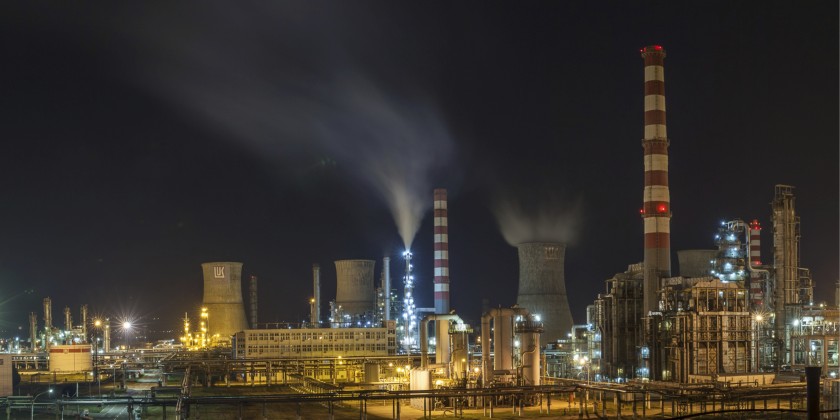
Photo: Petrotel-Lukoil


Russian oil producer Lukoil said it intends to sell its international assets due to US sanctions and that it has already begun reviewing bids. The company’s foreign subsidiaries include oil refineries in Bulgaria and Romania, as well as fuel retail chains across Southeast Europe.
The sale of Lukoil’s international assets is being carried out under a wind-down license from the United States Office of Foreign Assets Control (OFAC). In a press release, the company said it might apply for an extension of the license, if necessary to ensure uninterrupted operations of its subsidiaries.
The facilities up for sale include the largest oil refinery in the Balkans – Lukoil Neftohim Burgas in Bulgaria, as well as the Petrotel-Lukoil refinery in Romania. Lukoil also has fuel retail networks in Romania, Bulgaria, Turkey, North Macedonia, Croatia, Serbia, and Montenegro.
Lukoil operates the largest oil refinery in the Balkans and fuel retail chains across the region
Lukoil Neftohim Burgas is a major player in Bulgaria, supplying almost the entire market, according to reports. Its capacity is 190,000 barrels per day. On the other hand, the capacity of Petrotel-Lukoil in Romania is much smaller, at about 2.4 million tons per year.
The Bulgarian parliament has adopted legislative amendments requiring any sale of Lukoil’s assets in Bulgaria to be cleared by the country’s government and intelligence service.
Serbia-based oil company NIS is also under US sanctions, while the EU is imposing a ban on Russian gas
The US sanctions against Russian energy companies, which took effect earlier this month, are also affecting NIS, a Serbia-based oil refiner and fuel retailer owned by Russia’s Gazprom.
At the same time, the European Union plans to ban imports of Russian natural gas starting on January 1, 2026. However, a European Commission spokesperson said that it would not apply to the transit of Russian gas and would not affect deliveries to Serbia and Bosnia and Herzegovina.


Be the first one to comment on this article.