



Greece’s distribution system operator HEDNO added more than 20,000 prosumers in the past year and a half, although the new net billing program faces delays.
Last year the government in Athens formally ended the net metering scheme and enacted net billing, aligning with the European Union’s regulations. Any aspiring prosumer with an existing application can switch to the new mechanism for free. The connection charge is EUR 370 per unit.
In the net billing mechanism, the compensation for the prosumer for the electricity delivered to the grid is based on the hourly wholesale price of electricity, instead of a fixed tariff. Projects are limited to a maximum 10.8 kW for households and 100 kW for businesses and energy communities. Virtual billing is also allowed, meaning that production and consumption can be in different locations.
Total capacity almost at 1 GW
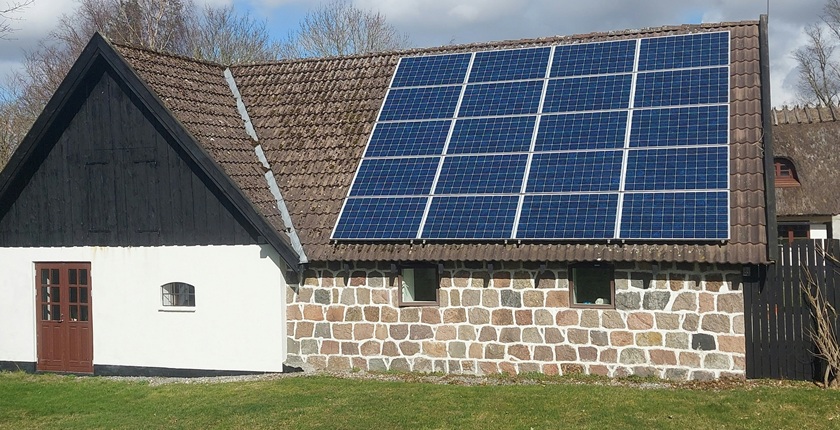
According to data from the Hellenic Electricity Distribution Network Operator (HEDNO or DEDDIE), more than 20,000 individual prosumer units have been connected to the grid over the last 18 months, with the majority being connected under net metering.
It brought the overall number of prosumer installations to 35,312, with a total capacity of 995 MW, according to the update.
HEDNO also said 705 applications were in the final stages of the licensing process.
Limited interest from suppliers and aggregators
Despite high interest, progress in adding units within the net billing scheme has been slow. Only two electricity suppliers currently provide such contracts to prosumers and just one of them includes businesses, Energypress reported.
There is limited interest among aggregators to represent corporate net billing installations in the market. As for household units, the Renewable Energy Sources Operator and Guarantees of Origin (DAPEEP) provides the service free of charge.
Market participants are urging improvements in the relevant ministerial decree on net billing, for things to move forward. One of them would be to simplify contracts.
Comments (1)
Davi
I have been waiting for 5 months to activate my 10.8kW home system through Hendo. They have yet to be able to simply turn on my system because of endless administrative delays, the latest one being waiting for the government to publish the prices at which they will buy any excess electricity. There is no timetable for this last step, it could be a week or a year. This is absolutely ridiculous in a civilized European country, especially one that suffers from such a poorly organized electrical grid.