


The third energy efficiency action plan (EEAP), for 2016-2018, was prepared by the Ministry of Economy and adopted by the government on June 30.
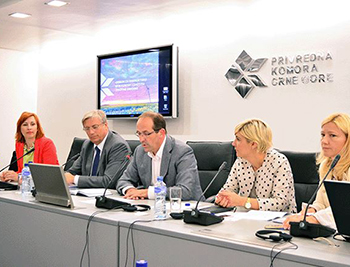
The plan was presented in the Chamber of Economy of Montenegro at the meeting of the Coordination Committee for Energy Efficiency and the Environment. The document complies with the requirements of the new European Union directives in the field of energy efficiency. At the same time, it is a comprehensive guide to implementing energy efficiency policy on the side of final energy consumption for the next three years, a report with detailed overview on the activities, and the evaluation of achieved energy savings considering the objectives set in the previous action plan.
Jasna Sekulović, project manager at GIZ Open Regional Fund for South-East Europe – Energy Efficiency (ORF-EE), said the German organization is supporting a network of entities dealing with energy efficiency through various activities and projects in Southeastern Europe for the last nine years. She commended the Directorate for Energy Efficiency, especially the direct participants in the making of the document – Milorad Burzan and Božidar Pavlović.
At the recent summit in Paris EUR 50 million was approved for energy efficiency projects.
EEAP has four main objectives based on the priorities of the Law on the Efficient Use of Energy, said Dragica Sekulić, director-general of the Directorate for Energy Efficiency of the Ministry of Economy of Montenegro. It is the implementation of the law by completing and improving the regulatory and institutional framework, then raising awareness of the new legal requirements and good practices in the field of energy efficiency in public institutions, local authorities, big consumers, professional organizations and others. Improvement of statistical and monitoring systems in the field of energy efficiency and the implementation of energy saving measures are also planned.
A total of 19 energy efficiency measures included in the EEAP are divided into buildings, households, services, transport, energy operators and horizontal measures. It is characteristic that the new directives included the sectors of production, distribution and transmission of energy.
Sekulić informed the members of the committee that at the recent summit in Paris EUR 50 million was approved for energy efficiency projects. The funds are expected to come through commercial loans.