


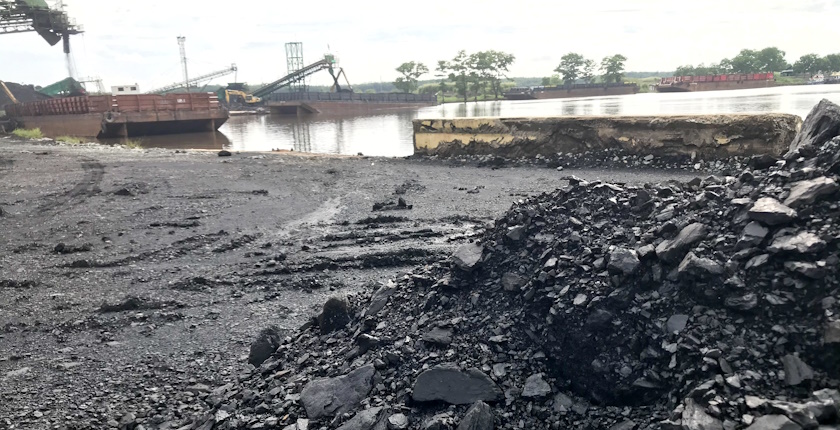
Transelectrica reportedly doesn’t see coal power plants having any share in Romania’s transmission system in 2026 and beyond. The official phaseout deadline is 2032.
Romania’s electricity transmission system operator Transelectrica is working on a ten-year plan through 2033. According to media reports, the draft shows coal power gone already in 2026. A similar announcement has just emerged in Greece, while Bulgaria is struggling even to keep its sole state-owned facility online.
Until a few years ago, the three countries were hesitating to determine coal phaseout dates or delaying them. Now even newer or reconstructed plants of the kind across Europe are reducing capacity utilization or abruptly shutting down. For instance, the ContourGlobal Maritsa East 3 coal-fired power plant in Bulgaria recently fired almost all its employees.
The ContourGlobal Maritsa East 3 coal-fired power plant in Bulgaria recently fired almost all its employees
Expenses are high because of the allowances that producers must buy via the European Union’s Emissions Trading System (EU ETS). They also face ever stricter environmental requirements. It makes coal power uncompetitive.
On the other hand, an uncontrolled collapse of the sector could jeopardize the security of energy supply. The rapid cut in coal power capacities makes the region’s energy consumers vulnerable to cold spells in the winter.
Romania leans on gas power to cover 2026 coal exit
The market has decimated coal plant production. In Romania in particular, it is evident from the forced transformation of state-owned coal miner and power plant operator Complexul Energetic Oltenia (CE Oltenia).
Active coal plants had an overall 1.9 GW in April, compared to 5.3 GW in 2012. CE Oltenia plans to replace them with gas power facilities in Ișalnița and Turceni by 2026, while with projects of other Romanian energy companies like Electrocentrale Bucharest (ELCEN), the new capacity is seen at 4.5 GW.
Romania is officially planning to complete its coal phaseout in 2032.
Would be worse without renewables
Minister of Energy Sebastian Burduja recently said Transelectrica’s report would determine the parts of the national electricity system that are in deficit. The last heat wave disturbed the wholesale trade in the region and catapulted power prices.
Burduja insisted that the situation would have been much worse without renewables.
The authorities want to eliminate coal by 2026 because Romania will double its interconnection capacity with neighboring countries to 7 GW next year, Radu Miruță said. He is a member of parliament from the opposition Save Romania Union (USR) and its head in Gorj county, a major coal hub. The country is upgrading the interconnections to buy, not to sell, in Miruță’s view.
The fate of coal industry workers and entire communities hangs in the balance. The implications are serious for national economies as well. The European Union’s just transition programs seem to need a boost.