


Greece’s brand new Ptolemaida 5 lignite plant was effectively pushed out of the market in May. The trend is evident across the Balkans.
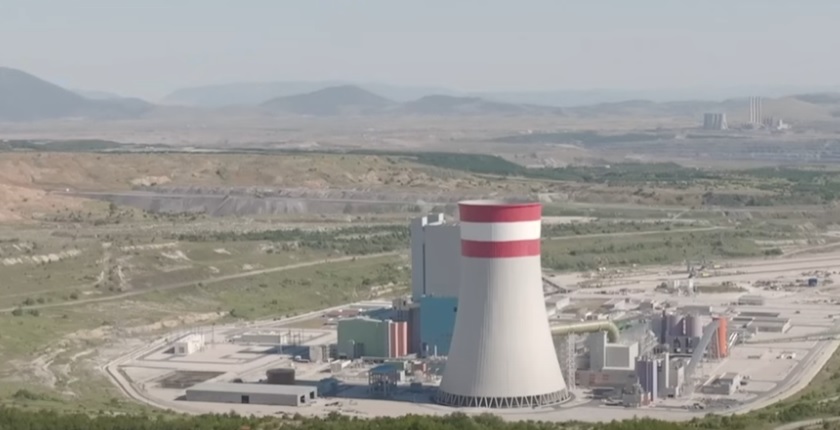
It is a 616 MW lignite-fired power station, completed under two years ago by government-controlled Public Power Corp. (PPC). But, apparently, it is already non-competitive due to the high cost of emissions and competition from renewables and natural gas plants.
The unit was supposed to enter full commercial operation last autumn. However, it seems to have remained under a testing regime, as PPC has not announced otherwise. If it is true, it means Ptolemaida 5 is not subject to its full operational requirements when it comes to the daily planning of Independent Power Transmission Operator (IPTO or, in Greek, Admie) and that it does not participate in the wholesale market as other plants do.
Regardless, it is notable that Ptolemaida 5’s usage rate has been between 11.9% and 31.3% in the first four months of 2024, according to IPTO. Last year it had similar shares, so it never worked at full capacity.
Since the beginning of May, all lignite plants, also owned by PPC, mostly had zero participation in the wholesale market as a result of low seasonal demand and no more need for district heating.
They are expected to be used again in the summer, when high temperatures and increased demand facilitate their return to ensure the system’s stability. In essence, lignite plants are now effectively providing reserve capacity for long periods of the year.
Capacity mechanism necessary to keep coal plants above water
It should be noted that lignite is not the only fuel faced with reduced production in Greece. Operators of natural gas–fired power plants have also suffered a drop in recent years as a result of a rise in renewables in the system. Official data show that in 2021 gas plants produced 20.9 TWh, and only 14.6 TWh in 2023.
All the conventional producers have asked the government to come up with a capacity mechanism, to secure their long-term commercial viability. The scheme will have to be submitted to the European Commission within the next year and it will have to be in line with strict European Union regulations.
The goal is for Greece to have a fleet of conventional plants able to maintain energy security, but without paying them exorbitant amounts for their services.
Already, studies by international bodies, such as the European Network of Transmission System Operators (ENTSO-E), have shown that European natural gas units will be uncompetitive without such support, starting well before 2030.
Coal in retreat across the Balkans
Coal plants are facing viability issues in other Balkan countries as well. Slovenian Prime Minister Robert Golob acknowledged last month that TEŠ – the country’s only facility of the kind – and its accompanying mine may end operations within three years instead of 2033, when they are scheduled for closure.
Similarly, coal power plants in Bulgaria almost halved their output last year as their operators struggle to compete with cheaper kinds of electricity in the market, high CO2 emission costs and strict pollution standards.
On the other hand, Turkey, in which there is no emissions pricing mechanism, consumed more coal-fired electricity so far in 2024 than any European country. Data from energy think tank Ember showed that it overtook Germany as the top coal power producer in Europe, shortly after surpassing Poland as number two.
Serbia is about to put its Kostolac B3 coal power plant into operation, after lengthy delays in the project’s final phase. It may turn out to be the last one in Europe.