






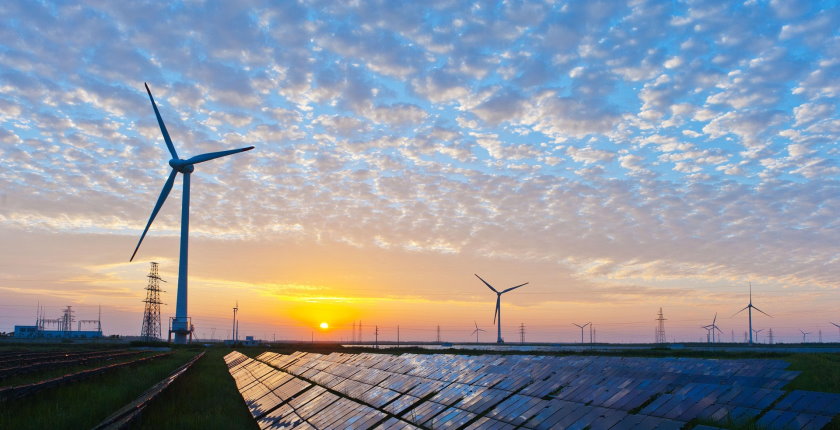
Photo: Kenueone from Pixabay


In a desert area the size of Singapore, India inaugurated a 30 GW power production project. The planned size of the hybrid solar and wind system in the Kutch district would make it the biggest on the planet.
Prime Minister of India Narendra Modi laid the foundation stone in his home state of Gujarat for a renewable energy production complex that would be larger than any existing or planned electricity units in the world. The hybrid solar and wind power system is envisaged to reach 30 GW.
The country aims to boost renewable energy capacity to 175 GW by 2022 and to 450 GW through 2030. It currently hosts the biggest photovoltaic facility anywhere – the 2.25 GW Bhadla Solar Park in Rajasthan, though there are already plans for larger facilities. Number two is in China.
The domestic media reported the renewables capacity could be expanded to 41.5 GW. Land has been allotted to companies including Solar Energy Corp. of India (SECI), energy conglomerate NTPC, electricity producer Adani Power, wind turbine manufacturer Suzlon and GSEC and GIPCL from Gujarat.
Storage capacities included
The site for the hybrid power plant in the Kutch district spans 72,600 hectares, which matches the total land area of Singapore. Wind turbines and solar powers will be backed up by storage systems.
The investment is potentially worth USD 20.4 billion
At the inauguration ceremony near the village of Vighakot, Modi said the facility is expected to attract USD 20.4 billion in investment and that it would provide employment for 100,000 people.
He also marked the beginning of construction of a desalination plant for sea water at Mandvi with an output of 100 million liters per day. It will supply a population of 800,000 people.
Carbon savings are equivalent to 90 million trees
The prime minister claimed the hybrid solar and wind power complex would bring annual carbon dioxide savings of 50 million tons and compared it to 90 million trees. India boosted the total size of its solar power capacity 16 times in the past six years, Modi added.
The 30 GW system will be installed in an area that the authorities call a wasteland, while environmentalists warned its unique desert ecosystem, particularly birds, needs to be protected.
The Three Gorges Dam in China is the world’s largest power station. The 22.5 GW system is online since 2012.
CWP Renewables, Intercontinental Energy and their partners intend to build a 26 GW hybrid wind and solar power plant in the Western Australian desert together with the world’s largest green hydrogen and green ammonia hub.
China recently revealed plans to install a string of hydropower plants on the Yarlung Zangbo river, which is actually the upstream section of the Brahmaputra. The 60 GW ambition for Tibet prompted India’s protest due to concerns that the most populous country would deprive it of water.




How much area required for the economy projects development.
What’s Government supportive Volum.