
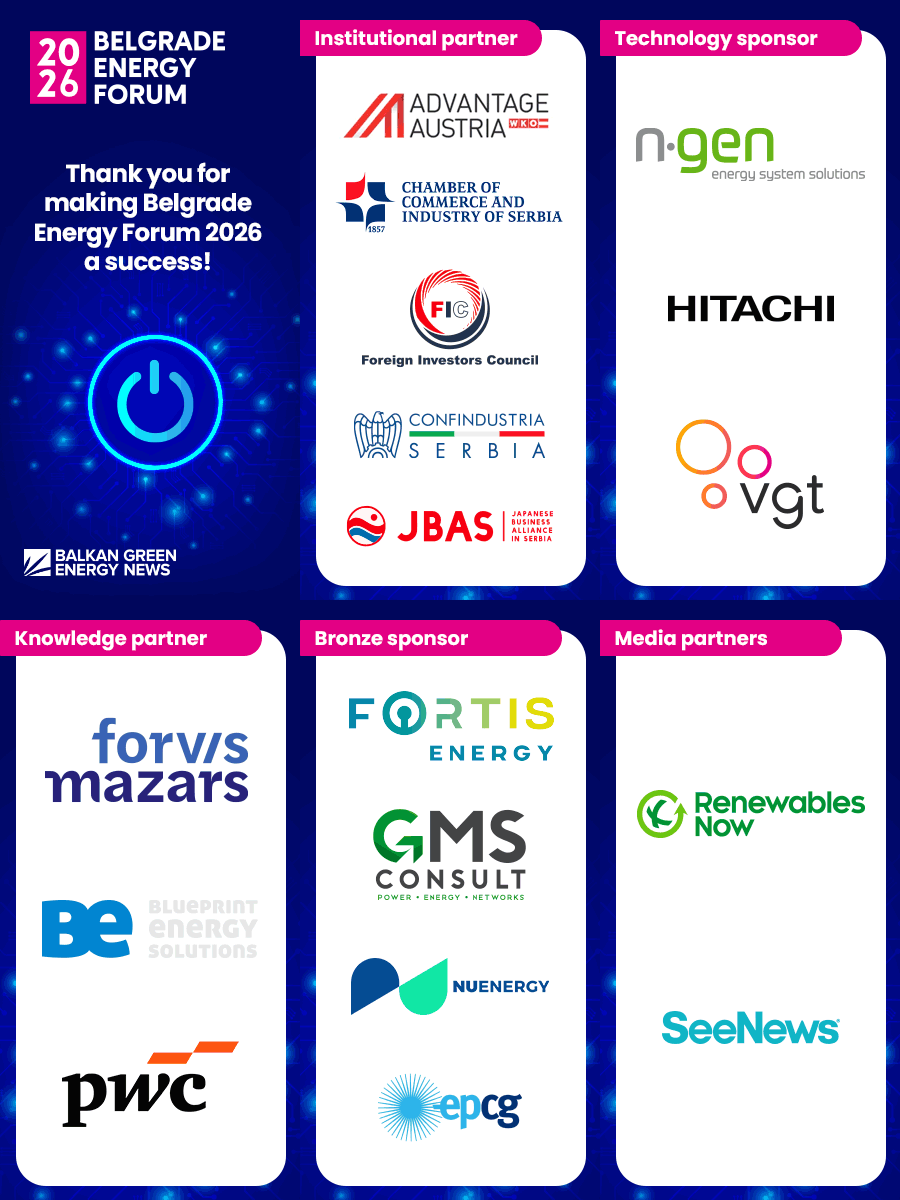







Photo: CSprotte from Pixabay


French President Emmanuel Macron has met with the national “electrification team,” which brings together key stakeholders, innovative industrialists, companies, and financiers, to accelerate the implementation of the government’s electrification plan unveiled in April.
The electrification team is gathered around a common objective – to thoroughly electrify all sectors of the French economy, and Macron has formalized concrete commitments in four priority areas: electric mobility, industry, transportation, and buildings, according to a press release from the Élysée Palace.
The French government intends to nearly double its annual support for electrification, from EUR 5.5 billion to EUR 10 billion by 2030, Prime Minister Sébastien Lecornu said in April.
Macron has said the electrification effort will involve 6,000 French businesses, according to news agencies.
The priority areas for electrification are mobility, industry, transportation, and buildings
The electrification plan comprises 22 measures designed to electrify the country’s economy. It is a response to the energy crisis triggered by the war in the Middle East, which has highlighted the French economy’s dependence on oil and natural gas imports.
Fossil fuels currently account for 58% of France’s final energy consumption, while the country’s third multi-year energy program (PPE 3) sets the objective of reducing this share to 40% by 2030.
France aims to cut the share of fossil fuels to 40% by 2030
The widespread electrification of energy consumption is a key lever for strengthening energy independence, accelerating decarbonization, protecting households’ purchasing power, and increasing business competitiveness, the French economy ministry said in April.
The 22 measures in the plan include facilitating access to the grid by switching from the “first-come, first-served” approach to allocating capacity to projects that are ready to connect.
The plan also envisages banning fossil fuel advertising, electrifying household heating, subsidizing heat pumps, phasing out natural gas in buildings, subsidizing electric vehicles, upgrading the charging network, and supporting the electrification of industry, crafts, and agriculture.


Be the first one to comment on this article.