



The European Commission published the list of the first 13 strategic projects for raw materials outside of the European Union. One of them is project Jadar in Serbia. It is the only one for lithium and boron. Notably, it got the strategic status only for extraction, even though Rio Tinto said it would also build a processing plant.
After adopting 47 strategic projects in line with the Critical Raw Materials Act (CRMA) in March, today the European Commission added another 13, for locations outside of the EU’s borders. They include Rio Tinto’s controversial project Jadar in Serbia, for lithium and boron. The aim is to diversify the sources of supply and increase economic security, but alongside strengthening value creation in third countries, according to the update.
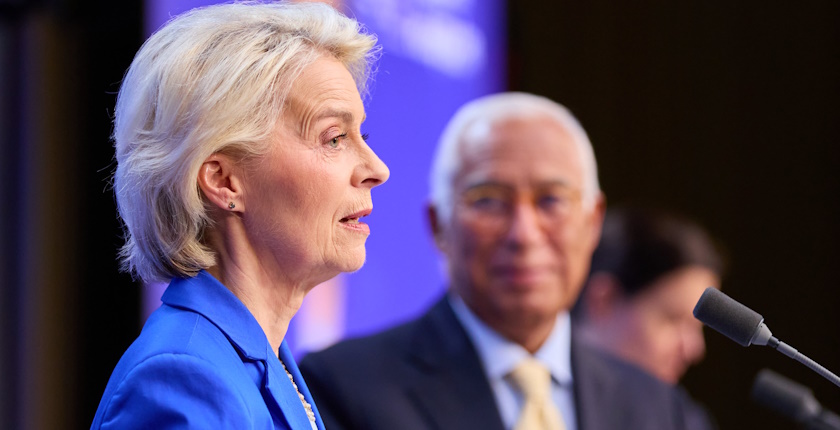
“Europe needs raw materials to succeed in our industrial and climate ambitions. The EU requires stable, secure and diversified supply chains,” said the European Commission’s Executive Vice-President for Prosperity and Industrial Strategy Stéphane Séjourné.
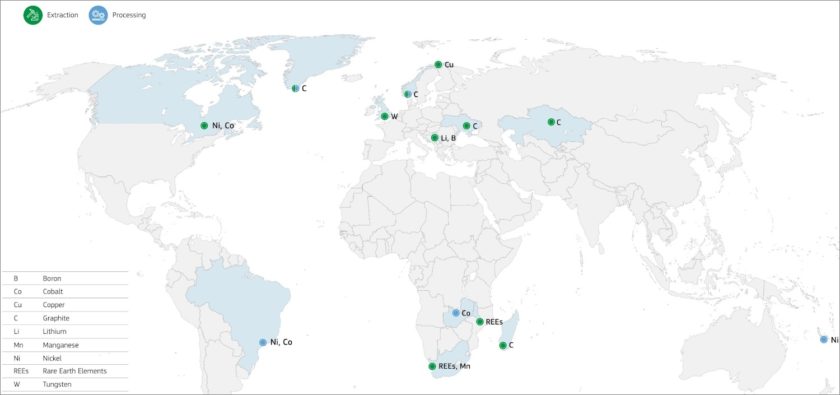
Strategic projects across globe
The first 13 strategic projects outside of the EU are in Canada, Greenland, Kazakhstan, Norway, Serbia, Ukraine, Zambia, New Caledonia, Brazil, Madagascar, Malawi, South Africa and the United Kingdom. They require EUR 5.5 billion in total capital investment to start operations, the European Commission said.
Séjourné revealed that investors filed 49 applications.
Project Jadar in western Serbia, near the city of Loznica, is the only one for lithium and boron. Interestingly, the European Commission only endorsed the extraction segment, even though Rio Tinto has said it would build a processing facility as well. According to today’s announcement, the investment aims to contribute to the supply of lithium – battery grade, and boron for metallurgy.
Several waves of mass rallies against project Jadar have been held throughout Serbia
The local population in the Jadar valley, environmentalist organizations and a number of experts have been opposing Rio Tinto for several years now, citing the lack of transparency and the risks for health, nature and agriculture, and especially the potential pollution of water sources. They held several waves of large countrywide protests.
Balkan Green Energy News has published a chronological overview of the key events since 2001, when Rio Tinto arrived in Serbia.
The mining giant is conducting project Jadar through its Serbian subsidiary Rio Sava Exploration.
Most projects are for graphite, cobalt, nickel
Most of the other endeavors entail the extraction and processing of graphite, cobalt and nickel. The remaining ones are for mining tungsten, rare earth elements, manganese and copper. A project conducted both in Greenland and Norway is for the extraction and processing of graphite.
Rare earth elements have a key role in producing high-performance magnets used in wind turbines or electric motors for renewable energy technologies and electromobility. Boron is used in the automotive, renewable energy, aerospace and defence sectors.
Lithium ion batteries are currently the dominant technology in the electricity storage segment, excluding pumped storage hydropower plants. The alkali metal has a range of applications: from consumer electronics and electric vehicles to stationary facilities within renewable power plants or for grid balancing.
The selected projects meet the environmental, social and governance standards stipulated in CRMA, together with technical feasibility, the EU executive said. They are eligible for support by the European Commission, member states and financial institutions, including “contacts with relevant offtakers,” it added.
Kokanović: We continue resistance
Local activist from the Ne damo Jadar group Zlatko Kokanović said the academic community and the Serbian Academy of Sciences and Arts (SANU) have clearly rejected Rio Tinto’s lithium project. He also claimed that 63.5% of citizens also oppose it, apparently citing results of a recent survey.
The European Commission’s decision doesn’t guarantee environmental standards, Kokanović told Beta news agency. “It is quite hypocritical from a Europe promoting the rule of law, democracy, freedom of speech, a healthy environment and clean air, water and soil. To the detriment of our health and the health of our children, they want to take our lithium and turn us into a waste dump so that they live healthy,” he stated.
There isn’t any such mining project in a densely populated area and on fertile land anywhere in the world, the activist argued. “It is essentially an experimental facility. They don’t have answers to all questions and their main slogan is: ‘We will try to reduce risks’. We now live without risks, we don’t need to reduce them. If an incident happens, they will say that they are acknowledging the mistake, that they will try not to repeat it, and they will apologize. We don’t have anything from it,” Kokanović underscored.
Separately today, he vowed to continue the resistance with all allowed and forbidden and available means. Kokanović resides in the village of Gornje Nedeljice, the site of the proposed mine.
Comments (1)
Ačeksandar Knezevic, Sarajevo
I have significant experience in environmental impact studies – from 1973 to the present. I follow the problem of lithium exploitation in Jadro – the position of the EU, the position of the Government of the Republic of Serbia and the reaction of citizens and environmental movements.
However, at this stage the problem is not environmental, but rather a problem of spatial use. Only when the spatial use is determined can we talk about environmental issues.
I described the reconciliation of spatial conflicts in my book Hydroelectric Power Plants and the Environment (2002), published by CETEOR, Sarajevo