

Bulgaria’s ruling coalition decided after consultations with the European Commission to shelve its controversial transit tax for Russian gas to avoid another delay in entering the Schengen Area. The levy has prompted criticism from Serbia, Hungary and North Macedonia.
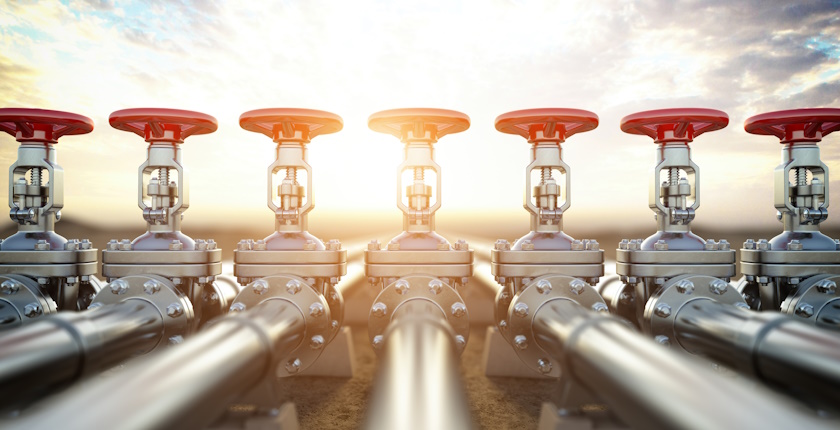
Two months after passing legislation that introduced a gas transit tax of EUR 10.2 per MWh for Russia’s Gazprom, Bulgaria is changing the law again. The ruling parties reached an agreement to suspend the measure until the European Union comes up with a joint solution.
“This tax shouldn’t be unilateral from Bulgaria’s side, but we should work with the European Commission. Such a tax can only be imposed with all European countries, in a way that would actually have an effect on the economy and on the Russian Federation,” said Kiril Petkov from the We Continue the Change – Democratic Bulgaria (PP-DB) alliance. It is one of the three groups in the National Assembly that support Prime Minister Nikolay Denkov’s government.
Lukoil can sell refinery only if parliament approves it
In addition, Lukoil’s oil refinery is set to be declared a strategic asset. Petkov, former prime minister and chair of the parliamentary EU affairs committee, explained that a sale would require approval from lawmakers.
Last week Russia’s Lukoil said once again that it is analyzing its options and pointed to the possibility of divestment. The EU has allowed Bulgaria to keep importing Russian oil until the end of next year, but the government proposed to cease the purchases on March 1.
Tax referred to Constitutional Court
As for the suspension of the gas transit tax, the representatives of the ruling coalition pointed out that the country is close to joining the Schengen Area and that they want to avoid the risk of another blockade.
The levy has prompted sharp criticism from Serbia, North Macedonia and Hungary. The authorities in Budapest also filed a complaint within the EU. The additional expenses would have affected buyers in Greece and Bosnia and Herzegovina as well. Bulgaria gave up on the transit tax after lengthy discussions in Brussels, even though the European Commission has just ruled that the law doesn’t breach EU regulations.
President Rumen Radev earlier challenged the rollout of the transit tax at the Constitutional Court.
Of note, North Macedonia’s state-owned energy utility Elektrani na Severna Makedonija (ESM) said last week that its subsidiary ESM Prodažba purchased gas for its heating plants through neighboring Bulgaria for the third month in a row. The supplier is Graystone Bulgaria. The fuel comes from Azerbaijan as well as from liquefied natural gas from the United States and other sources, but not Russia.
Serbia and Bulgaria put a gas interconnector into trial operation on December 10. It will enable Serbia to diversify its gas supply after many years of dependence on Russia.